Ball Python Care for Beginners: Complete Setup & Care Guide (2026)
QUICK ANSWER: IS A BALL PYTHON RIGHT FOR YOU?
- Ball pythons are the most beginner-friendly pet snake — calm, manageable, and long-lived
- They need a secure enclosure (min. 120×60 cm), proper heating, and humidity 60–80%
- Diet: frozen/thawed mice or rats — fed every 7–14 days depending on age
- Ball pythons can live 25–30 years — this is a long-term commitment
- Feed frozen/thawed prey only — live prey causes injuries and is unnecessary
- This article is based on peer-reviewed herpetological research and best practices from the Association of Reptile and Amphibian Veterinarians (ARAV).
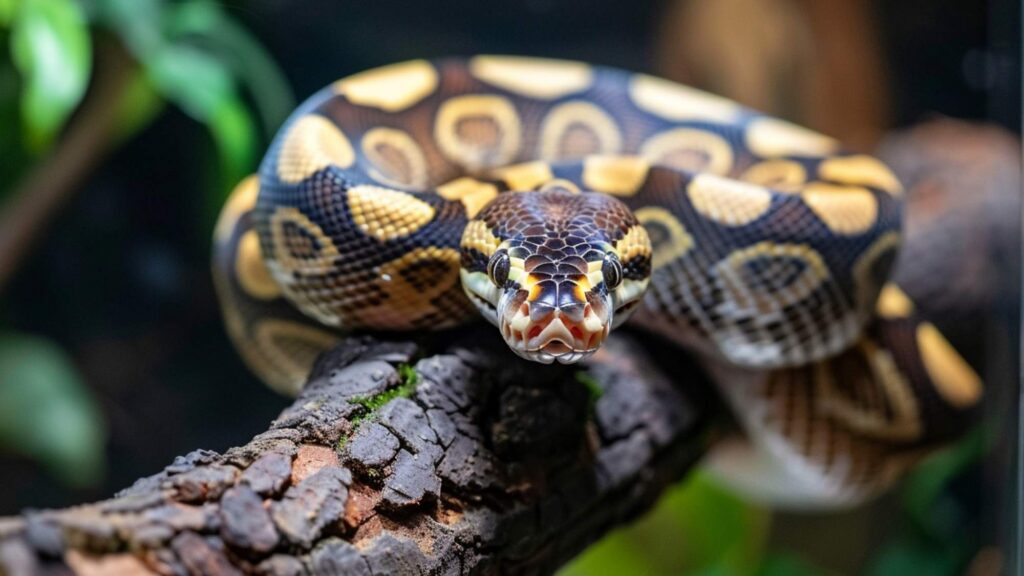
Ball pythons (Python regius) are the best-selling pet snake in the world — and for good reason. They are docile, manageable in size, come in hundreds of stunning color and pattern variations called morphs, and tolerate handling better than virtually any other snake species. For someone considering their first snake, ball pythons are the near-universal recommendation from experienced keepers and reptile veterinarians alike.
However, ball python care has evolved dramatically over the past decade. The husbandry advice that came with starter kits in the early 2000s — small enclosures, screen-top tanks, low humidity — is now recognized as inadequate and is directly linked to the most common health problems seen in captive ball pythons. This guide reflects current best practices.
New pet? Find a name that truly fits who they are.
Browse 6,500+ names for dogs, cats, birds, reptiles, rabbits and more — filtered by personality.
Try Pet Name FinderUnderstanding Ball Pythons
| Fact | Detail |
|---|---|
| Lifespan | 25–30 years in captivity (some reach 40+) |
| Adult size | 1.2–1.5 m (females) / 0.9–1.2 m (males) |
| Adult weight | Females: 1.5–2.5 kg / Males: 0.9–1.5 kg |
| Activity pattern | Nocturnal — most active at night |
| Temperament | Generally calm, tolerates handling well |
| Country of origin | West and Central Africa (Ghana, Togo, Nigeria) |
| Diet in the wild | Small mammals, occasionally birds |
| Name origin | Curl into a tight ball when stressed — hence “ball python” |
Ball pythons are ambush predators in the wild that spend most of their time hidden in burrows, animal dens, and dense vegetation. This informs their care requirements: they need secure, enclosed spaces where they can hide, consistent temperatures that mimic their tropical origin, and high humidity that reflects the humid forest and grassland environments of West Africa.
Enclosure: Size, Type, and Setup
Enclosure Size
This is the most common area where beginners go wrong. The traditional advice of starting with a small enclosure and upgrading as the snake grows is outdated and problematic — ball pythons kept in undersized enclosures develop chronic stress, feeding refusals, and respiratory infections at significantly higher rates.
Recommended enclosure sizes:
- Hatchlings and juveniles (under 60 cm): 60 x 45 x 30 cm minimum
- Sub-adults and adults: 120 x 60 x 45 cm minimum — larger is better
- Large adult females: 150 x 60 x 60 cm or bigger
Enclosure Type
Front-opening PVC or wood enclosures are widely considered the best option for ball pythons. They retain heat and humidity far better than glass tanks, reduce stress (ball pythons feel more secure when approached from the front rather than from above), and are easier to maintain appropriate temperatures in.
Glass terrariums with screen tops lose heat and humidity rapidly and require significant modifications (covering most of the screen) to maintain appropriate conditions. If using glass, cover at least 75% of the screen top with aluminum foil or a solid panel.
Avoid: Aquariums repurposed as snake enclosures without modification — the temperature and humidity management challenges are significant.
Essential Enclosure Items
Two hides: Provide one hide on the warm side and one on the cool side. This is non-negotiable — ball pythons that cannot hide become chronically stressed and frequently refuse food. Hides should be snug (the snake should fit with minimal extra space) — overly large hides do not provide the security feeling the snake needs. Upside-down plastic containers with an entrance hole cut in work perfectly and cost almost nothing.
Water dish: Large enough for the snake to soak in if it chooses. Ball pythons occasionally soak before shedding or when dehydrated. Clean and refill at least twice weekly.
Substrate: Substrate (bedding) must retain moisture to maintain humidity. Best options include cypress mulch, coconut fiber (coco coir), and bioactive substrate mixes. Aim for 10–15 cm depth to allow burrowing. Avoid cedar and pine (toxic aromatic oils), sand (impaction risk, poor humidity retention), and paper towels as a long-term substrate (adequate for quarantine, not for permanent housing).
Décor: Cork bark tubes, artificial plants, and other décor add security and enrichment. A more “cluttered” enclosure with multiple visual barriers makes ball pythons significantly more secure and active.

Temperature and Heating
Ball pythons are ectotherms — they regulate body temperature by moving between warm and cool areas. Providing a proper thermal gradient is essential for digestion, immune function, and overall health.
Target temperatures:
| Zone | Temperature |
|---|---|
| Warm hide (hot spot) | 32–35°C |
| Warm side ambient | 29–31°C |
| Cool side ambient | 24–27°C |
| Nighttime drop | No lower than 22°C |
Best heating methods:
Under-tank heaters (UTH) placed under one end of the enclosure provide belly heat that aids digestion. Always use with a thermostat — an uncontrolled UTH will overheat and burn your snake.
Radiant heat panels (RHP) mounted inside the top of the enclosure provide excellent ambient and radiant heat. More expensive initially but easier to control and very effective.
Ceramic heat emitters (CHE) provide heat without light — suitable for ambient heating.
Deep heat projectors (DHP) penetrate deeper into the substrate, providing more natural belly and body heat than surface-only heating.
Never use: Hot rocks (burns), red or blue “night” bulbs (myth that snakes cannot see these — they can), heat tape without a thermostat.
Always use a thermostat with any heating element. A thermostat regulates the temperature automatically and prevents dangerous overheating. Proportional thermostats or PID thermostats offer the most precise control.
Humidity
Humidity is critical for ball pythons and one of the most commonly neglected aspects of care. Insufficient humidity causes dysecdysis (stuck sheds), respiratory infections, and dehydration.
Target humidity: 60–80% ambient, rising to 80–90% during shedding.
How to achieve and maintain:
- Use a moisture-retaining substrate (cypress mulch, coco coir)
- Provide a humid hide — fill one hide (usually the warm side hide) with damp sphagnum moss. Dampen (not soaking) the moss and replace weekly
- Partially cover any screen panels with aluminum foil or plexiglass
- Mist the cool side of the enclosure lightly every 2–3 days
Monitor with a digital hygrometer placed in the middle of the enclosure. Cheap dial hygrometers are notoriously inaccurate — use a digital probe hygrometer for reliable readings.
Feeding
What to Feed
Ball pythons eat rodents. In captivity, the diet should consist exclusively of frozen/thawed mice or rats appropriate to the snake’s size. Never feed live prey — live rodents bite and scratch snakes causing serious injuries, and live feeding provides no benefit that frozen/thawed feeding does not.
Prey sizing: The prey item should be approximately the same width as the widest part of the snake’s body. Too small provides insufficient nutrition; too large increases regurgitation risk.
| Snake age/size | Prey type |
|---|---|
| Hatchling | Pinky or fuzzy mouse |
| Juvenile | Hopper mouse or small rat pup |
| Sub-adult | Adult mouse or small rat |
| Adult | Medium to large rat |
How to thaw: Remove frozen prey from the freezer and place in a zip-lock bag. Thaw in the refrigerator overnight OR thaw in warm (not boiling) water for 30 minutes. Never microwave prey items — uneven heating creates hot spots and destroys nutritional value.
How to offer: Use long feeding tongs (not your hands) to present the prey item slightly warmed — a prey item at room temperature or slightly above triggers the snake’s feeding response most reliably.
Feeding Frequency
| Age | Frequency |
|---|---|
| Hatchlings (0–6 months) | Every 5–7 days |
| Juveniles (6–18 months) | Every 7–10 days |
| Adults (18+ months) | Every 10–14 days |
Feeding Refusal
Ball pythons are famous for sometimes refusing food for weeks or months — and this is one of the most stressful aspects of ball python keeping for new owners. An adult ball python that has stopped eating for 4–8 weeks and maintains good body weight is not an emergency. Common triggers include the breeding season (November–March), a recent shed cycle, stress from handling or enclosure changes, and suboptimal husbandry.
Before panicking about a food refusal, check: temperatures, humidity, hide availability, whether the snake is in shed, and whether anything in the enclosure changed recently. Correct any husbandry issues before assuming illness.

Handling
Ball pythons are the most handleable pet snake species. Most individuals become calm and curious with regular handling.
Before first handling: Allow a newly acquired ball python to settle in for at least 7–14 days before any handling. Give them time to acclimate to the new enclosure.
After feeding: Wait 48 hours after a feeding before handling. Handling a recently fed snake causes regurgitation — a serious event that stresses the snake and depletes nutrition.
During shed: Reduce or eliminate handling when your ball python is in shed — eyes turn blue/milky, skin appears dull. A shedding snake is temporarily blind and more defensive than usual.
Session length: 10–20 minutes per session, 3–5 times per week, is ideal. Ball pythons that are handled too rarely become defensive; those handled excessively become stressed.
Health Care
Finding a Vet
Find a reptile-experienced or exotic animal vet before you need one urgently. Search for vets listing herpetology or exotic animals in their specialties.
Common Health Problems
Respiratory infections: One of the most common health issues in ball pythons, usually resulting from inadequate temperatures or humidity. Symptoms include wheezing, mucus bubbling from the nose or mouth, labored breathing, and the snake holding its head up at an unusual angle. Always a vet visit — respiratory infections in snakes progress quickly without treatment.
Dysecdysis (stuck shed): Incomplete shedding caused by low humidity. The shed comes off in pieces rather than one complete piece, and retained shed on the eyes (eye caps) requires prompt veterinary removal — do not attempt to remove stuck eye caps at home. A proper humid hide and adequate ambient humidity prevents this almost entirely.
Mites: Small black or red parasites visible on the snake’s body or in the water dish. Require treatment of both the snake and the enclosure. A vet visit confirms the species and appropriate treatment.
Scale rot (necrotic dermatitis): Caused by sitting on substrate that is too damp or wet for extended periods. Appears as soft, discolored, blistered scales. Requires veterinary treatment and substrate correction.
Inclusion Body Disease (IBD): A fatal viral disease caused by reptarenaviruses. Symptoms include neurological signs — the snake cannot right itself, star-gazes (holds its head up abnormally), or has coordination problems. Any snake showing neurological symptoms should be isolated from other reptiles and examined by a vet immediately.
Frequently Asked Questions
Setup & Daily Care
Q: How often should I clean my ball python’s enclosure? A: Spot clean (remove feces and soiled substrate) as soon as you notice them — typically within 1–3 days of feeding. A full substrate replacement every 2–3 months maintains hygiene without over-cleaning, which disrupts the scent environment. Always disinfect the enclosure during a full clean with a reptile-safe disinfectant.
Q: Do ball pythons need UVB lighting? A: Ball pythons are nocturnal and have historically been kept successfully without UVB. However, current research increasingly supports low-level UVB provision as beneficial for Vitamin D3 synthesis and immune health. A low-output UVB bulb (2.0 or 5.0 UVI) on a 10–12 hour cycle is now considered best practice by many experienced keepers. It is not strictly mandatory but is recommended.
Q: Can I keep two ball pythons together? A: No. Ball pythons are solitary animals and should always be housed separately. Co-habitation causes chronic stress, resource competition, and increases disease transmission risk. Even if two snakes appear to tolerate each other, the stress of sharing space affects their health and feeding negatively over time.
Behavior & Feeding
Q: My ball python has not eaten in 6 weeks — is it dying? A: Not necessarily. Ball pythons frequently refuse food for weeks to months — particularly during breeding season (November to March), during a shed cycle, or following a husbandry change. If the snake maintains good body weight (no visible spine or hip bones), behaves normally, and has proper husbandry, a prolonged fast is usually not an emergency. Check all husbandry parameters first. If the snake is losing weight visibly, see a reptile vet.
Q: My ball python won’t leave the hide — is that normal? A: Yes. Ball pythons are naturally secretive and spend most of their time hidden. A ball python that rarely leaves its hide during the day is behaving normally — they are nocturnal. If your snake never comes out even at night or has stopped being active entirely, check temperatures, humidity, and whether it might be preparing to shed.

Ball Python Morphs: A Quick Introduction
One of the most exciting aspects of ball python keeping is the incredible diversity of morphs available. A morph is a genetic variant that affects the color, pattern, or both — and selective breeding has produced hundreds of distinct combinations over the past three decades.
Common beginner-friendly morphs:
| Morph | Key Visual Feature | Approx. Price Range |
|---|---|---|
| Normal (wild type) | Brown/black pattern, white belly | Lowest cost |
| Pastel | Brightened yellows, reduced pattern | Budget-friendly |
| Spider | High-contrast pattern, white sides | Budget-friendly |
| Piebald | White patches with normal patterning | Mid-range |
| Albino | Yellow and white, red eyes | Mid-range |
| Clown | Reduced dorsal pattern, bright colors | Mid-range |
| Banana | Yellow-orange with purple spots | Mid to higher range |
| Axanthic | Black, white, and grey only | Varies |
Important note on the Spider morph: Spider ball pythons carry a genetic trait associated with a neurological condition called “wobble” — a head tremor and balance issue of varying severity. The ethics of breeding and purchasing Spider morphs is actively debated in the hobby community. Some affected individuals live comfortably despite the wobble; others are significantly impacted. New owners should research this before purchasing a Spider or Spider-combination morph.
Normal (wild-type) ball pythons are an excellent choice for beginners — they are typically the lowest cost, widely available, and just as healthy and personable as any exotic morph.
Related Articles
- Leopard Gecko Care for Beginners — Another popular beginner reptile with very different care needs
- Bearded Dragon Diet: Complete Feeding Guide — The most popular pet lizard species
- Hamster Care for Beginners — Popular small exotic pet with specific enrichment needs
This article is for informational purposes only. For health concerns, always consult an exotic or reptile veterinarian.