Cat Eye Infection
Your cat’s eye is red, watery, and partially closed. They’re squinting and pawing at their face. Something is clearly wrong.
Eye infections and problems are common in cats, ranging from mild conjunctivitis to serious conditions threatening vision. While some minor issues resolve on their own, many require veterinary treatment.
The challenge is knowing when to treat at home and when professional care is necessary.
This complete guide covers everything about cat eye infections: recognizing symptoms, understanding causes, home treatment for minor issues, and critical signs requiring immediate veterinary attention.
New cat? Find a name as unique as their character.
Browse 600+ cat names by gender and personality type — because every cat has a story.
Try Pet Name FinderCat Eye Anatomy Basics
Understanding eye structure helps recognize problems.
Parts of the eye:
Conjunctiva:
- Thin membrane lining eyelids and covering white of eye
- Becomes inflamed in conjunctivitis
- Most common infection site
Cornea:
- Clear dome covering iris and pupil
- Can be scratched or ulcerated
- Very painful when damaged
Third eyelid (nictitating membrane):
- Cats have this protective eyelid in inner corner
- Normally hidden
- Visible when problems occur
- Can become inflamed or infected
Tear ducts:
- Drain tears from eyes to nose
- Can become blocked
- Cause excessive tearing
Common Eye Problems in Cats
1. Conjunctivitis (Pink Eye)
Most common eye problem.
What it is:
- Inflammation of conjunctiva
- Makes eye appear red or pink
- Uncomfortable but usually not serious
Causes:
- Viral infections (most common)
- Bacterial infections
- Allergies
- Irritants
Symptoms:
- Redness
- Discharge (clear, yellow, or green)
- Squinting
- Rubbing eyes
- Swollen eyelids
2. Upper Respiratory Infection (URI)
Viral infections affecting eyes and respiratory system.
Common viruses:
Feline herpesvirus (FHV-1):
- Most common cause of cat eye infections
- Highly contagious between cats
- Causes chronic recurring infections
- No cure; virus remains dormant
Feline calicivirus:
- Also causes respiratory and eye symptoms
- Very contagious
- Vaccine available but doesn’t prevent all strains
Symptoms:
- Eye discharge
- Sneezing
- Nasal discharge
- Loss of appetite
- Lethargy
3. Corneal Ulcers
Scratches or wounds on cornea.
Causes:
- Scratches from fighting or sharp objects
- Foreign material (dust, plant material)
- Chronic dryness
- Untreated infections
Symptoms:
- Severe squinting
- Excessive tearing
- Pawing at eye
- Cloudiness of cornea
- Very painful
- May see visible defect
Serious condition requiring immediate veterinary care.
4. Entropion
Eyelid rolls inward.
Problem:
- Eyelashes rub against cornea
- Causes irritation and ulcers
- Very painful
Often congenital (born with it).
Some breeds predisposed:
- Persians
- Himalayans
Treatment usually requires surgery.

5. Glaucoma
Increased pressure inside eye.
Causes:
- Blocked drainage of fluid
- Can be primary (genetic) or secondary (from other conditions)
Symptoms:
- Cloudy, bluish cornea
- Dilated pupil
- Eye appears enlarged
- Severe pain
- Vision loss
Medical emergency—can cause permanent blindness quickly.
6. Uveitis
Inflammation of internal structures of eye.
Causes:
- Infections (FIV, FeLV, toxoplasmosis)
- Cancer
- Trauma
- Immune disorders
Symptoms:
- Redness
- Cloudiness
- Pupil changes
- Light sensitivity
- Pain
Serious condition requiring immediate treatment.
7. Blocked Tear Ducts
Tears can’t drain properly.
Causes:
- Infection
- Inflammation
- Congenital defect
Symptoms:
- Constant tearing
- Tear stains on face
- Discharge accumulation
Usually not painful but may need treatment.
Symptoms of Eye Problems
Mild to Moderate Symptoms
Squinting or blinking excessively:
- Eye feels uncomfortable
- Trying to protect eye
Watery eyes:
- Clear discharge
- Excessive tearing
- May indicate irritation or blocked ducts
Redness:
- Pink or red conjunctiva
- Inflamed blood vessels
Rubbing or pawing at eye:
- Eye is itchy or uncomfortable
- Can worsen condition
Discharge:
- Clear: Irritation or viral infection
- Yellow/green: Bacterial infection
- Thick, crusty: More serious infection
Third eyelid visible:
- Partially covers eye
- Indicates pain or illness

Severe Symptoms (Emergency)
Cloudiness of eye:
- May indicate glaucoma, uveitis, or serious infection
- Potential vision threat
Eye appears swollen or bulging:
- Glaucoma
- Trauma
- Tumor
Pupil changes:
- One pupil different size
- Dilated and non-responsive
- May indicate glaucoma or uveitis
Obvious pain:
- Crying
- Aggressive when face touched
- Hiding
- Not eating
Visible injury:
- Scratch, cut, or puncture
- Prolapsed (bulging) eye
Sudden blindness:
- Bumping into objects
- Dilated pupils
Any of these require immediate veterinary care.
When to See the Veterinarian
Always err on side of caution with eye problems.
See vet within 24 hours if:
- Any eye discharge (especially yellow, green, or thick)
- Squinting lasting more than a few hours
- Redness not improving quickly
- Third eyelid visible
- Cat rubbing eye constantly
- Both eyes affected
- Accompanying symptoms (sneezing, nasal discharge)
Emergency veterinary care (immediately) if:
- Sudden cloudiness
- Eye appears enlarged or bulging
- Visible injury or trauma
- Severe pain
- Pupil changes
- Suspected glaucoma or uveitis
- Possible corneal ulcer
Eye problems can progress rapidly. Hours matter for some conditions.
Home Care for Minor Issues
Only for mild symptoms with no signs of serious problems.
What You Can Do at Home
Gentle cleaning:
Remove discharge and crustiness around eye.
How to clean:
- Use warm water
- Soft, clean cloth or gauze
- Gently wipe from inner corner outward
- Use different cloth for each eye
- Clean several times daily
Never:
- Touch eyeball directly
- Use cotton balls (fibers can irritate)
- Use hydrogen peroxide or harsh chemicals
Warm compress:
Soothes irritation and loosens discharge.
How:
- Warm (not hot) damp cloth
- Hold gently against closed eye for 5-10 minutes
- Repeat 2-3 times daily

Monitor closely:
Watch for:
- Improvement within 24 hours
- Worsening symptoms
- Development of new symptoms
If no improvement in 24 hours or condition worsens, see vet.
What NOT to Do
Don’t use human eye drops:
- Most are not safe for cats
- May contain ingredients toxic to cats
- Can worsen condition
Don’t use over-the-counter pet eye drops without vet approval:
- May mask serious problems
- Wrong treatment for specific condition
Don’t delay veterinary care:
- “Wait and see” approach dangerous for eyes
- Treatment is more successful when started early
Did your cat eat something dangerous? Find out right now.
Enter what they ate and their weight — get an instant toxicity assessment for 35+ substances.
Check Toxicity NowVeterinary Diagnosis and Treatment
Diagnostic Tests
Physical examination:
- External eye exam
- Check for foreign objects
- Assess eyelid position
- Look for signs of trauma
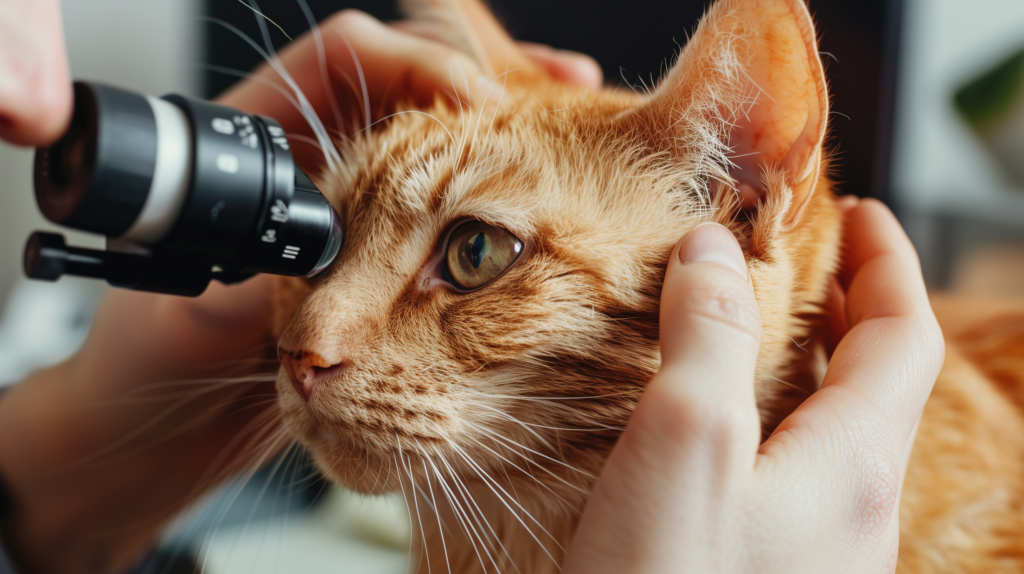
Ophthalmoscope exam:
- Examine internal eye structures
- Check retina, lens, optic nerve
Fluorescein stain:
- Special dye reveals corneal ulcers
- Shows scratches or defects
- Glows under special light
Schirmer tear test:
- Measures tear production
- Diagnoses dry eye
Tonometry:
- Measures eye pressure
- Diagnoses glaucoma
Cultures:
- If bacterial infection suspected
- Determines which antibiotic to use
Treatment Options
Medications:
Antibiotic eye drops or ointment:
- For bacterial infections
- Applied multiple times daily
- Usually 7-14 days
Antiviral medications:
- For herpesvirus infections
- Oral or topical
- May need long-term management
Anti-inflammatory eye drops:
- Reduce swelling and discomfort
- Often corticosteroids
- Used carefully (can worsen some conditions)
Glaucoma medications:
- Lower eye pressure
- May be drops or oral medications
- Often lifelong treatment
Pain medication:
- Oral pain relievers
- Makes cat more comfortable
- Especially for ulcers or uveitis
Procedures:
Flushing eye:
- Removes debris and discharge
- May require sedation
Removing foreign objects:
- If something lodged in eye
- Requires delicate technique
Surgery:
- Entropion correction
- Removing tumors
- Repairing severe injuries
- Enucleation (eye removal) if eye severely damaged and painful
Administration of Eye Medications
Proper technique ensures effectiveness.
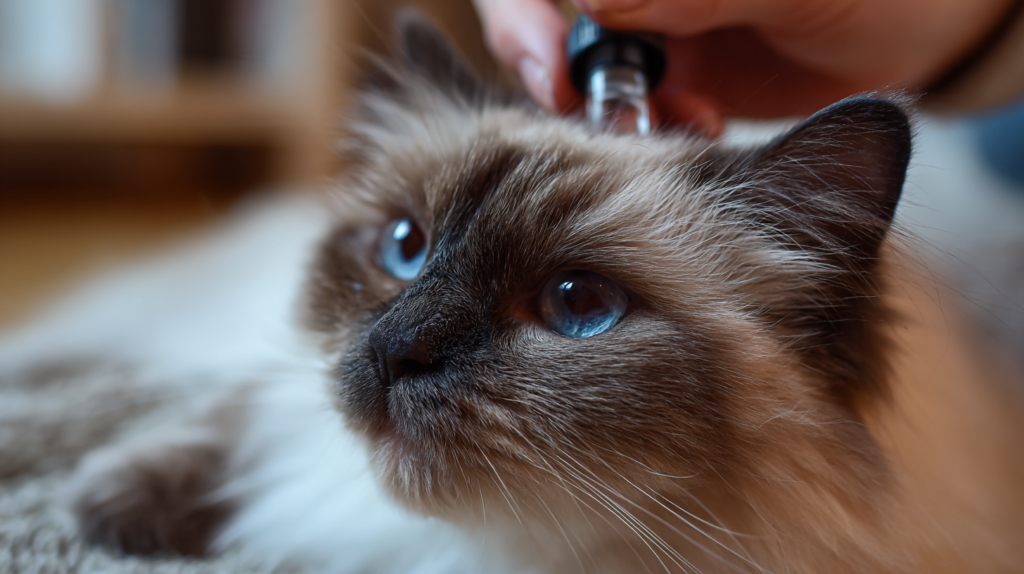
How to Apply Eye Drops
Preparation:
- Wash hands
- Have medication ready
- Position cat comfortably
- May need helper or towel wrap
Technique:
- Hold bottle in dominant hand
- Use other hand to gently lift cat’s head up
- Pull lower eyelid down slightly with thumb
- Hold dropper above eye (don’t touch eye)
- Squeeze prescribed number of drops
- Release head, let cat blink
- Wipe away excess
Tips:
- Steady hands on cat’s head
- Approach from behind so cat doesn’t see dropper
- Treat and praise after
How to Apply Eye Ointment
Similar process:
- Hold tube above eye
- Gently pull lower eyelid down
- Squeeze ribbon of ointment along inner eyelid
- Release, let cat blink to distribute
- Vision may be temporarily blurry (normal)
Give medications at prescribed times.
Never stop early even if eye looks better.
Preventing Eye Problems
1. Vaccination
Protect against major viral causes:
- FVRCP vaccine covers herpesvirus and calicivirus
- Keep vaccinations current
- Especially important for cats going outdoors or multi-cat homes
2. Minimize Fighting
Scratches from fights common cause of eye injuries.
Prevention:
- Keep cats indoors
- Spay/neuter to reduce aggression
- Provide resources in multi-cat homes
- Separate cats that fight
3. Safe Environment
Remove hazards:
- Sharp objects at cat eye level
- Toxic plants
- Harmful chemicals
Supervise outdoor time.

4. Manage Stress
Stress triggers herpesvirus flare-ups in carrier cats.
Stress reduction:
- Maintain routine
- Provide hiding places
- Minimize changes
- Use pheromone diffusers if needed
5. Good Nutrition
Supports immune system.
L-lysine supplements:
- May help manage chronic herpesvirus infections
- Reduces severity and frequency of flare-ups
- Discuss with vet
6. Regular Veterinary Care
Annual exams:
- Early detection of problems
- Especially important for senior cats
- Eye exams part of routine checkup
Special Considerations
Kittens
More vulnerable to infections.
Upper respiratory infections common:
- Highly contagious in shelters
- Can be severe in young kittens
- May cause permanent eye damage if untreated
Prompt treatment crucial.
Senior Cats
Higher risk of:
- High blood pressure (can affect eyes)
- Diabetes (affects eyes)
- Kidney disease (can cause high blood pressure)
- Cancer
Regular vet exams important.
Flat-Faced Breeds
Persians, Himalayans, Exotic Shorthairs:
Predisposed to:
- Chronic tearing
- Entropion
- Corneal ulcers
- Blocked tear ducts
Require:
- Daily face cleaning
- More frequent vet checks
- Careful monitoring
Chronic Herpesvirus Carriers
Many cats infected with herpesvirus as kittens.
Virus remains dormant, flares up with stress.
Management:
- L-lysine supplements
- Stress reduction
- Prompt treatment of flare-ups
- Antiviral medication during outbreaks
Cost of Treatment
Varies by location and condition.
Typical Costs
Initial vet visit:
- Exam: $50-100
- Fluorescein stain: $20-40
- Medications: $20-60
- Total: $90-200
Specialty exams:
- Ophthalmologist referral: $150-300
- Advanced testing: $100-300
Surgery:
- Entropion repair: $500-1,500
- Enucleation: $800-2,000
Treatment for chronic conditions can be ongoing expense.
Common Questions
Q: Can cat eye infections spread to humans?
A: Some bacterial infections can. Wash hands after handling infected cat. Most viral cat eye infections don’t infect humans.
Q: Will my cat’s eye infection go away on its own?
A: Some mild irritations may, but most infections need treatment. Don’t risk vision loss—see vet.
Q: Can I use my eye drops on my cat?
A: No. Many human medications are toxic to cats. Use only vet-prescribed medications.
Q: How long does it take for eye infection to heal?
A: With treatment, improvement usually within 3-5 days. Complete healing 7-14 days. Chronic conditions may take longer.
Q: Is eye discharge always an infection?
A: Not always. Can be allergies, irritation, or blocked ducts. But discharge warrants vet evaluation to determine cause.
Q: Can cats go blind from eye infections?
A: Yes, if untreated or severe. Glaucoma, uveitis, and severe ulcers can cause permanent vision loss.
Q: My cat keeps getting eye infections. Why?
A: Likely chronic herpesvirus carrier. Virus flares up with stress. May need long-term management with L-lysine and stress reduction.
The Bottom Line
Cat eye problems range from minor irritations to vision-threatening emergencies.
Key takeaways:
Common symptoms: Squinting, discharge, redness, tearing, third eyelid visible.
Major causes: Viral infections (herpesvirus, calicivirus), bacterial infections, injuries, ulcers, glaucoma.
See vet within 24 hours for any discharge, persistent squinting, or redness.
Emergency care immediately for cloudiness, bulging, severe pain, or injury.
Home care only for very mild symptoms: Gentle cleaning with warm water, warm compresses.
Never use human eye drops without vet approval.
Treatment usually involves: Antibiotic or antiviral medications applied directly to eye.
Complete full course of medications even if improvement seen.
Prevention: Vaccination, indoor housing, minimize stress, regular vet care.
Eyes are delicate and precious. When in doubt, see your veterinarian.
Has your cat had eye problems? Share your experience in the comments!
This article provides general information. Eye problems require veterinary diagnosis and treatment. Always consult your veterinarian if your cat shows eye symptoms.