Why Is My Cat Not Using the Litter Box? 7 Reasons & Solutions
Your once perfectly litter-trained cat has suddenly started peeing on the carpet, your bed, or other inappropriate places. It’s frustrating, messy, and concerning—but it’s also one of the most common issues cat owners face.
Litter box avoidance is rarely about “bad behavior.” It’s your cat’s way of telling you something is wrong—whether medical, environmental, or emotional. This guide helps you identify the root cause and provides proven solutions to get your cat back to using their litter box consistently.
New cat? Find a name as unique as their character.
Browse 600+ cat names by gender and personality type — because every cat has a story.
Try Pet Name FinderRule Out Medical Issues First
Before assuming it’s behavioral, always consult a vet.
Urinating outside the litter box can indicate:
- Urinary tract infection (UTI) – Pain while urinating
- Bladder stones or crystals – Extremely painful
- Kidney disease – More common in senior cats
- Diabetes – Increased urination
- Arthritis – Difficulty climbing into box
- Cognitive decline – Common in elderly cats
Red flags requiring immediate vet attention:
- Blood in urine
- Straining to urinate with little output
- Crying or vocalizing while in the box
- Excessive licking of genital area
- Sudden increase in water consumption
If medical issues are ruled out, it’s time to investigate behavioral and environmental causes.
Reason 1: Dirty Litter Box
The Problem:
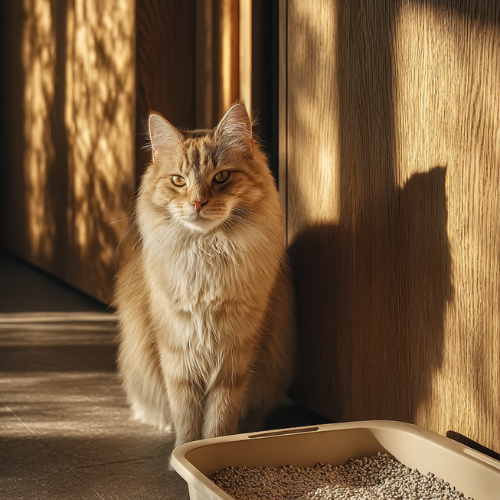
Cats are fastidious creatures. A litter box that seems “fine” to you might be repulsive to your cat. They have a sense of smell 14 times stronger than humans.
Signs This Is the Issue:
- Cat approaches the box but walks away without using it
- Cat digs excessively before or after using it
- Cat perches on the edge to avoid touching the litter
- Elimination happens right next to (but not in) the box
The Solution:
Scooping frequency:
- Minimum: Once daily (twice for multiple cats)
- Ideal: After every use if possible
- Senior or sick cats: Increase to 3x daily
Full litter replacement:
- Clumping litter: Replace completely every 2-3 weeks
- Non-clumping: Replace weekly
- Wash box with mild, unscented soap monthly
Number of boxes:
- Golden rule: # of cats + 1
- Example: 2 cats = 3 litter boxes
- Multi-level homes: At least one box per floor
Pro tip: Use a litter liner or disposable box to make cleaning easier.

Reason 2: Wrong Type of Litter
The Problem:
Cats have strong preferences for litter texture, scent, and depth. A sudden change or a type they dislike can cause avoidance.
Signs This Is the Issue:
- Problem started after switching litter brands
- Cat scratches around the box but won’t step in
- Cat uses the box inconsistently
The Solution:
Preferred litter characteristics:
- Texture: Fine, sand-like (most cats prefer clumping clay)
- Scent: Unscented (cats hate perfumes)
- Depth: 2-3 inches (not too shallow, not too deep)
How to transition to a new litter:
- Mix 25% new litter with 75% old litter
- Gradually increase new litter ratio over 7-10 days
- Never switch abruptly
Popular cat-approved litters:
- Dr. Elsey’s Precious Cat (unscented, fine texture)
- World’s Best Cat Litter (natural, low dust)
- Arm & Hammer Clump & Seal (if cat tolerates light scent)
Avoid:
- Heavily scented litters
- Crystal/silica litters (too rough for sensitive paws)
- Pellets (most cats dislike the texture)
Reason 3: Litter Box Location Issues
The Problem:
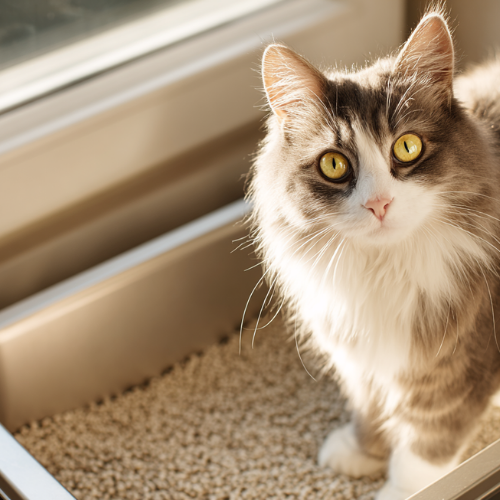
The litter box is in a noisy, high-traffic, or intimidating area. Cats need privacy and a sense of security when eliminating.
Signs This Is the Issue:
- Cat uses the box only when no one is around
- Cat seems nervous approaching the box
- Accidents happen in quieter, hidden areas (closets, behind furniture)
The Solution:
Ideal litter box placement:
- Quiet area – Away from washing machines, furnaces, loud appliances
- Low traffic – Not in hallways or main living areas
- Escape routes – Never in corners where cat could feel trapped
- Away from food/water – Cats won’t eliminate near their eating area
- Accessible – Easy for cat to reach at all times
Multiple cat households:
- Spread boxes throughout the home
- Don’t place all boxes in one room
- Ensure timid cats have private access (separate from dominant cats)
What to avoid:
- Basement corners (scary for cats)
- Near noisy appliances (dryer, furnace)
- High-traffic areas
- Dead-end corners with no escape
Pro tip: If your cat likes a specific “accident spot,” try placing a litter box there temporarily.

Reason 4: Litter Box Design Problems
The Problem:
The box itself is uncomfortable, too small, or has features your cat dislikes (covered, automatic, liner, etc.).
Signs This Is the Issue:
- Cat hangs over the edge while using the box
- Cat refuses to use a covered box
- Larger cats struggle to fit comfortably
The Solution:
Size matters:
- Minimum: 1.5x the length of your cat (nose to base of tail)
- Ideal: Bigger is always better
- Large breeds (Maine Coon, Ragdoll): Use storage bins as oversized boxes
Covered vs uncovered:
- Most cats prefer: Uncovered (no trapped odors, better visibility)
- Some cats like covered: Provides privacy, contains scatter
- Test both if your cat is avoiding the box
Automatic litter boxes:
- Some cats love them, others are terrified
- Introduce slowly with manual box still available
- Not recommended for anxious or elderly cats
Box liners:
- Many cats hate them (claws get caught)
- Skip the liner unless your cat doesn’t mind
Entry height:
- Senior/arthritic cats: Low-entry or cut-down boxes
- Kittens: Shallow boxes they can easily climb into

Reason 5: Stress, Anxiety, or Environmental Changes
The Problem:
Cats are highly sensitive to changes in their environment. Stress can trigger inappropriate elimination as a coping mechanism or territorial marking.
Common stress triggers:
- New pet in the household
- New baby or family member
- Moving to a new home
- Renovation or furniture rearrangement
- Schedule changes (owner working different hours)
- Loud noises (construction, fireworks)
- Conflict with another cat in multi-cat homes
Signs This Is the Issue:
- Accidents started after a specific event/change
- Cat is also showing other stress signs (hiding, decreased appetite, over-grooming)
- Urine is found on owner’s belongings (bed, clothes, couch)
The Solution:
Reduce stressors:
- Maintain consistent routines (feeding, playtime)
- Provide safe hiding spots (cat trees, covered beds)
- Use pheromone diffusers (Feliway – clinically proven to reduce stress)
For new pets/babies:
- Gradual introduction over 2-4 weeks
- Give cat a “safe room” where they can retreat
- Maintain one-on-one attention with your cat
For multi-cat conflict:
- Separate resources (food, water, litter boxes)
- Provide vertical territory (cat trees, shelves)
- Consider temporary separation if aggression is severe
Medication options (vet consultation required):
- Anti-anxiety medication for severe cases
- Calming supplements (L-theanine, tryptophan)
Reason 6: Territorial Marking vs. Inappropriate Elimination
Understanding the Difference:
Inappropriate elimination (medical/behavioral):
- Cat squats to urinate
- Large volume of urine
- Happens on horizontal surfaces (floor, carpet, bed)
Territorial marking (behavioral/hormonal):
- Cat backs up to vertical surfaces (walls, furniture)
- Small amount of urine (spray)
- Tail quivers during spraying
- More common in unneutered males
The Solution for Marking:
1. Spay/Neuter
- Reduces marking by 90% in males
- Reduces by 95% in females
- Most effective if done before 6 months
2. Clean marked areas thoroughly
- Use enzyme-based cleaner (Nature’s Miracle, Rocco & Roxie)
- Never use ammonia-based cleaners (smells like urine to cats)
- Consider blacklight to find all marked spots
3. Block access to marked areas
- Temporarily restrict access
- Place aluminum foil or double-sided tape (cats dislike the texture)
4. Increase environmental enrichment
- More playtime
- Additional vertical territory
- Interactive toys
5. Address outdoor cat triggers
- Close blinds if outdoor cats are visible
- Motion-activated sprinklers to deter strays

Reason 7: Senior Cat Cognitive Decline or Mobility Issues
The Problem:
Older cats (10+ years) may develop arthritis, cognitive dysfunction, or other age-related issues affecting litter box use.
Signs This Is the Issue:
- Cat is senior (10+ years)
- Difficulty jumping or climbing
- Confusion or disorientation
- Accidents near (but not in) the litter box
The Solution:
Make boxes more accessible:
- Low-entry boxes or cut-down storage bins
- Place boxes on every floor of the home
- Add more boxes closer to where the cat spends time
Pain management:
- Vet-prescribed pain medication for arthritis
- Joint supplements (glucosamine, chondroitin)
- Heated beds for comfort
Cognitive support:
- Nightlights (cognitive decline affects nighttime navigation)
- Consistent routine
- Prescription diet (Hill’s b/d) for cognitive health
Waterproof protection:
- Waterproof mattress covers
- Puppy pads in accident-prone areas (temporary solution)
Step-by-Step Troubleshooting Plan
Week 1: Rule out medical
- Vet visit for urinalysis and exam
Week 2: Address cleanliness
- Increase scooping frequency
- Add more boxes
- Replace all litter
Week 3: Optimize environment
- Evaluate box locations
- Try different litter types
- Consider box size/style changes
Week 4: Reduce stress
- Add Feliway diffuser
- Increase playtime and enrichment
- Address any household changes
What NOT to Do
❌ Never punish your cat – Creates fear and worsens the problem
❌ Don’t rub their nose in it – Cruel and ineffective
❌ Avoid sudden litter changes – Transition gradually
❌ Don’t use ammonia cleaners – Smells like urine, encourages re-marking
❌ Never restrict water access – Dangerous and won’t solve the issue
When to Consult a Veterinary Behaviorist
If you’ve tried everything and the problem persists for more than 4-6 weeks, consider a certified veterinary behaviorist. They can:
- Conduct in-home assessments
- Prescribe anti-anxiety medication
- Create customized behavior modification plans
The Bottom Line
Litter box problems are solvable, but they require patience, consistency, and detective work. Most cases resolve by addressing one of these seven causes:
- Medical issues
- Dirty box
- Wrong litter
- Poor location
- Box design
- Stress/anxiety
- Senior cat challenges
Start with a vet visit, then systematically address environmental factors. With the right changes, most cats return to perfect litter box habits within 4-6 weeks.
Has your cat struggled with litter box issues? What worked for you? Share your experience in the comments!
This article is for informational purposes. Always consult your veterinarian for medical concerns or persistent behavioral issues.