Dog Ear Infection: Causes, Symptoms & Treatment Guide
Your dog is shaking their head constantly, scratching at their ears, and there’s a strange odor. You look inside and see redness and discharge. Your dog has an ear infection.
Ear infections are one of the most common reasons dogs visit the veterinarian, affecting up to 20% of dogs. While painful and uncomfortable, ear infections are treatable when caught early.
But leaving them untreated can lead to serious complications including hearing loss and chronic pain.
This complete guide covers everything about dog ear infections: how to recognize symptoms, what causes them, treatment options, and most importantly, how to prevent recurring infections.
New puppy? Find a name that fits their personality.
Browse 600+ dog names by gender and personality type — playful, calm, bold, elegant, funny or mysterious.
Try Pet Name FinderWhat Is a Dog Ear Infection?
Ear infections (otitis) are inflammation of the ear canal.
Three types based on location:
Otitis externa:
- Most common (affects 80% of ear infections)
- Inflammation of external ear canal
- Between ear opening and eardrum
- Easiest to treat
Otitis media:
- Middle ear infection
- Behind eardrum
- Often follows untreated externa
- More serious
Otitis interna:
- Inner ear infection
- Deepest part of ear
- Affects balance and coordination
- Most serious, can cause permanent damage
Most infections start as otitis externa and progress deeper if untreated.
Symptoms of Ear Infection
Behavioral Signs
Head shaking:
- Frequent, vigorous shaking
- Trying to dislodge discomfort
- Most obvious sign
Ear scratching:
- Pawing at ears constantly
- Rubbing ears on furniture or floor
- May cause self-injury from scratching
Head tilt:
- Holding head to one side
- Indicates more serious infection
- May affect balance
Pain when touched:
- Yelps or pulls away when ears touched
- Reluctance to have ears examined
- May become aggressive due to pain
Behavior changes:
- Lethargy
- Depression
- Loss of appetite
- Unusual irritability
Physical Signs
Looking inside the ear:
Redness:
- Pink to dark red inflammation
- Swollen ear canal
Discharge:
- Yellow, brown, or bloody
- Thick or crusty
- May have foul odor
Odor:
- Yeasty or sweet smell (yeast infection)
- Foul, rotten smell (bacterial infection)
- Strong, unpleasant
Swelling:
- Ear canal narrowed
- Outer ear flap swollen or hot
Crust or scabs:
- Around ear opening
- On ear flap
Hair loss:
- Around ears from scratching
Advanced Symptoms
If infection severe or spreads to middle/inner ear:
Balance problems:
- Stumbling, falling
- Walking in circles
- Leaning to one side
Hearing loss:
- Not responding to name
- Doesn’t react to sounds
- Temporary or permanent
Eye problems:
- Drooping eyelid on affected side
- Rapid eye movements (nystagmus)
- Indicates inner ear involvement
Facial paralysis:
- One side of face droops
- Nerve damage from infection
- Serious complication
If you see these symptoms, seek emergency veterinary care.

Common Causes of Ear Infections
1. Bacteria
Most common cause of ear infections.
Common bacteria:
- Staphylococcus
- Streptococcus
- Pseudomonas
- E. coli
How infections start:
- Normal bacteria overgrow when conditions change
- Moisture, debris, or inflammation create environment
- Bacteria multiply rapidly
Bacterial infections often:
- Have yellow or green discharge
- Smell foul
- Cause severe inflammation
2. Yeast
Second most common cause.
Malassezia yeast:
- Naturally present in small amounts
- Overgrows when conditions favorable
- Warm, moist environments ideal
Yeast infections:
- Brown, waxy discharge
- Sweet or musty odor
- Very itchy
- Often chronic and recurring
More common in dogs with allergies.
3. Allergies
Leading underlying cause of recurring ear infections.
Types:
Food allergies:
- Beef, chicken, dairy, wheat common triggers
- Cause inflammation in ears
- Create environment for infection
Environmental allergies:
- Pollen, dust mites, mold
- Seasonal or year-round
- Ears become inflamed and infected
Contact allergies:
- Shampoos, cleaning products
- Directly irritate ear tissue
Managing allergies essential to preventing recurring infections.
4. Ear Mites
Parasites living in ear canal.
More common in:
- Puppies
- Outdoor dogs
- Cats (can spread to dogs)
Symptoms:
- Intense itching
- Dark, coffee-ground-like discharge
- Highly contagious
Treatment:
- Anti-parasitic medication
- Treat all pets in household
5. Foreign Objects
Objects lodged in ear canal:
- Grass seeds (foxtails)
- Plant material
- Dirt, small pebbles
- Cotton from cleaning
Cause:
- Direct irritation
- Secondary infection
- Pain and inflammation
Requires removal by veterinarian.

6. Excessive Moisture
Ears that don’t dry properly:
- Swimming frequently
- Bathing
- Humid climate
- Rain exposure
Creates perfect environment:
- Bacteria and yeast thrive in moisture
- “Swimmer’s ear”
Prevention crucial for water-loving breeds.
7. Ear Anatomy
Some breeds predisposed due to ear structure:
Floppy ears:
- Basset Hounds, Cocker Spaniels, Beagles
- Cover ear canal
- Reduce airflow
- Trap moisture
Hairy ear canals:
- Poodles, Schnauzers
- Hair blocks ventilation
- Traps debris and moisture
Narrow ear canals:
- Shar-Peis, Bulldogs
- Poor air circulation
- Difficult to clean
8. Hormonal Imbalances
Thyroid disorders:
- Hypothyroidism common in dogs
- Affects skin and ear health
- Predisposes to infections
Cushing’s disease:
- Excess cortisol
- Weakens immune system
- Increases infection susceptibility
9. Autoimmune Diseases
Immune system attacks ear tissue:
- Pemphigus
- Lupus
- Causes inflammation
- Secondary infections result
Requires immunosuppressive treatment.
10. Tumors or Polyps
Growths in ear canal:
- Block drainage
- Trap debris
- Cause chronic infections
More common in older dogs.
May require surgical removal.
When to See the Veterinarian
Always see vet for suspected ear infection.
Immediate veterinary care if:
Severe pain:
- Dog cries when ears touched
- Won’t allow examination
- Aggressive due to pain
Balance problems:
- Stumbling, falling
- Walking in circles
- Tilting head severely
Facial paralysis or drooping:
- One-sided facial droop
- Eye problems
- Indicates nerve involvement
Bleeding from ear:
- May indicate ruptured eardrum
- Trauma
- Serious infection
Swollen, hot ear flap:
- May be ear hematoma
- Blood-filled pocket
- Requires drainage
Symptoms lasting more than 2 days.
First-time ear infection or chronic recurring infections.
Veterinary Diagnosis
Examination
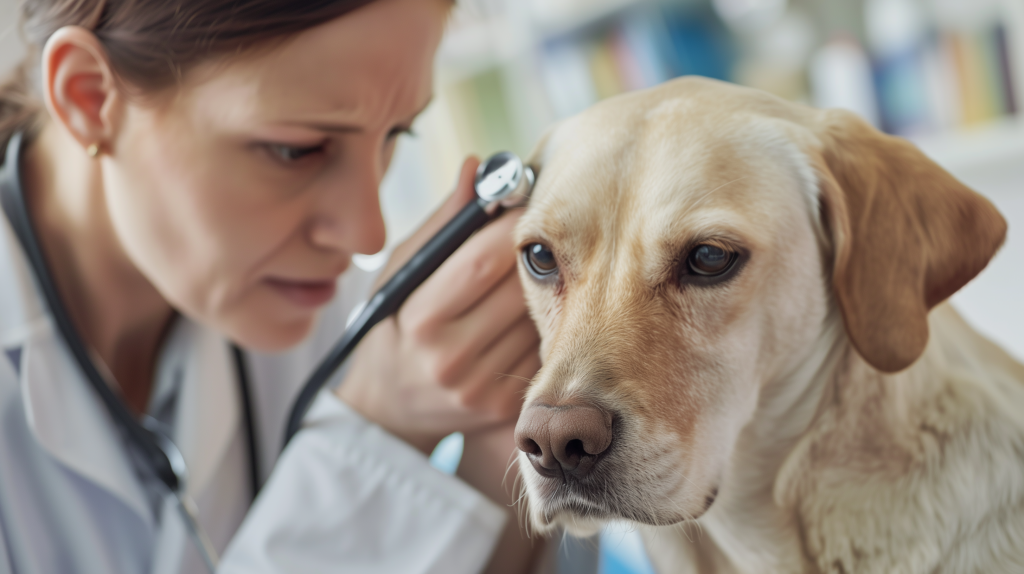
Otoscopic exam:
- Veterinarian uses otoscope
- Lighted instrument to visualize ear canal
- Checks for foreign objects, tumors, eardrum status
May require sedation:
- If dog in severe pain
- Allows thorough examination
- Permits deep cleaning if needed

Diagnostic Tests
Cytology:
- Sample of discharge examined under microscope
- Identifies bacteria, yeast, or mites
- Determines infection type
- Guides treatment choice
Culture and sensitivity:
- For resistant or chronic infections
- Identifies specific bacteria
- Tests which antibiotics work
- Takes several days for results
Allergy testing:
- If recurring infections suggest allergies
- Blood tests or skin testing
- Identifies triggers
Imaging:
- X-rays or CT scans
- For chronic cases or suspected middle ear involvement
- Identifies masses, polyps, or structural problems
Treatment Options
Medications
Topical ear medications:
Antibiotics:
- For bacterial infections
- Applied directly to ear canal
- Common: gentamicin, enrofloxacin
Antifungals:
- For yeast infections
- Common: clotrimazole, miconazole
Anti-inflammatory:
- Reduces swelling and pain
- Often corticosteroids
- Improves comfort quickly
Many ear medications are combination products:
- Antibiotic + antifungal + steroid
- Treats multiple causes simultaneously
- Examples: Tresaderm, Mometamax, Easotic
Application:
- Clean ear first (vet demonstrates technique)
- Apply prescribed amount
- Massage base of ear
- Let dog shake head
- Usually twice daily for 7-14 days
Oral medications:
For severe, deep, or chronic infections:
Oral antibiotics:
- For middle ear infections
- Resistant bacteria
- Severe cases
- 2-6 weeks typically
Oral antifungals:
- For systemic yeast issues
- Chronic yeast infections
Pain medication:
- NSAIDs for pain and inflammation
- Important for comfort
Allergy medications:
- Antihistamines
- Apoquel or Cytopoint
- Address underlying cause
Ear Cleaning
Proper cleaning essential to treatment success.
Veterinary cleaning:
- Deep cleaning under sedation sometimes necessary
- Removes debris and discharge
- Allows medication to contact tissue
- Your vet will demonstrate home cleaning
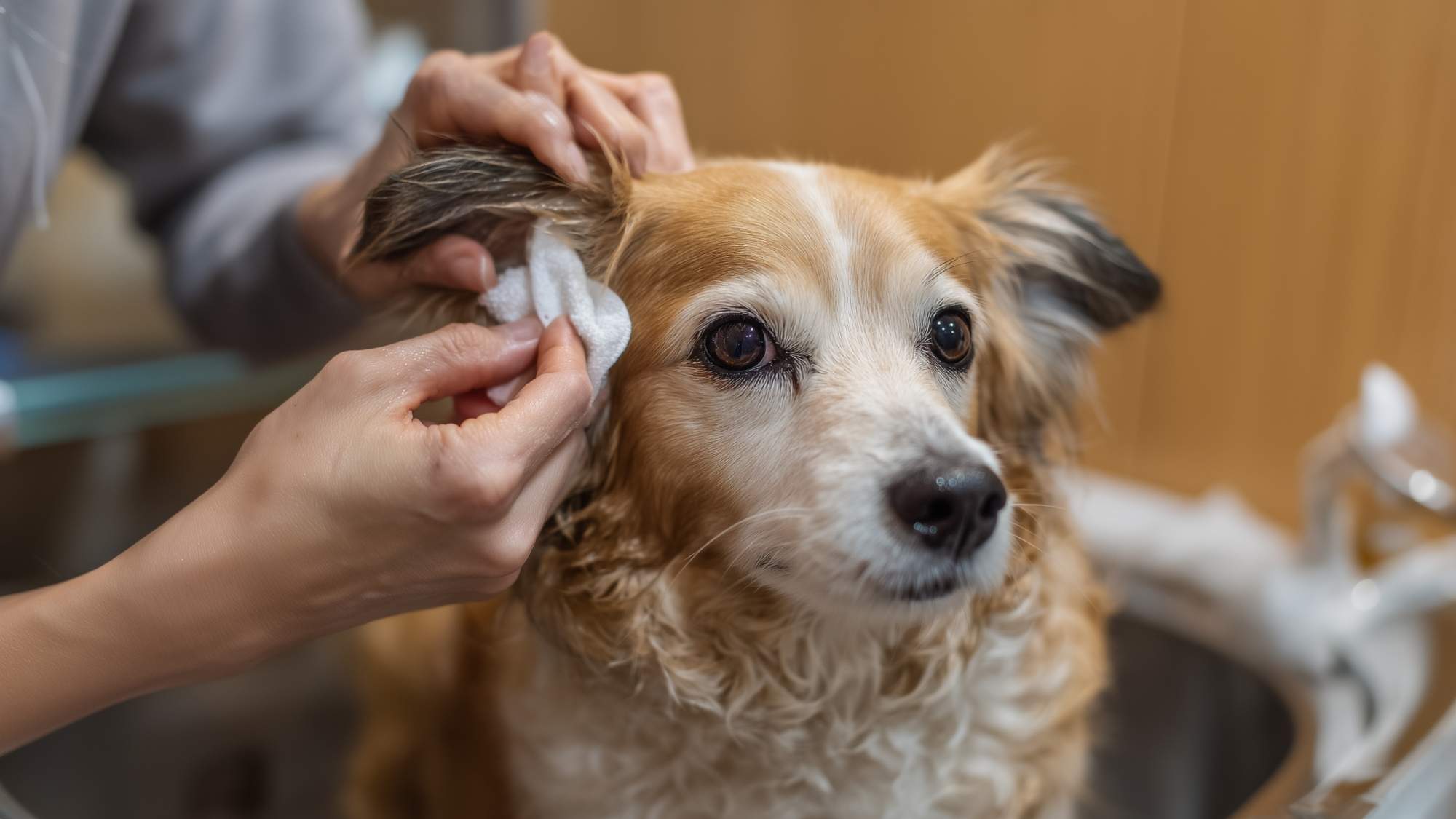
Home cleaning:
- Use veterinary ear cleaner only
- Never hydrogen peroxide, alcohol, or vinegar
- Fill ear canal with cleaner
- Massage base of ear
- Let dog shake
- Wipe outer ear with cotton ball
- Frequency per vet instructions
Do not clean infected ears without veterinary guidance.
Surgery
Rare, but necessary for:
Chronic infections unresponsive to treatment:
- Total ear canal ablation (TECA)
- Removes diseased ear canal tissue
- Last resort
Tumors or polyps:
- Surgical removal
- Biopsy
Ear hematomas:
- Drainage and suturing
Home Care and Monitoring
Medication Administration
Tips for success:
Restraint:
- Have helper hold dog gently
- Wrap in towel if needed
- Stay calm; dog senses your stress
Technique:
- Lift ear flap up and back
- Insert tip just inside opening
- Squeeze prescribed amount
- Massage ear base for 30 seconds
- Release and let dog shake
- Wipe excess from outer ear
Timing:
- Give medications at same times daily
- Complete full course even if improved
- Stopping early allows infection to return
Reward:
- Treat and praise after medication
- Makes future treatments easier
Preventing Scratching
Scratching worsens infection and causes self-injury.
E-collar (cone):
- Prevents dog from scratching ears
- Usually necessary during treatment
- Temporary but important
Alternatives:
- Soft recovery collar
- Inflatable donut collar
- Whatever prevents scratching
Monitoring Response
Watch for improvement:
Within 3-5 days:
- Less head shaking
- Reduced scratching
- Less discharge
- Decreased odor
If no improvement after 3-5 days, contact vet.
Possible reasons:
- Wrong medication
- Resistant infection
- Underlying cause not addressed
- Medication not reaching deep enough
Follow-Up Exams
Recheck exam essential:
- Usually 10-14 days after starting treatment
- Vet verifies infection cleared
- Examines ear canal thoroughly
- May need extended treatment
Never stop medications early even if dog seems better.

Preventing Ear Infections
Prevention far better than treatment.
1. Regular Ear Checks
Weekly inspection:
- Look inside ears
- Check for redness, discharge, odor
- Early detection prevents severe infections
What’s normal:
- Pink, healthy tissue
- Little to no wax
- No odor
- No discomfort when touched
2. Proper Ear Cleaning
Routine cleaning for prone breeds:
- Use veterinary ear cleaner
- After swimming or bathing
- Weekly or as recommended by vet
Never over-clean:
- Can irritate ears
- Disrupts natural balance
- Clean only as needed
Technique:
- Fill ear canal with cleaner
- Massage base
- Let dog shake
- Wipe outer ear
- Never insert cotton swabs deep into canal
3. Keep Ears Dry
After water exposure:
Swimming or bathing:
- Dry ears thoroughly
- Use drying ear solution
- Lift ear flaps to air dry
Prevent water entry during baths:
- Place cotton balls gently in ear opening
- Remove after bath
4. Hair Management
For hairy-eared breeds:
Regular plucking or trimming:
- Poodles, Schnauzers need this
- Professional groomer can do it
- Improves ventilation
- Reduces moisture and debris trapping
5. Allergy Management
If allergies cause infections:
Food allergies:
- Elimination diet trial
- Hypoallergenic food
- Novel protein diets
Environmental allergies:
- Medications: Apoquel, Cytopoint
- Immunotherapy (allergy shots)
- Frequent bathing to remove allergens
Managing allergies prevents recurring infections.
6. Address Underlying Conditions
Hormonal disorders:
- Treat hypothyroidism
- Manage Cushing’s disease
Regular veterinary care:
- Annual exams
- Blood work for seniors
- Early disease detection
Breed-Specific Considerations
Floppy-Eared Breeds
Cocker Spaniels, Basset Hounds, Beagles:
Higher risk due to:
- Poor air circulation
- Trapped moisture
- Warm, dark environment
Prevention:
- More frequent ear checks
- Regular cleaning
- Dry thoroughly after water
- Consider tying ears up occasionally for airflow
Hairy-Eared Breeds
Poodles, Schnauzers, Shih Tzus:
Ear hair traps debris.
Management:
- Regular hair removal
- Professional grooming every 6-8 weeks
- Daily ear checks
Water-Loving Breeds
Labradors, Golden Retrievers, Spaniels:
Frequent swimming increases risk.
Prevention:
- Dry ears after every swim
- Use drying ear products
- More frequent ear cleaning
Chronic or Recurring Infections
Some dogs suffer repeated ear infections.
Why Infections Recur
Underlying allergies:
- Most common cause
- Must be managed long-term
Resistant bacteria or yeast:
- Require culture and sensitivity testing
- May need different medications
Ear anatomy:
- Narrow canals
- Excessive hair
- May benefit from surgery in severe cases
Incomplete treatment:
- Stopping medications too early
- Infection returns
Did your dog eat something dangerous? Find out right now.
Enter what they ate and their weight — get an instant toxicity assessment for 35+ substances.
Check Toxicity NowLong-Term Management
For chronic cases:
Regular vet visits:
- Monitor ear health
- Adjust treatment as needed
Maintenance cleaning:
- Weekly or as directed
- Prevents buildup
Allergy control:
- Ongoing medication
- Diet management
Possible long-term medication:
- Some dogs need maintenance ear drops
Consider:
- Specialist referral (veterinary dermatologist)
- Advanced diagnostics
- Surgical options if quality of life severely affected
Cost of Treatment
Veterinary costs vary by location and severity.
Initial Visit
Examination and diagnosis:
- Office visit: $50-100
- Cytology: $30-50
- Ear cleaning: $25-75
- Total initial: $100-225
Medications
Ear drops:
- Generic: $20-40
- Brand name: $50-100
- Course: 7-14 days
Oral antibiotics:
- $20-60 for course
Pain medication:
- $15-40
Total medication: $50-200
Follow-Up
Recheck exam:
- $50-100
Chronic Cases
Culture and sensitivity:
- $100-200
Specialist referral:
- $150-300 initial consult
Allergy testing:
- $200-500
Surgery (TECA):
- $1,500-3,000+ per ear
Managing chronic infections expensive but necessary for quality of life.

Common Questions
Q: Can ear infections go away on their own?
A: No. Ear infections require treatment. They won’t resolve without medication and may worsen, potentially causing permanent damage.
Q: Are ear infections painful for dogs?
A: Yes, very painful. Infected ears are inflamed, swollen, and sensitive. This is why treatment should start promptly.
Q: Can I use human ear infection medicine on my dog?
A: No. Dog ear anatomy differs from humans. Use only veterinarian-prescribed medications. Human medications may be ineffective or harmful.
Q: How long does it take for ear infection to clear?
A: With proper treatment, improvement usually within 3-5 days. Complete resolution typically 10-14 days. Chronic cases may take longer.
Q: Can ear infections cause permanent hearing loss?
A: Yes, if untreated or chronic. Severe infections can damage structures in ear, causing permanent hearing loss.
Q: My dog’s ear infection keeps coming back. Why?
A: Recurring infections usually indicate underlying cause not addressed—most commonly allergies. Also resistant bacteria, incomplete treatment, or anatomical issues. Needs thorough workup.
Q: Is it okay to clean my dog’s ears with hydrogen peroxide?
A: No. Hydrogen peroxide can damage ear tissue and isn’t effective cleanser. Use only veterinary ear cleaning solutions.
The Bottom Line
Ear infections are painful but treatable conditions requiring prompt veterinary attention.
Key takeaways:
Symptoms: Head shaking, scratching, odor, discharge, redness, pain.
Common causes: Bacteria, yeast, allergies, ear mites, moisture, anatomy.
Always see vet for diagnosis and treatment. Do not attempt to treat at home without veterinary guidance.
Treatment: Topical and/or oral medications, cleaning, addressing underlying causes.
Complete full course of medications even if dog improves.
Prevention:
- Regular ear checks
- Proper cleaning when needed
- Keep ears dry
- Manage allergies
- Address underlying health conditions
Chronic infections require long-term management with veterinary guidance.
Early treatment prevents complications including hearing loss and permanent damage.
Work closely with your veterinarian for best outcomes.
Has your dog had ear infections? What worked for you? Share experiences in comments!
This article provides general information. Ear infections require veterinary diagnosis and treatment. Always consult your veterinarian if your dog shows signs of ear infection.