Senior Dog Care: Complete Guide to Keeping Your Aging Dog Healthy & Happy (2026)
- Quick Answer: Dogs are considered senior when they reach the last 25% of their expected lifespan – typically age 7-8 for large breeds and age 10-11 for small breeds. Senior dogs need twice-yearly vet visits instead of annual ones, a diet review, joint support, adjusted exercise, and regular monitoring for the most common age-related conditions: arthritis, dental disease, cognitive decline, kidney disease, and cancer. Most changes that come with aging are manageable when caught early – and the goal is not just more years, but better quality years.
- Expert Source: Age and care guidelines in this article are based on recommendations from the American Veterinary Medical Association (AVMA) senior pet care guidelines, VCA Animal Hospitals’ senior dog care protocols, Dr. Barri J. Morrison DVM’s clinical content on PetMD, and research on canine cognitive dysfunction published in the Journal of Veterinary Internal Medicine. Breed-size aging data follows American Kennel Club life expectancy tables.
- Last Updated: April 2026
There is a specific moment most dog owners can describe. You look at your dog one morning and notice the gray spreading across their muzzle. They hesitate at the bottom of the stairs. They take longer to get up after sleeping. Nothing is wrong, exactly – but something has shifted.
This is the beginning of the senior years. It happens gradually, then all at once.
The good news is that most of what aging does to dogs is manageable. The conditions that reduce quality of life in older dogs – arthritis, dental disease, cognitive decline, kidney issues – respond well to early detection and appropriate care. Dogs that receive proactive senior care consistently live more comfortably and often longer than those whose age-related changes are attributed to “just getting old” until a serious problem develops.
This guide covers everything you need to know to give your senior dog the best possible golden years.
When Is a Dog Considered “Senior”?
Age alone does not define seniority – size matters significantly because larger dogs age faster than smaller ones. The AVMA recommends considering a dog senior when they reach the last 25% of their expected lifespan for their breed and size.
| Size | Weight | Senior Age Begins |
|---|---|---|
| Small / Toy | Under 20 lbs | 8-11 years |
| Medium | 20-50 lbs | 8-10 years |
| Large | 50-90 lbs | 8-9 years |
| Giant | Over 90 lbs | 6-7 years |
A Chihuahua at age 9 may have many years of good health ahead. A Great Dane at age 6 is already in their senior stage. This size-based difference is not just about lifespan – it affects when age-related conditions typically appear and when preventive care adjustments should begin.
Beyond the numbers, watch your individual dog. Changes in energy, mobility, appetite, or sleep patterns often signal the transition to senior status regardless of age on paper.
The 5 Most Common Health Problems in Senior Dogs
Understanding what to watch for is the foundation of effective senior care.
1. Arthritis and Joint Disease
Arthritis is the most common condition in senior dogs. Studies suggest that over 80% of dogs show some degree of joint degeneration by age 8. It develops gradually, which means many owners attribute early signs to “slowing down with age” rather than recognizing them as treatable pain.
Signs to watch for: Stiffness after rest – especially in the mornings, reluctance to jump or use stairs, slower pace on walks, limping that is worse after exercise, licking or chewing at joints, behavioral changes like irritability or reduced interaction.
What helps: Veterinary pain management (non-steroidal anti-inflammatory medications), joint supplements with evidence-based ingredients (glucosamine, chondroitin, omega-3 fatty acids), orthopedic bedding, low-impact exercise like swimming or short leash walks, and home modifications like ramps and non-slip mats.
2. Dental Disease
Dental disease is nearly universal in dogs over age 7. Bacteria accumulate under the gumline, leading to periodontal disease that causes pain, tooth loss, and – critically – bacterial spread to the heart, kidneys, and liver through the bloodstream. A dog with severe dental disease is not just uncomfortable. Their systemic health is at risk.
Signs to watch for: Bad breath that is worse than normal, difficulty eating or dropping food, pawing at the mouth, inflamed or bleeding gums, discoloration of teeth, reduced interest in hard food or chews.
What helps: Twice-yearly professional dental cleanings under anesthesia, daily or three-times-weekly at-home tooth brushing, veterinarian-approved dental chews, and dental rinses. The cost of prevention is consistently less than the cost of treating advanced dental disease.
3. Cognitive Dysfunction Syndrome (CDS)
Canine cognitive dysfunction syndrome – often called doggy dementia – affects an estimated 14-35% of dogs over age 8, with prevalence increasing significantly after age 11. It is caused by physical changes in the aging brain similar to those seen in human Alzheimer’s disease.
Signs to watch for: Disorientation in familiar environments, getting stuck in corners or staring blankly at walls, disrupted sleep-wake cycles (awake and restless at night, sleeping more during the day), forgetting house training, reduced recognition of familiar people, loss of interest in play or interaction.
What helps: Veterinary diagnosis and possible medication (selegiline is the only FDA-approved drug for canine CDS), dietary antioxidants, continued mental stimulation through gentle puzzle toys and training, maintaining consistent routines, and environmental modifications for safety. CDS cannot be reversed but its progression can be slowed.
4. Kidney Disease
Chronic kidney disease is among the most common age-related organ conditions in dogs, particularly in breeds over age 7. The kidneys lose functional capacity gradually, and by the time clinical signs appear, significant damage has often already occurred. Blood and urine screening is the only reliable early detection method – symptoms alone are a late indicator.
Signs to watch for: Increased water consumption, increased urination or urinary accidents, reduced appetite, weight loss, vomiting, lethargy, poor coat condition.
What helps: Twice-yearly bloodwork and urinalysis to detect kidney value changes before symptoms appear, dietary adjustment to a kidney-supportive formula when indicated, increased hydration (wet food, water fountains), phosphorus management, and blood pressure monitoring. Early detection and dietary management can extend comfortable life significantly.
5. Cancer
Cancer becomes more common with age in dogs – it is estimated to affect approximately half of dogs over age 10. Many cancers are treatable or manageable when caught early, particularly certain skin tumors, mast cell tumors, and lymphoma. Regular veterinary examination, including palpation of lymph nodes and attention to new lumps, is the most important tool for early detection.
Signs to watch for: New lumps or bumps – any new growth should be examined by a vet, unexplained weight loss, changes in appetite, swollen lymph nodes, persistent lameness not explained by arthritis, difficulty breathing or swallowing.
What helps: Regular vet visits with thorough physical examination, prompt veterinary attention to any new masses, awareness that not all lumps are cancerous (lipomas are common, benign fat deposits in older dogs) but all need evaluation.

Senior Dog Vet Care: What Changes and When
Switch to Twice-Yearly Visits
The single most impactful change in senior care is increasing vet visits from once to twice yearly. Six months is a long time in the life of a senior dog. Conditions that are manageable when caught early – kidney disease, dental disease, thyroid dysfunction, early cancer – can become significantly harder to treat if six months pass between detection opportunities.
Senior wellness exams typically include a complete physical examination, blood panel including organ function values, urinalysis, blood pressure assessment, dental evaluation, weight check and body condition scoring, and discussion of any behavioral or mobility changes you have noticed.
Senior Blood Panel – Why It Matters
A basic senior blood panel checks kidney function (creatinine, BUN, SDMA), liver values, thyroid hormone levels, blood glucose, red and white blood cell counts, and protein levels. This gives your vet a baseline for your individual dog and allows them to detect trending changes over time even before values leave the normal range.
SDMA – a kidney function marker – detects kidney disease earlier than traditional creatinine testing, often by months to years. Ask your vet about including SDMA in your senior dog’s bloodwork if it is not already standard in their protocol.
Nutrition for Senior Dogs
Nutritional needs change with age. The key adjustments to consider:
Protein: Contrary to older belief, most senior dogs benefit from maintained or even higher-quality protein rather than protein restriction. Adequate protein supports muscle maintenance – muscle loss (sarcopenia) is a significant contributor to decline in senior dogs. Protein restriction is only appropriate for dogs with confirmed kidney disease, under veterinary guidance.
Calories: Most senior dogs become less active and need fewer calories to maintain healthy weight. Obesity significantly worsens arthritis, heart disease, and puts additional stress on aging organs. Monitor body condition regularly – you should be able to feel ribs easily but not see them.
Joint-supporting nutrients: Many senior formulas include omega-3 fatty acids, glucosamine, and chondroitin. The quantities in food are often lower than therapeutic supplement doses, but they contribute to overall joint support.
Hydration: Kidney function benefits significantly from adequate hydration. Wet food adds moisture content and encourages water intake. A pet water fountain often increases water consumption in dogs that drink minimally.
Senior vs. standard adult food: There is currently no AAFCO-mandated nutrient profile specifically for senior dogs – different senior formulas vary significantly in their approach. The best diet for your senior dog depends on their individual health status. Talk to your vet rather than choosing based on the word “senior” on the packaging.
Exercise for Senior Dogs: Less Intense, More Consistent
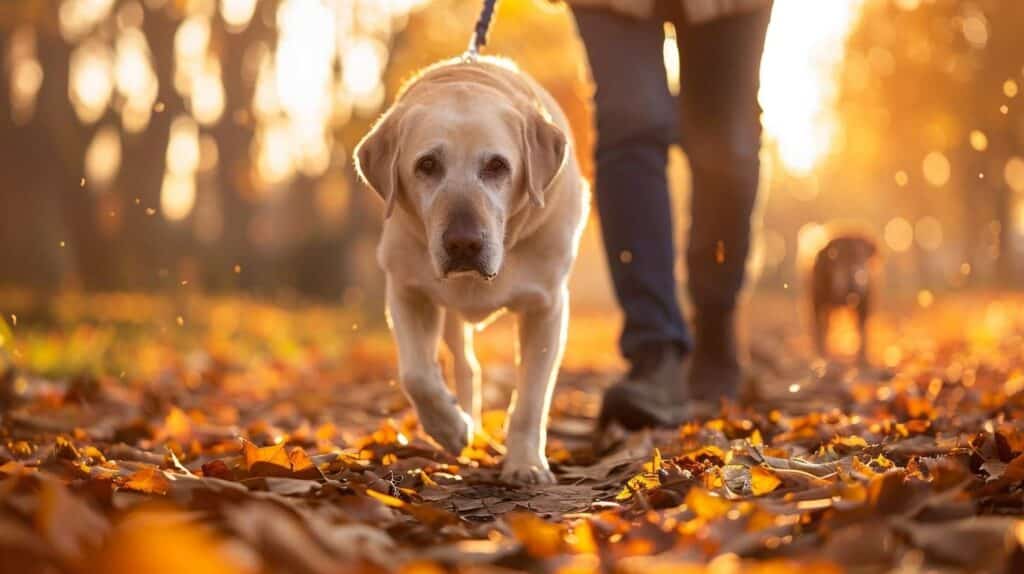
Exercise remains essential for senior dogs – but the nature of it changes. The goal shifts from physical conditioning to joint mobility, muscle maintenance, and mental stimulation.
What works well:
- Shorter, more frequent walks instead of one long outing
- Swimming or hydrotherapy – low-impact but excellent for joints and muscle maintenance
- Gentle leash walks on even surfaces
- Sniff walks – allowing the dog to move slowly and explore by smell – mentally engaging and low-stress
- Puzzle feeders and gentle training sessions for mental exercise
What to reduce or avoid:
- High-impact jumping or repeated stair climbing if joint disease is present
- Prolonged activity in heat – thermoregulation is less efficient in senior dogs
- Forced exercise when the dog shows reluctance – this is often a pain signal
Watch for signs of overexertion: excessive panting, lameness after activity, reluctance to continue, stiffness the following day. These indicate the session was too long or too intense.

Home Modifications for Senior Dogs
Small environmental changes make a meaningful difference in day-to-day comfort for aging dogs.
Bedding: An orthopedic memory foam bed significantly reduces joint pressure compared to a standard flat bed. Arthritic dogs sleep better and move more comfortably throughout the day when their resting surface is supportive. Place beds in multiple locations so the dog does not have to travel far to rest.
Flooring: Slippery floors are a major hazard for senior dogs with reduced muscle strength and joint stability. Yoga mats, rubber-backed rugs, or anti-slip dog socks placed on hardwood or tile in main pathways significantly reduce the risk of falls and the anxiety that comes with loss of traction.
Ramps and steps: A ramp or pet stairs for getting onto furniture or into a vehicle removes the impact of jumping, which is one of the most painful movements for arthritic dogs. Many senior dogs will use furniture they previously jumped onto without hesitation.
Night lights: Senior dogs with vision loss or cognitive dysfunction can become disoriented at night. Small night lights in hallways and near sleeping areas help them navigate and reduce nighttime confusion and anxiety.
Food and water bowl height: Raised bowls reduce neck strain and make eating more comfortable for dogs with arthritis in the neck and front legs. The ideal height places the bowl at approximately elbow height.
Signs Your Senior Dog Is in Pain
Dogs instinctively hide pain – it is a survival behavior from their evolutionary history. This means that obvious limping or crying is often a late sign of significant pain, not an early one.
More subtle signs of pain in senior dogs include:
- Reluctance to be touched in specific areas
- Changes in facial expression – a tense, slightly squinting look
- Reduced interest in food or play
- Increased irritability or withdrawal
- Changes in posture – hunched back, lowered head carriage
- Licking or chewing at a joint without obvious wound
- Hesitation before getting up or lying down
- Behavioral changes that seem to have no trigger
If you notice any of these changes, mention them to your vet rather than attributing them to “just aging.” Pain in senior dogs is consistently undertreated because owners and sometimes vets accept discomfort as an inevitable part of getting old. It is not – it is a signal that something is happening and that management is needed.
Mental Health and Enrichment for Senior Dogs
Cognitive health in senior dogs, like physical health, responds to active maintenance. Dogs that remain mentally engaged show slower cognitive decline than those whose mental activity decreases with age.
What supports cognitive health:
- Continued gentle training – learning new tricks is possible at any age and provides meaningful stimulation
- Sniff-based activities – scent games, scatter feeding, snuffle mats
- Consistent routine – predictability reduces anxiety in cognitively vulnerable dogs
- Social interaction – continued engagement with people and familiar dogs
- Puzzle feeders at mealtime
The goal is not to push a senior dog beyond their comfort level but to keep their days varied and mentally engaging within the limits of their physical capacity.
Frequently Asked Questions About Senior Dog Care
Understanding Senior Health
At what age is my dog considered senior? It depends on their size. Giant breeds like Great Danes are considered senior at around 6-7 years. Large breeds like Golden Retrievers and Labradors reach senior status around 8-9 years. Medium breeds around 8-10 years, and small or toy breeds not until 10-11 years. These are general guidelines – your vet can assess your individual dog’s biological age based on their health status, bloodwork, and physical condition. Some dogs age faster than their size would suggest.
How do I know if my senior dog is in pain? Pain in dogs is often subtle. Rather than obvious limping or vocalizing, look for: stiffness after rest, reluctance to jump or use stairs, reduced interest in activities they previously enjoyed, changes in posture, irritability when touched in certain areas, licking at joints, and behavioral withdrawal. If you notice changes you cannot explain, discuss them with your vet – do not assume they are simply “normal aging.”
Is it normal for senior dogs to sleep more? Some increase in rest is expected. However, significant changes in sleep patterns – particularly restlessness at night combined with sleeping heavily during the day – can be a sign of canine cognitive dysfunction, pain, or another medical issue. An abrupt change in sleep is worth mentioning to your vet.
Caring at Home
What is the most important thing I can do for my senior dog? Twice-yearly vet visits with a senior blood panel and urinalysis. Most conditions that reduce quality of life in senior dogs are manageable when caught early – kidney disease, dental disease, thyroid issues, early cancer. The problem is that dogs do not show symptoms of many conditions until they are already advanced. Bloodwork and physical examination are how you find problems before they become crises.
Should I change my senior dog’s food? Possibly – but the right change depends on your dog’s specific health status rather than their age alone. Do not switch to a senior formula purely because the label says “senior” without discussing it with your vet first. Some senior dogs need higher protein, some need reduced phosphorus for kidney support, some need calorie reduction for weight management, and some do fine on a continued high-quality adult diet. Let bloodwork and your vet guide the decision.
How can I help a senior dog with stiff joints? A combination approach works best. Start with a vet assessment to confirm the diagnosis and discuss pain management options – prescription anti-inflammatory medication is often appropriate and makes a significant difference in comfort and mobility. Alongside medication, orthopedic bedding, non-slip flooring, ramps instead of stairs, reduced-impact exercise, and joint supplements with omega-3 fatty acids and glucosamine all contribute. No single change is as effective as the combination.
How do I know when my senior dog’s quality of life is declining? Quality of life assessment tools like the HHHHHMM scale (Hurt, Hunger, Hydration, Hygiene, Happiness, Mobility, and More good days than bad) were developed to help owners evaluate this in a structured way. More than any single sign, look at whether your dog has more good days than difficult ones – whether they still enjoy things that brought them joy. Your vet can guide this conversation with empathy and honesty when the time comes.
The Bottom Line
Senior dogs are not just older adult dogs – they have genuinely different needs, different vulnerabilities, and often more to give than their owners expect. Most of what diminishes quality of life in aging dogs is not inevitable. It is detectable, and much of it is manageable.
The most important shifts: twice-yearly vet visits instead of annual, a complete senior blood panel at each visit, honest attention to subtle signs of pain and behavior change, and proactive home modifications that support comfort and safety.
The gray muzzle and the slower pace are not signs of decline – they are the beginning of a different kind of relationship with your dog. One that, with the right care, can be full of comfort, companionship, and genuinely good days.
This article is for informational purposes only and does not replace advice from a qualified veterinarian. If your senior dog shows sudden changes in behavior, appetite, mobility, or any concerning symptoms, contact your vet promptly.