Can Dogs Eat Grapes? Why Grapes Are Toxic to Dogs (Vet Warning) (2026)
QUICK ANSWER: CAN DOGS EAT GRAPES?
- NO — grapes and raisins are TOXIC to dogs
- Even one grape can cause acute kidney failure in some dogs
- Also toxic: raisins, currants, grape juice, and foods containing raisins
- If your dog ate grapes: call your vet IMMEDIATELY — do not wait for symptoms
- Safe alternatives: blueberries, watermelon, apple slices (no seeds)
- This article is based on peer-reviewed veterinary research including Cornell University College of Veterinary Medicine guidelines and American Veterinary Medical Association (AVMA) recommendations.
Grapes are one of the most dangerous foods you can give a dog — and one of the most commonly misunderstood. Unlike chocolate, which most dog owners know to avoid, grape toxicity still surprises many people. A well-meaning child shares a handful of grapes. A raisin falls from a cookie on the floor. Trail mix is left on the coffee table. These accidents happen every day, and they can be fatal.
What makes grape toxicity especially dangerous is how unpredictable it is. Some dogs have eaten several grapes and shown no reaction at all. Others have gone into acute kidney failure after a single grape. There is no known safe amount, and there is no way to predict in advance which dogs will react severely. This means every grape exposure must be treated as a potential emergency — no exceptions.
This guide explains everything you need to know: why grapes are toxic, which forms are most dangerous, what symptoms to watch for, what to do immediately if your dog eats a grape, and what safe fruit alternatives you can offer instead.
New puppy? Find a name that fits their personality.
Browse 600+ dog names by gender and personality type — playful, calm, bold, elegant, funny or mysterious.
Try Pet Name FinderWhy Are Grapes Toxic to Dogs?
Veterinary researchers have been studying grape toxicity in dogs for decades, and the exact mechanism still isn’t fully understood. For years, the toxic compound was unknown — researchers ruled out pesticides, fungal contamination, and various other substances.
The most widely supported current theory, backed by case reports and laboratory research, points to tartaric acid as the primary culprit. Tartaric acid is a naturally occurring organic acid found in high concentrations in grapes and tamarinds. Dogs appear to metabolize tartaric acid differently from humans — in some dogs, it causes rapid, severe damage to the kidney tubules, leading to acute kidney injury.
However, the research is still ongoing and not fully conclusive. What is definitively known from thousands of documented cases is this: grapes and raisins cause acute kidney injury (AKI) in dogs, and the reaction is dose-independent and unpredictable. This means that a small amount can be just as dangerous as a large amount in susceptible dogs.
The unpredictability is what makes grape toxicity so alarming to veterinarians. There is no “a little bit is okay” rule with grapes. The only safe rule is: no grapes, ever.

All Forms of Grapes Are Dangerous
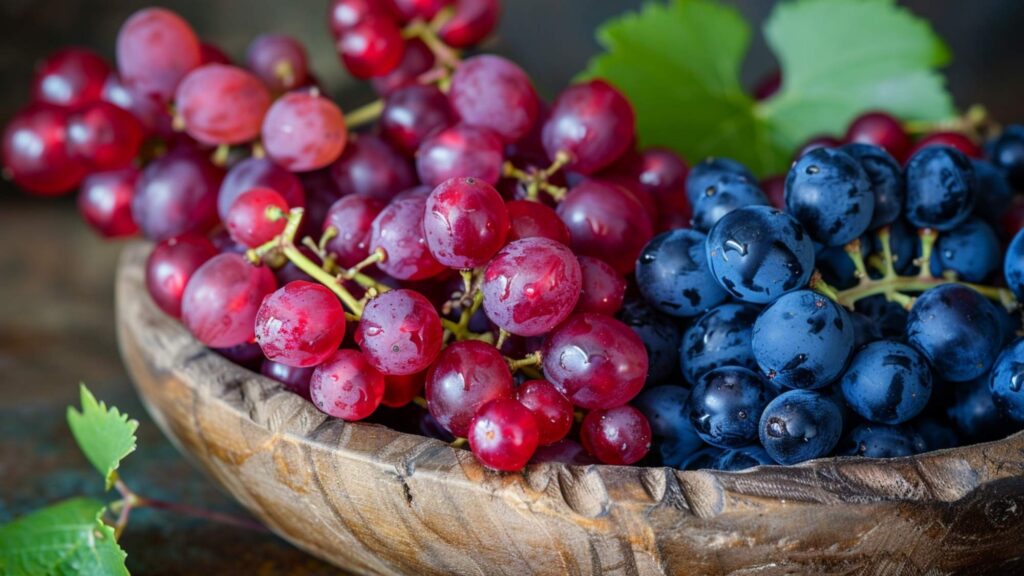
Many owners assume that only certain types of grapes are toxic, or that seedless grapes might be safer. This is not true. All forms and varieties of grapes pose a risk to dogs. The toxin is present across the board.
| Food | Toxic to Dogs? | Notes |
|---|---|---|
| Fresh red grapes | ❌ YES | All varieties toxic |
| Fresh green grapes | ❌ YES | Color makes no difference |
| Seedless grapes | ❌ YES | Seeds are not the source of toxicity |
| Raisins (dried grapes) | ❌ YES — EXTREMELY DANGEROUS | Drying concentrates the toxin |
| Currants (black, red, white) | ❌ YES | Related fruit, similar toxicity |
| Sultanas | ❌ YES | Dried white grapes — very dangerous |
| Grape juice | ❌ YES | Liquid form still contains toxins |
| Grape jam or jelly | ❌ YES | Processing does not remove toxicity |
| Wine or grape extract | ❌ YES | Never give alcohol to dogs |
| Foods containing raisins | ❌ YES | Cookies, trail mix, fruitcake, bread |
| Grape seed extract | ⚠️ Unknown | Avoid — insufficient safety data |
Raisins and sultanas deserve special attention. The drying process that turns fresh grapes into raisins concentrates all of the components — including the toxic compounds — into a much smaller, denser food. This means that gram for gram, raisins are significantly more dangerous than fresh grapes. A single small box of raisins contains enough concentrated toxin to cause serious kidney failure in a medium-sized dog.
Many dog owners are caught off guard by hidden raisins in everyday foods. Hot cross buns, certain granola bars, trail mixes, oatmeal raisin cookies, Christmas pudding, and fruitcake all commonly contain raisins. Always check labels and keep these foods well out of reach.
Did your dog eat something dangerous? Find out right now.
Enter what they ate and their weight — get an instant toxicity assessment for 35+ substances.
Check Toxicity NowHow Much Is Too Much?
This is one of the most frequently asked questions — and the honest answer is that there is no established safe dose. Toxicity studies in dogs have failed to find a threshold below which grapes are consistently safe.
Some dogs have developed acute kidney failure after eating as few as 1–2 grapes. Others have eaten larger amounts without apparent ill effect. Body weight does not reliably predict outcomes the way it does with some other toxins. A large dog is not necessarily safer than a small dog when it comes to grapes.
Because of this complete unpredictability, veterinary guidelines are uniform: treat any grape or raisin ingestion as an emergency, regardless of the amount consumed.
Symptoms of Grape Poisoning in Dogs
Symptoms typically appear within a few hours of ingestion, though the timeline varies between individual dogs. Kidney failure signs may not appear until 24–72 hours after eating grapes, which is why early veterinary intervention is so important — by the time kidney failure is visibly apparent, significant damage may already have occurred.
Early Signs (Within 6 Hours)
- Vomiting — usually the first sign, often appearing within 1–2 hours
- Diarrhea — may contain pieces of grape or raisin
- Lethargy and weakness — dog seems unusually tired or unresponsive
- Loss of appetite — complete or significant reduction in interest in food
- Abdominal pain or tenderness — dog may hunch, flinch when belly is touched, or resist being picked up
- Excessive drooling
Signs of Acute Kidney Injury (24–72 Hours)
- Decreased urination or complete absence of urine — one of the most serious signs
- Increased urination initially — kidneys may produce excess dilute urine as they begin to fail
- Excessive thirst — or complete loss of thirst as kidneys deteriorate
- Swollen, tender abdomen
- Bad breath with chemical or ammonia-like odor — waste products accumulating in the bloodstream
- Pale or yellowish gums
- Tremors or muscle twitching
- Seizures
- Disorientation or confusion
- Coma
It is critical to understand that a dog that appears normal in the first few hours after eating grapes is not necessarily safe. Kidney damage can progress silently. Do not wait for symptoms before calling a vet.

What to Do If Your Dog Eats Grapes
Time is everything with grape poisoning. The faster you act, the better the chances of preventing serious kidney damage. Follow these steps immediately.
Step 1: Stay Calm and Act Fast
Do not panic, but do not delay. Every minute matters. Gather the following information before calling your vet: how many grapes or raisins your dog ate (approximate), when they ate them, your dog’s weight, and whether your dog is showing any symptoms.
Step 2: Call Your Vet or Emergency Animal Hospital
Call immediately — do not wait to see if symptoms develop. If your regular vet is unavailable, go directly to the nearest emergency animal hospital.
You can also call the ASPCA Animal Poison Control Center: 888-426-4435 (available 24/7 — a consultation fee may apply) or the Pet Poison Helpline: 855-764-7661.
Step 3: Do Not Induce Vomiting at Home Without Guidance
Your vet may ask you to induce vomiting if ingestion was very recent — within the past 1–2 hours — and your dog is not already vomiting or showing neurological symptoms. However, do not do this without specific instructions from a vet. Inducing vomiting incorrectly can cause additional harm.
Step 4: Get to a Vet Immediately
Even if your dog vomited, this does not mean all toxins have been eliminated. Your dog still needs immediate professional evaluation, blood tests, and likely IV fluid therapy.
Veterinary Treatment for Grape Poisoning
The treatment protocol for grape toxicity is well-established and involves several steps:
Decontamination: If ingestion was recent and the dog is stable, the vet will induce vomiting to remove as much grape material as possible. Activated charcoal may be administered to bind any remaining toxins in the gastrointestinal tract and prevent further absorption.
IV fluid therapy: This is the cornerstone of treatment. Aggressive intravenous fluids help flush the toxins through the kidneys and maintain kidney perfusion — the flow of blood to the kidneys. Fluid therapy is typically continued for 48–72 hours.
Blood and urine monitoring: The vet will run blood panels to check kidney function markers — specifically BUN (blood urea nitrogen), creatinine, and phosphorus. These are checked at regular intervals to monitor whether kidney damage is occurring or worsening.
Hospitalization: Most dogs with significant grape ingestion are hospitalized for at least 48–72 hours for close monitoring and continued fluid support.
Supportive care: Depending on the severity, additional treatments may include anti-nausea medication, medications to protect the stomach lining, and in severe cases, dialysis — though this is rarely available and very expensive.
Prognosis depends heavily on how quickly treatment begins. Dogs treated within the first few hours of ingestion — before significant kidney damage occurs — have a much better prognosis than those treated after kidney failure is established. Dogs that have already stopped producing urine (anuric renal failure) have a significantly worse outlook.
Long-Term Effects of Grape Poisoning
Dogs that survive acute grape poisoning may fully recover kidney function, especially if treated early and aggressively. However, some dogs develop chronic kidney disease (CKD) as a result of the damage sustained during the acute episode. This means they may require lifelong dietary management, regular blood monitoring, and veterinary care.
If your dog has been treated for grape poisoning, your vet will likely recommend follow-up blood work at intervals over the following weeks and months to assess kidney function and catch any developing CKD early.
Safe Fruit Alternatives for Dogs
Just because grapes are dangerous doesn’t mean dogs can’t enjoy fruit. Many fruits are completely safe, healthy, and delicious for dogs when served in appropriate amounts.
| Safe Fruit | Key Benefits | How to Serve |
|---|---|---|
| Blueberries | Antioxidants, vitamin C, low calorie | Whole, fresh or frozen |
| Watermelon | Hydrating, vitamins A and C | Remove seeds and rind, cube |
| Strawberries | Vitamin C, fiber, natural sweetness | Remove stem, slice |
| Banana | Potassium, magnesium, fiber | Peel, slice — high in sugar so limit |
| Apple | Fiber, vitamins A and C | Remove core and ALL seeds |
| Mango | Vitamins A, B6, C, and E | Remove pit and skin entirely |
| Pineapple | Bromelain enzyme, vitamins | Remove skin and core, small cubes |
| Pear | Fiber, copper, vitamins | Remove core and seeds |
Always introduce new fruits slowly and in small amounts. Even safe fruits should be treats — not a significant portion of your dog’s diet — due to their sugar content.

Frequently Asked Questions
My Dog Just Ate Grapes — What Now?
Q: My dog ate one grape — should I be worried? A: Yes. Even a single grape has caused kidney failure in some dogs. Do not wait and see. Call your vet immediately regardless of how little was consumed.
Q: What if my dog ate a grape hours ago and seems fine? A: Still call your vet. Kidney damage can develop silently over 24–72 hours without visible symptoms in the early stages. Even if your dog appears normal, blood tests may reveal developing kidney injury that cannot be seen from the outside.
Q: My dog ate raisins in a cookie — is that as dangerous as eating fresh grapes? A: Yes — and possibly more so. Raisins are more concentrated than fresh grapes. Even a small amount of raisins hidden in a baked good can be enough to trigger kidney failure. Treat this as an emergency.
Q: How long does grape poisoning take to show symptoms? A: Vomiting often begins within 1–6 hours. Signs of kidney injury such as decreased urination, lethargy, and loss of appetite may not appear until 24–72 hours after ingestion. The absence of early symptoms does not mean your dog is safe.
General Questions About Grapes and Dogs
Q: My dog ate grapes before and was completely fine. Does this mean they’re safe for my dog? A: No. The reaction to grape toxicity is completely unpredictable and can change from one exposure to the next. Previous tolerance does not guarantee future safety. The risk is never worth taking.
Q: Are grape leaves or vines toxic to dogs? A: There is insufficient research on grape leaves and vines specifically. Given the well-documented toxicity of the fruit, it is safest to keep dogs away from all parts of the grapevine.
Q: Can cats eat grapes? A: The ASPCA lists grapes as toxic to both cats and dogs. While the majority of documented cases involve dogs, it is best to keep grapes and raisins away from cats as well.
Q: How do I stop my dog from getting into grapes at home? A: Store grapes in the refrigerator rather than in fruit bowls. Keep raisins in closed cabinets. Teach children never to share human food with pets without adult permission. Be especially careful during gatherings, holiday baking, or any time foods like trail mix, baked goods, or fruit salads are present.
Related Articles
- Can Dogs Eat Blueberries? — A safe, antioxidant-rich treat dogs love
- Can Dogs Eat Strawberries? — Safe summer fruit guide for dogs
- Can Dogs Eat Watermelon? — Hydrating and dog-safe summer treat
- 10 Warning Signs Your Dog Needs Emergency Vet Care — Know when to act fast
This article is for informational purposes only. For health concerns, always consult a licensed veterinarian.