Can Dogs Eat Strawberries? Benefits, Risks & How to Serve Them Safely
You’re snacking on fresh strawberries and your dog is giving you that look. The “the world will end if I don’t get a piece” look.
Before you share, you want to make sure it’s safe.
Good news: strawberries are one of the safest and most nutritious fruits you can share with your dog. But there are important things to know about how to serve them, how much is appropriate, and which dogs should avoid them entirely.
This complete guide covers everything about dogs and strawberries.
New puppy? Find a name that fits their personality.
Browse 600+ dog names by gender and personality type — playful, calm, bold, elegant, funny or mysterious.
Try Pet Name FinderCan Dogs Eat Strawberries?
Yes—dogs can eat strawberries.
Strawberries are non-toxic to dogs and contain genuine nutritional benefits. Most dogs love them.
However:
- They contain natural sugar—offer as occasional treat
- Dogs with certain health conditions should avoid them
- Only fresh or frozen plain strawberries are safe
The rule: Fresh, plain, properly prepared strawberries in appropriate portions = safe and healthy for most dogs.

Health Benefits of Strawberries for Dogs
1. Rich in Vitamin C
Powerful antioxidant.
- Supports immune function
- Reduces inflammation
- Protects cells from damage
- Beneficial for older dogs and dogs under stress
2. High in Fiber
Supports digestive health.
- Promotes healthy bowel movements
- Helps dogs with occasional constipation
- Supports gut bacteria balance
3. Packed with Antioxidants
Strawberries contain:
- Quercetin
- Anthocyanins
- Ellagic acid
Benefits:
- Combat oxidative stress
- Anti-inflammatory properties
- May reduce chronic disease risk over time
4. Low in Calories
Diet-friendly treat.
- Approximately 4 calories per medium strawberry
- Excellent for dogs on weight management plans
- Satisfying without the guilt
5. High Water Content
About 91% water.
- Hydrating snack
- Refreshing in warm weather
- Supports overall fluid intake
6. Natural Teeth Whitening
Contains malic acid.
- Naturally helps whiten teeth
- Doesn’t replace brushing or professional cleanings
- A nice bonus from a tasty treat
7. Contains Potassium
Supports:
- Healthy muscle function (including heart)
- Fluid balance
- Nerve function

Risks of Strawberries for Dogs
1. Natural Sugar Content
Most important consideration.
Strawberries contain approximately 7g of sugar per 100g.
Dogs who should avoid or strictly limit strawberries:
- Diabetic dogs (blood sugar management critical)
- Overweight or obese dogs
- Dogs with pancreatitis
- Dogs with sensitive stomachs
Did your dog eat something dangerous? Find out right now.
Enter what they ate and their weight — get an instant toxicity assessment for 35+ substances.
Check Toxicity Now2. Choking Hazard
Whole strawberries can be dangerous.
- Risk for small dogs especially
- Always cut into appropriate pieces
- Remove stem and leaves first
3. Allergic Reactions
Uncommon but possible.
Signs of allergic reaction:
- Itching or hives
- Facial swelling
- Vomiting or diarrhea
- Excessive scratching
If first time: Start with very small amount. Wait and watch for a few hours.
4. Strawberry Products Are DANGEROUS
This is critical.
Only fresh or frozen plain strawberries are safe.
Never give your dog:
- Strawberry jam or jelly (extremely high sugar + often contains xylitol)
- Canned strawberries (heavy sugar syrup)
- Strawberry yogurt (may contain xylitol)
- Strawberry candy or gummies (xylitol and artificial ingredients)
- Anything strawberry-flavored with artificial sweeteners
Xylitol is extremely toxic to dogs.
Even small amounts cause:
- Life-threatening hypoglycemia
- Liver failure
- Death
Always check ingredient labels before sharing any human food.
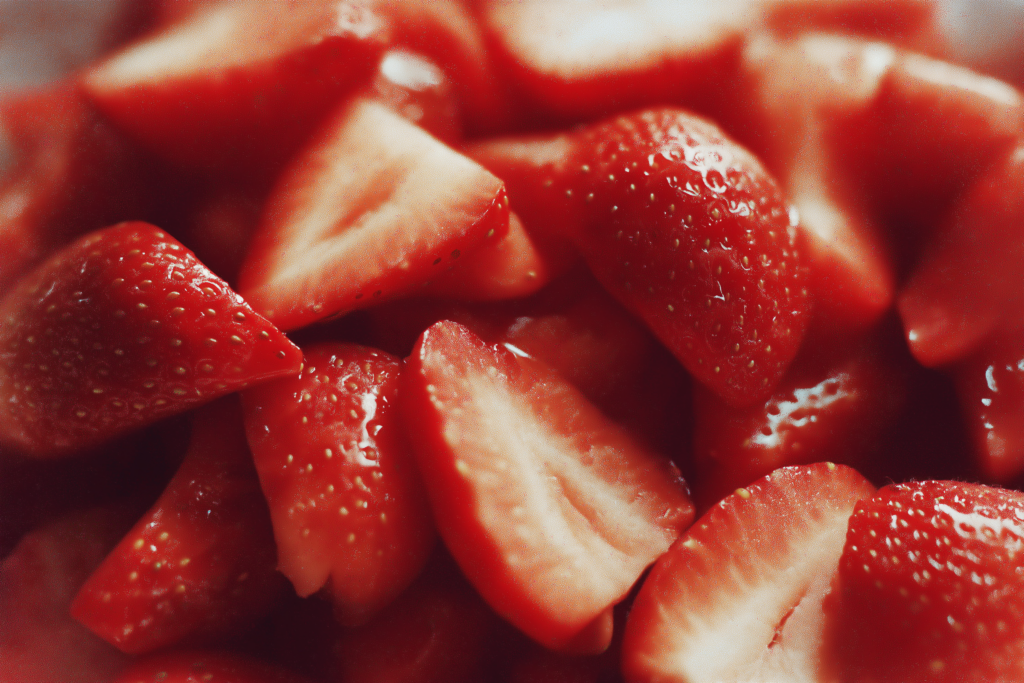
How Many Strawberries Can a Dog Eat?
Treats should be no more than 10% of daily caloric intake.
| Dog Size | Suggested Serving |
|---|---|
| Small dog (under 20 lbs) | 1 strawberry |
| Medium dog (20-50 lbs) | 3-4 strawberries |
| Large dog (50+ lbs) | 5-6 strawberries |
Frequency: A few times per week—not daily.
First time: Start with just one small piece. Watch for any reaction.
How to Safely Prepare Strawberries for Your Dog
Step-by-step preparation:
Step 1: Wash thoroughly. Strawberries are frequently sprayed with pesticides. Rinse well under cold running water. Choose organic when possible.
Step 2: Remove stem and leaves. Not toxic—but fibrous and potential choking hazard. Always remove before serving.
Step 3: Cut into appropriate pieces.
- Large dogs: halve or quarter
- Small dogs: small bite-sized pieces
- Never serve whole to small breeds
Step 4: Serve plain. No sugar, no cream, no chocolate, no toppings. Plain is always the rule.
Step 5: Consider freezing. Frozen strawberry pieces = refreshing summer treat. Wash, hull, cut, freeze on baking sheet, transfer to bag. Many dogs love the texture and cold sensation.
Fun Ways to Serve Strawberries
Stuffed Kong:
- Blend strawberries with banana and plain xylitol-free yogurt
- Stuff into Kong toy
- Freeze overnight
- Long-lasting enriching treat
Fruit Mix:
- Combine with blueberries, seedless watermelon, apple slices (no seeds)
- Colorful, nutritious snack
Training Treats:
- Tiny pieces work as high-value rewards
- Great for dogs not motivated by standard treats
Frozen Puree:
- Blend strawberries
- Pour into ice cube trays
- Freeze and serve
- Great for teething puppies

Safe vs. Unsafe Fruits for Dogs
Safe:
- Blueberries ✅
- Watermelon (seedless, no rind) ✅
- Apple (no seeds or core) ✅
- Banana ✅
- Mango (no pit) ✅
- Peach (no pit) ✅
NOT safe:
- Grapes and raisins ❌ (can cause acute kidney failure)
- Cherries ❌ (pits contain cyanide)
- Avocado ❌ (contains persin, toxic to dogs)
- Citrus ❌ (citric acid and essential oils harmful)
Common Questions
Q: Can puppies eat strawberries? A: Yes, but very small amounts only. Puppy digestive systems are more sensitive. Start with a tiny piece and watch for stomach upset. Always plain, washed, and cut small.
Q: Can dogs eat strawberry leaves and tops? A: Not toxic, but not worth serving. Tough, fibrous, and minor choking risk. Remove them every time.
Q: My dog ate strawberry jam. Should I be worried? A: Check the label immediately. If it contains xylitol—contact your vet or ASPCA Poison Control now. If regular sugar and a small amount, monitor for vomiting or diarrhea and call vet if symptoms develop.
Q: Are strawberries good for dogs with arthritis? A: The anti-inflammatory compounds (quercetin, anthocyanins) may have a mild supportive effect. Not a treatment—but a healthy addition to a balanced diet with proper vet management.
Q: How often can I give my dog strawberries? A: A few times per week in appropriate portions. Daily feeding adds up in sugar—especially for smaller dogs.
Q: My dog ate a large amount of strawberries. What should I do? A: Watch for diarrhea, vomiting, stomach discomfort, and gas. Ensure access to fresh water. Symptoms typically resolve within 24 hours. Contact vet if severe or lasting longer.
Signs Your Dog Ate Too Many Strawberries
Watch for:
- Diarrhea or loose stools
- Vomiting
- Stomach gurgling or visible discomfort
- Gas and bloating
What to do:
- Provide fresh water
- No more strawberries until resolved
- Contact vet if symptoms are severe or last more than 24 hours
The Bottom Line
Strawberries are a safe, nutritious, and genuinely enjoyable treat for most dogs.
Key takeaways:
Safe for most dogs: Non-toxic, nutritious, low in calories.
Serve plain and fresh: No jam, candy, flavored products, or anything with xylitol.
Portion control matters: 1-6 strawberries depending on size, a few times per week.
Prepare properly: Wash, remove stem, cut into pieces.
Avoid for: Diabetic dogs, overweight dogs, dogs with pancreatitis.
Xylitol is deadly: Always check labels on any strawberry product.
When in doubt: A quick call to your vet is always the right move.
Does your dog go crazy for strawberries? Tell us their favorite fruit treat in the comments!
This article provides general information. Consult your veterinarian before introducing new foods, especially if your dog has health conditions.