
Dog Skin Allergies: Symptoms, Causes & The Best Treatments
This article is based on peer-reviewed veterinary research including Cornell University College of Veterinary Medicine guidelines and American Veterinary Medical Association (AVMA) recommendations.
Your dog won’t stop scratching. They’re constantly licking their paws, rubbing their face on the carpet, and chewing at their skin. You’ve tried changing their food. You’ve tried medicated shampoo. Nothing seems to help.
Sound familiar?
Skin allergies are one of the most common health issues in dogs—and one of the most frustrating. For the dog who can’t stop itching and the owner who desperately wants to help.
The challenging part: dog skin allergies don’t have a single cure. They require identifying the trigger, managing symptoms effectively, and committing to long-term strategies.
The good part: with the right approach, most allergic dogs can live comfortable, itch-free lives.
This complete guide covers everything—symptoms, causes, diagnosis, and the treatments that actually work.
New puppy? Find a name that fits their personality.
Browse 600+ dog names by gender and personality type — playful, calm, bold, elegant, funny or mysterious.
Try Pet Name FinderWhat Are Dog Skin Allergies?
An overreaction of the immune system.
When a dog has skin allergies (allergic dermatitis), the immune system treats a harmless substance as a threat—triggering inflammation of the skin.
Result:
- Itching
- Redness
- Rashes
- Secondary infections
Three main types:
- Environmental allergies (atopic dermatitis) — pollen, dust mites, mold
- Food allergies — reaction to specific diet ingredients
- Flea allergy dermatitis — reaction to flea saliva
Many dogs have more than one type simultaneously.
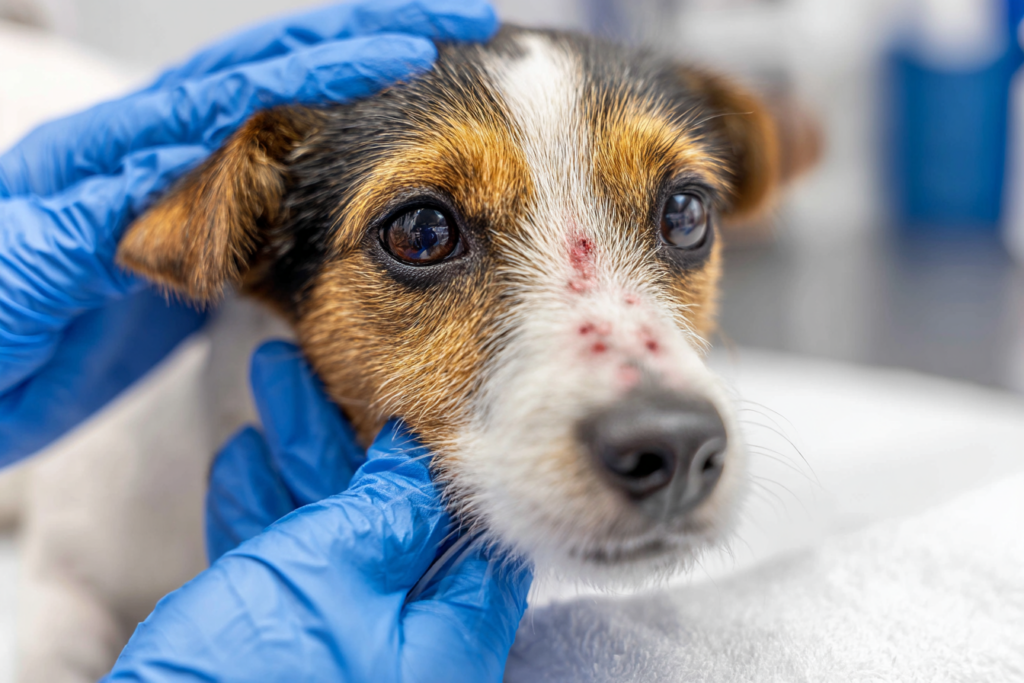
Symptoms of Dog Skin Allergies
Behavioral Signs
Watch for:
- Excessive scratching—returning to same spots repeatedly
- Constant paw licking (one of the most distinctive allergy signs)
- Rubbing face on carpet or furniture
- Chewing at skin (especially paws, tail base, groin)
- Scooting on floor
- Restlessness and disrupted sleep from itching
Physical Signs
Visible on the skin:
- Red, inflamed skin (belly, armpits, groin, between toes)
- Hives or raised bumps
- Dry, flaky skin or dandruff
- Greasy, oily coat
- Hair loss from excessive scratching
- Skin thickening or darkening (chronic, long-standing irritation)
- Recurring ear infections
Systemic signs:
- Watery eyes or nasal discharge (environmental allergies)
Secondary Infections
This is where allergies become truly painful.
Constant scratching breaks down the skin barrier—creating entry points for bacteria and yeast.
Common secondary infections:
Bacterial skin infections (pyoderma):
- Red bumps and pustules
- Crusting
- Musty smell
Yeast infections (Malassezia):
- Greasy skin
- Intense itching
- Dark discoloration
- Distinctive corn-chip or musty odor
Chronic ear infections:
- Recurrent and difficult to resolve
- Won’t clear until underlying allergy is treated
Secondary infections MUST be treated alongside allergy management.
Type 1: Environmental Allergies (Atopic Dermatitis)
Most common type—affects up to 15% of dogs.
Dogs with atopic dermatitis react to airborne or contact allergens.
Common Environmental Allergens
Seasonal:
- Tree, grass, and weed pollen
Year-round:
- Dust mites
- Mold spores
- Cockroach allergens
- Human dander
Contact allergens:
- Cleaning products
- Carpet fibers
- Certain fabrics

Key Characteristics
- Typically begins between 1-3 years of age
- Can be seasonal or year-round
- Tends to worsen over time without management
- Strong genetic predisposition
Breeds Most Prone to Atopic Dermatitis
- Golden Retrievers
- Labrador Retrievers
- West Highland White Terriers
- English and French Bulldogs
- Boxers
- German Shepherds
- Pugs
- Bichon Frisé
- Irish Setters
- Dalmatians
Type 2: Food Allergies
Accounts for roughly 10-15% of allergic dogs.
Food Allergy vs. Food Sensitivity
Food allergy:
- Immune system response to a specific protein
- Causes skin symptoms + sometimes GI symptoms
Food sensitivity (intolerance):
- Digestive reaction—not immune-mediated
- Primarily causes vomiting, diarrhea, gas
Most Common Food Allergens in Dogs
Contrary to popular belief—most food allergies involve proteins, not grains.
Top allergens:
- Beef
- Dairy
- Chicken
- Wheat
- Egg
- Lamb
- Soy
- Pork
Important: Dogs are typically allergic to proteins they’ve eaten repeatedly over time—not new proteins.
Signs Food Allergies May Be Involved
- Itching that doesn’t respond to allergy medication
- Year-round itching with no seasonal pattern
- Recurrent ear infections despite treatment
- Gastrointestinal symptoms alongside skin problems
- Symptoms started after a diet change
Type 3: Flea Allergy Dermatitis (FAD)
Most common allergic skin condition in dogs worldwide.
Key fact: Dogs with FAD are allergic to flea SALIVA—not just fleas. A single flea bite triggers an intense reaction lasting days.
Signs of Flea Allergy Dermatitis
- Intense itching at tail base, lower back, groin, thighs
- Red, inflamed skin in these areas
- Hair loss (classic pattern from tail base forward)
- Flea dirt visible (tiny black specks that turn red when wet)
Why You May Not See Fleas
Dogs with FAD scratch so intensely they often remove fleas before you can spot them.
Absence of visible fleas does NOT rule out flea allergy dermatitis.

Diagnosing Dog Skin Allergies
Accurate diagnosis is essential. Without knowing the trigger, treatment is guesswork.
Allergy Testing Options
Intradermal skin testing:
- Gold standard for environmental allergies
- Performed by veterinary dermatologist
- Small amounts of allergens injected into skin
- Most accurate
Serum allergy testing (blood test):
- Less invasive
- More accessible
- Somewhat less accurate than intradermal testing
Elimination diet trial:
- Only reliable way to diagnose food allergy
- Strict novel or hydrolyzed protein diet for 8-12 weeks
- No exceptions—no treats, no flavored medications
- If symptoms resolve: food allergy confirmed
What to Expect at the Vet
Thorough history:
- When symptoms started
- Seasonal patterns
- Diet and flea prevention history
Physical examination:
- Skin evaluation
- Skin scraping or cytology (identify infections)
Specialist referral:
- Board-certified veterinary dermatologist for complex cases
Treatment Options
No universal cure—but many effective management strategies.
Flea Control (Always First)
Non-negotiable for ANY allergic dog.
Even dogs with environmental or food allergies can have symptoms dramatically worsened by flea bites.
What to do:
- Vet-recommended flea prevention year-round
- Treat ALL pets in the household
- Treat home and yard as well

Allergen-Specific Immunotherapy
The only treatment addressing the root cause.
Based on allergy testing results:
- Custom serum created with specific allergens
- Administered as injections or oral drops
- Given over months to years
- Gradually desensitizes immune system
Timeline: 6-12 months to see significant results.
Success rate: Approximately 60-70%.
Best long-term option for environmental allergies.
Cytopoint (Lokivetmab)
Injectable monoclonal antibody.
- Targets and neutralizes the itch signal (IL-31)
- Begins working within 24 hours
- Lasts 4-8 weeks per injection
- Very safe with minimal side effects
A breakthrough treatment for atopic dermatitis.
Apoquel (Oclacitinib)
Daily oral medication.
- Blocks multiple itch and inflammation pathways
- Begins working within 4 hours
- Effective for short-term flares AND long-term maintenance
Corticosteroids (Prednisone)
Powerful—but not for long-term use.
- Rapidly reduces itching and inflammation
- Highly effective
- Significant side effects with long-term use:
- Increased thirst and urination
- Weight gain
- Increased infection risk
- Adrenal suppression
Best for: Short-term flare control only.
Antihistamines
Less effective in dogs than humans.
- Help approximately 30% of allergic dogs
- Low risk, low cost—worth trying for mild allergies
- Common options: Cetirizine (Zyrtec), Diphenhydramine (Benadryl)
Always confirm safe dosing with your vet.
Antibiotics and Antifungals
Required when secondary infections are present.
- Oral antibiotics for bacterial infections (pyoderma)
- Antifungal medications for yeast infections
- Medicated shampoos targeting specific infection type
Must be treated alongside allergy management—not instead of it.

Dietary Approaches
Omega-3 Fatty Acid Supplementation:
- Fish oil (EPA and DHA)
- Documented anti-inflammatory properties
- Improves skin barrier function
- Reduces itch intensity
- Works best as part of broader management plan
Elimination Diet:
- 8-12 week strict diet trial
- Both diagnostic AND therapeutic
- If food allergy confirmed: novel protein or hydrolyzed diet long-term
Prescription Hydrolyzed Protein Diets:
- Proteins broken down too small to trigger immune reaction
- Available from veterinarian
- Highly effective for food-allergic dogs
Skin Care and Environmental Management
Medicated shampoos:
- Chlorhexidine (antibacterial)
- Antifungal formulas
- Soothing oatmeal-based
- Bathing 1-2 times weekly for environmental allergy management
Paw washing:
- Rinse or wipe paws after outdoor walks
- Removes pollen and environmental allergens
- Meaningfully reduces symptoms in pollen-allergic dogs
Air purifiers:
- HEPA filters reduce dust mite and mold levels
- Particularly helpful for year-round indoor allergens
Regular bedding washing:
- Hot wash weekly
- Removes accumulated dust mites and allergens
When to See a Veterinary Dermatologist
Consider specialist referral if:
- Allergies are severe and significantly affect quality of life
- Standard treatments aren’t providing adequate relief
- You want the most accurate allergy testing (intradermal)
- Immunotherapy is being considered
- Diagnosis remains unclear after initial workup
Board-certified veterinary dermatologists (DACVD) have advanced training and the full range of diagnostic and therapeutic tools.

Common Questions
Q: Can dog allergies be cured? A: Environmental allergies cannot be cured—but can be very effectively managed. Immunotherapy offers the best chance of long-term improvement. Food allergies can effectively be “cured” by permanently removing the offending ingredient.
Q: Is grain-free food good for allergic dogs? A: Not necessarily. Grain allergies are uncommon—most food allergies involve animal proteins. Switching to grain-free won’t help if protein is the trigger. A proper elimination diet is far more effective.
Q: How do I know if it’s allergies or just dry skin? A: Allergies cause itching and redness; dry skin mainly causes flaking and dull coat without intense itch. However, allergies can also cause dry skin. A vet exam is the best way to distinguish.
Q: Can allergies develop suddenly in older dogs? A: Yes. New allergies can develop at any age. Sudden-onset skin symptoms in an older dog should always be evaluated to rule out other causes.
Q: What’s the fastest way to stop my dog from itching? A: Short-term: remove trigger if possible, apply cold compress, gentle medicated bath, contact vet. Cytopoint injection and Apoquel work fastest among prescription options—often within hours to days.
Q: My dog has recurring ear infections. Could it be allergies? A: Very likely yes. Recurring ear infections—especially in the same ear—are one of the most common signs of underlying allergies in dogs. Treating the infection without addressing the allergy leads to constant recurrence.
Did your dog eat something dangerous? Find out right now.
Enter what they ate and their weight — get an instant toxicity assessment for 35+ substances.
Check Toxicity NowThe Bottom Line
Dog skin allergies require patience. They’re chronic conditions without quick fixes, and finding the right combination of diagnosis, trigger management, and treatment takes time.
Key takeaways:
Three main types: Environmental, food, flea allergy dermatitis.
Most distinctive sign: Paw licking. Constant paw licking is almost always allergy-related.
Flea control first: Always, for every allergic dog—regardless of allergy type.
Best long-term treatment: Allergen-specific immunotherapy (allergy shots/drops).
Best fast-acting medications: Cytopoint injection, Apoquel.
Recurring ear infections: Classic sign of underlying allergy.
Food allergy diagnosis: Requires strict 8-12 week elimination diet—no shortcuts.
Start with your vet. Proper diagnosis before treatment. Guessing makes everything harder.
Does your dog suffer from skin allergies? What’s worked for you? Share in the comments!
This article provides general information. Dog skin allergies require veterinary diagnosis and individualized treatment. Always consult your veterinarian.