Alaskan Malamute: Complete Breed Guide – Temperament, Care, Health & More (2026)
- 🐕 QUICK ANSWER: ALASKAN MALAMUTE BREED GUIDE
- ✅ The Alaskan Malamute is one of the oldest and most primitive Arctic working breeds – developed over thousands of years by the Mahlemut Inuit people of Alaska
- ✅ The largest of the sled dog breeds: Males 85 lbs, Females 75 lbs – powerful, heavily built, and bred for hauling heavy loads over long distances
- ✅ Deeply affectionate, playful, and people-oriented – often called a “gentle giant” within its family
- ✅ Exceptionally hardy and adapted to cold climates – one of the most physically robust breeds available
- ✅ The Alaskan Malamute served the US military in both World Wars as a search, rescue, and cargo transport dog
- ⚠️ High prey drive – small animals including cats, rabbits, and small dogs are at genuine risk without careful management
- ⚠️ Extreme shedding – two annual coat blows produce volumes of undercoat that require daily brushing for 3-4 weeks
- ⚠️ Strong-willed and independent – Malamutes do not naturally defer to authority and require patient, consistent, experienced handling
- ⚠️ Prone to escape – they dig under, climb over, and push through fences with determination and physical capability
- ❌ Do NOT leave a Malamute unsupervised with small animals – prey drive is strong and can be fatal to smaller pets
- ❌ Do NOT rely on standard suburban fencing – Alaskan Malamutes need genuinely reinforced, escape-proof enclosures
- This article draws on breed standards from the American Kennel Club (AKC) and the Alaskan Malamute Club of America (AMCA), health research from the AMCA Health Committee, and clinical guidance from veterinary orthopaedic and neurological specialists with expertise in Arctic and giant breed health.
- Last Updated: May 2026
What Kind of Dog Is an Alaskan Malamute?
Ancient Alaskan Heritage
The Alaskan Malamute is one of the oldest dog breeds in the world, and its history is inseparable from the story of the Mahlemut people – an Inuit tribe who inhabited the Kotzebue Sound region of northwestern Alaska for thousands of years before European contact. The Mahlemut developed the breed as their primary working animal, relying on these dogs for survival in one of the harshest environments on Earth.
Indeed, the name Malamute is a direct rendering of the tribal name Mahlemut, and the breed takes its identity from these people in a way that few breeds can claim. The Mahlemut did not simply develop the Malamute as a tool – rather, dog and people co-evolved over millennia of shared Arctic existence.
The Mahlemut bred the Malamute for a single purpose that demanded everything: hauling heavy sleds loaded with food, equipment, and hunting supplies over enormous distances in temperatures that regularly dropped below -50°F. Unlike the Siberian Husky, which breeders developed for speed pulling lighter loads over long distances, the Malamute was specifically built for freight hauling – pulling heavier loads at a steady, powerful pace. This distinction explains the fundamental physical and temperamental differences between the two breeds. The Malamute is heavier, more powerfully built, and significantly slower than the Husky. Its endurance and pulling power are extraordinary; its racing speed is not.
From Gold Rush to World War Recovery
The breed first attracted outside attention during the Klondike Gold Rush of 1896-1899, when prospectors flooded into Alaska and desperately needed capable sled dogs. Consequently, prospectors crossed Malamutes with other breeds so extensively during this period that the pure Mahlemut type nearly disappeared. The AMCA formed in 1935 and worked to restore the original type through careful selective breeding.
The Alaskan Malamute served in both World Wars – carrying supplies, conducting search and rescue operations, and transporting cargo in mountainous and Arctic terrain. During World War II, approximately 450 Malamutes entered US Army service, and poachers and combat destroyed almost all of them. Unfortunately, the breed’s gene pool was already small enough that this loss threatened the breed again, requiring careful reconstruction from the surviving foundation stock.
Official Recognition
The AKC recognized the Alaskan Malamute in 1935. Furthermore, Alaska named it the official state dog in 2010 – a fitting recognition for a breed whose history is more deeply woven into Alaskan culture than any other.

At a Glance: Alaskan Malamute Quick Reference
| Category | Details |
|---|---|
| AKC group | Working Group |
| Origin | Alaska – Mahlemut Inuit people, thousands of years |
| Male height | 25 inches |
| Male weight | 85 lbs |
| Female height | 23 inches |
| Female weight | 75 lbs |
| Lifespan | 10-14 years |
| Energy level | High |
| Exercise needed | 90-120 minutes per day |
| Grooming | High – two annual coat blows |
| Shedding | Very high – seasonal blow periods extreme |
| Trainability | Moderate – intelligent but independent |
| Good with children | Excellent – gentle and patient |
| Good with other dogs | Variable – same-sex aggression possible |
| Good with cats | Risky – high prey drive |
| Escape tendency | Very high – digger and climber |
| Heat tolerance | Poor – cold climate breed |
| First-time owner suitable | Not recommended |
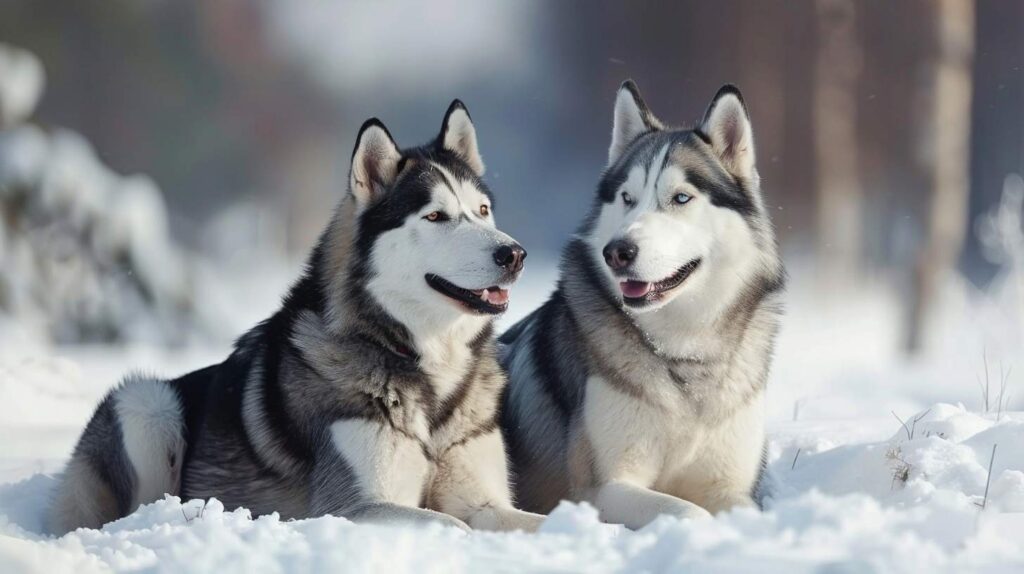
Alaskan Malamute vs Siberian Husky: Key Differences
These two Arctic sled breeds are frequently confused. However, the differences are meaningful and important for prospective owners.
| Feature | Alaskan Malamute | Siberian Husky |
|---|---|---|
| Size | Large – 75-85 lbs | Medium – 35-60 lbs |
| Build | Heavyweight – freight hauling | Lighter – speed racing |
| Purpose | Heavy load, short to medium distance | Light load, long distance speed |
| Eyes | Brown only (blue is disqualifying) | Blue, brown, or heterochromia |
| Tail | Waving plume over back | Brush tail, lower carry |
| Energy | High but steady | Extremely high |
| Vocalization | Howling and “talking” | Frequent howling and talking |
| Independence | Very high | Very high |
| Stubbornness | More pronounced | High |
| Prey drive | Very high | High |
Alaskan Malamute Temperament: What to Expect
The Affectionate Freight Dog
The Malamute’s personality reflects its working history in a specific way. The Mahlemut people did not simply use their Malamutes as working tools – instead, they shared their homes, their food, and their lives with them in conditions where human and dog survival depended on each other. Consequently, this close, interdependent relationship produced a breed with a fundamental warmth toward people that distinguishes Malamutes from more aloof spitz breeds.
Malamutes are genuinely affectionate dogs. They seek physical contact, enjoy being with their family, and show particular warmth with children – their patience and gentleness with children is a well-established breed characteristic. Indeed, many Malamute owners describe their dogs as having a clownish, playful quality that persists well into adulthood.
Independence and the Training Reality
The Malamute’s intelligence is genuine and substantial. However, it is the intelligence of a working dog that spent thousands of years making independent decisions about route-finding, weather assessment, and problem-solving in Arctic conditions without human direction. It is not the intelligence of a breed that breeders selected for handler compliance.
In practice, a Malamute that understands a command will evaluate whether compliance serves its current interest before responding. This is not stubbornness in the emotional sense – rather, it is the behavioral expression of a breed that breeders never selected for biddability. Training works best with high-value food rewards, short engaging sessions, genuine consistency, and realistic expectations. A Malamute will never respond like a Golden Retriever.
Pack Dynamics and Vocalization
Malamutes have a strong sense of pack hierarchy and can be assertive about establishing their position within multi-dog households. Furthermore, same-sex aggression is a documented breed trait – particularly in intact adults. Consequently, neutered male-female combinations are generally the most stable multi-dog configuration.
Malamutes also howl and “talk” – producing a remarkable range of expressive vocalizations including yodeling, woo-wooing, and extended howling sequences. This vocalization serves as genuine communication rather than problem barking. However, it carries well over distances and requires management in suburban environments.
Exercise: The Freight Dog’s Daily Needs
Overall, Alaskan Malamutes need 90-120 minutes of vigorous daily exercise. Their freight-hauling heritage means they have genuine endurance and a drive for sustained physical activity. Without adequate exercise, a Malamute becomes restless, destructive, and increasingly difficult to manage.
| Exercise Type | Suitability | Notes |
|---|---|---|
| Hiking and trail walking | Exceptional | Natural activity – mental and physical combined |
| Skijoring and dog sledding | Exceptional | Returns to breed function |
| Weight pulling | Excellent | Traditional breed sport |
| Backpacking | Excellent | Carries their own gear – very satisfying |
| Running with owner | Good | Excellent endurance but limited in heat |
| Off-leash in securely fenced area | Good | Must be genuinely escape-proof |
| Dog parks | Caution | Prey drive and same-sex aggression risk |
Heat Management
The Alaskan Malamute’s double coat works as a natural temperature regulator for Arctic conditions. In warm climates, owners must schedule exercise in early morning or after sunset. Additionally, air conditioning is essential above 75°F. Malamutes in warm climates require more careful heat management than almost any other breed – they are genuinely cold-climate dogs placed in an incompatible environment.
Grooming: The Coat Blow Challenge
Double Coat Management
The Malamute’s double coat – a dense, woolly undercoat beneath a coarser outer coat – is one of the most substantial in the dog world. During the two annual coat blows in spring and autumn, the volume of released undercoat is genuinely remarkable. Consequently, daily brushing for 3-4 weeks during each blow is essential to prevent matting and manage indoor hair accumulation.
| Grooming Task | Regular Periods | Coat Blow Periods |
|---|---|---|
| Brushing | 3-4 times per week | Daily for 3-4 weeks |
| Bathing | Every 8-10 weeks | After blow begins – helps release undercoat |
| Undercoat rake | Weekly | Daily during blows – essential tool |
| Ear cleaning | Every 2 weeks | Check for debris accumulation |
| Nail trimming | Every 3-4 weeks | Large nails – heavy duty grinder |
| Teeth brushing | 3-5 times per week | Giant breed dental maintenance |
Never Shave a Malamute
The double coat regulates temperature in both directions – it insulates against cold and provides UV protection and air circulation against heat. Shaving a Malamute removes heat protection rather than providing it. Furthermore, post-clipping coat damage is common and can permanently alter coat texture. Instead, manage heat through careful timing of outdoor activity, shade, and air conditioning.
Health: Common Conditions in Alaskan Malamutes
Health Conditions Overview
| Health Condition | Prevalence | Signs to Watch For | Action |
|---|---|---|---|
| Hip dysplasia | High | Stiffness, abnormal gait | OFA evaluation on both parents |
| Inherited polyneuropathy | Moderate – breed-specific | Weakness, muscle atrophy, abnormal gait | Neurological evaluation – DNA test available |
| Thrombopathia | Moderate – breed-specific | Excessive bleeding after injury | Platelet function testing if surgery planned |
| Hypothyroidism | Moderate | Weight gain, lethargy, coat changes | Annual thyroid panel |
| Day blindness (cone degeneration) | Low-moderate | Normal night vision, poor day vision | DNA test available |
| Chondrodysplasia (dwarfism) | Low – DNA testable | Abnormally short and bowed legs | DNA test – responsible breeders screen |
| Cataracts | Low-moderate | Cloudiness in lens | Annual CAER eye exam |
| Bloat (GDV) | Moderate | Distended abdomen, retching, collapse | Emergency vet – pre-plan nearest clinic |
| Zinc-responsive dermatosis | Moderate | Scaling and crusting around muzzle and eyes | Zinc supplementation – veterinary guidance |
Zinc-Responsive Dermatosis
Alaskan Malamutes and Siberian Huskies are among the breeds most commonly affected by zinc-responsive dermatosis – a condition where the dog’s system does not absorb dietary zinc normally, leading to skin crusting, scaling, and hair loss particularly around the muzzle, lips, and eye margins. Fortunately, the condition responds well to zinc supplementation under veterinary guidance. Any Malamute developing unexplained skin changes around the face warrants prompt veterinary evaluation.
Inherited Polyneuropathy
Inherited polyneuropathy is a progressive neurological condition causing weakness, muscle wasting, and gait abnormalities. Specifically, a DNA test is available for the primary mutation causing the condition in Alaskan Malamutes. Responsible breeders test all breeding dogs before mating. Consequently, buyers should request DNA test documentation for both parents before purchasing a puppy.
Training: Working With the Independent Arctic Mind
| Training Element | Effectiveness | Notes |
|---|---|---|
| High-value food rewards | Excellent | Primary motivator – standard treats insufficient |
| Short, varied sessions | Best results | Malamutes disengage from repetition rapidly |
| Positive reinforcement | Most effective approach | Respect through consistency, not force |
| Clear, firm structure | Essential | Provides the hierarchy context Malamutes understand |
| Harsh corrections | Counterproductive | Creates resistance rather than compliance |
| Recall training | Continuous priority | Never fully reliable off-leash |
The Recall Reality
Malamute recall is never fully reliable outside secure fencing. Indeed, their prey drive, independence, and physical capability mean that once they lock onto a scent trail or chase target, recall becomes ineffective. Therefore, off-leash exercise should occur only within genuinely escape-proof enclosures. Owners who respect this reality keep their dogs safe; owners who dismiss it do not.
Is an Alaskan Malamute Right for You?
Owners Who Succeed With Alaskan Malamutes
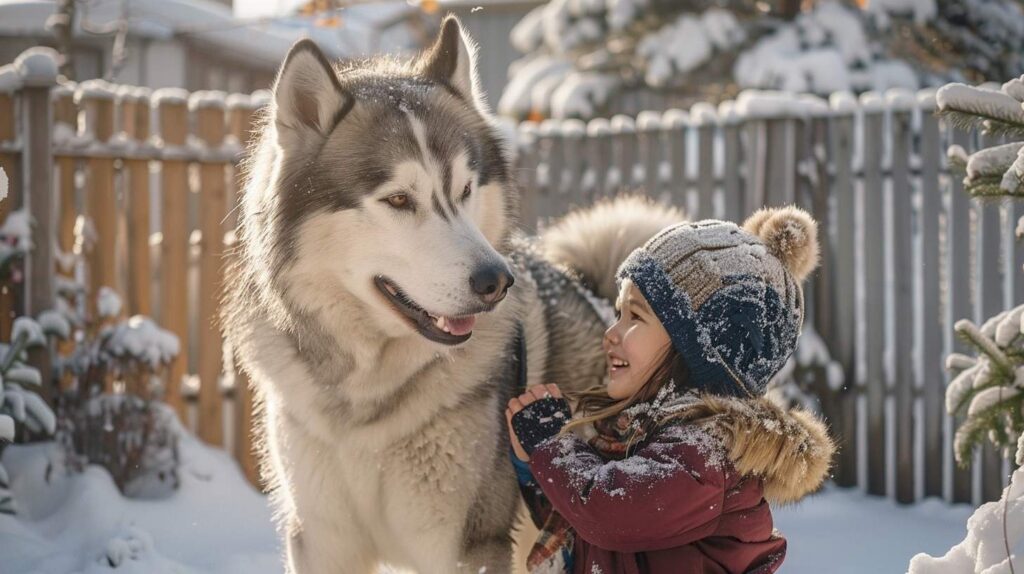
Malamutes thrive with active owners who hike, mush, or engage in sustained outdoor activity daily. They also suit cold or temperate climates with adequate space and genuinely secure fencing, experienced dog owners who understand independent northern breeds, and households without cats or small animals. Above all, anyone who finds the breed’s combination of physical presence, playful warmth, and primitive Arctic heritage genuinely compelling will form a deeply rewarding bond.
Households That Struggle With Alaskan Malamutes
In contrast, Malamutes are consistently challenging in warm climates without air conditioning, for owners who cannot provide 90-120 minutes of daily vigorous activity, for households with cats or small animals, for first-time owners, for apartment residents without immediate access to running space, and for anyone who underestimates the coat maintenance commitment.
New puppy? Find a name that fits their personality.
Browse 600+ dog names by gender and personality type — playful, calm, bold, elegant, funny or mysterious.
Try Pet Name FinderFrequently Asked Questions
Malamute Identity and Heritage
What is the difference between an Alaskan Malamute and a Siberian Husky? Indeed, they are distinct breeds that breeders developed for different purposes. The Malamute is larger (75-85 lbs vs 35-60 lbs), heavier-built, and specifically designed for hauling heavy loads at a steady pace. In contrast, the Husky is lighter, faster, and built for pulling lighter loads at speed over long distances. Notably, Malamutes have brown eyes only – blue eyes are a disqualifying fault – while Huskies can have blue eyes, brown eyes, or one of each. Both are highly independent and primitive in temperament, but the Malamute is generally considered more stubborn and more prey-driven.
Are Alaskan Malamutes good family dogs? Yes – within families that can meet their needs. Their gentleness and patience with children is a consistent breed characteristic. Their affectionate, playful nature also makes them warm family members. However, the requirements are non-negotiable: daily vigorous exercise, secure fencing, experienced handling, no small pets, and adequate heat management in warm climates.
Can a Malamute live in a hot climate? Only with very careful management. Air conditioning is essential above 75°F. Exercise must occur in early morning or after dark. Water must be available constantly. Furthermore, any signs of overheating – excessive panting, drooling, weakness, or disorientation – require immediate cooling and veterinary contact. Overall, Malamutes in warm climates require more active management than almost any other breed.
Malamute Care and Behavior
Why do Alaskan Malamutes howl so much? Howling is the primary communication method of Arctic breeds – it carries over distances in open terrain where barking would not. Historically, a breed that worked in the open Arctic alongside other dogs and humans used howling to communicate location, mood, and social information effectively. In domestic settings, Malamutes howl in response to sirens, music, other dogs, and as general communication with their owners. It cannot be eliminated but owners can manage it through adequate exercise and enrichment.
Are Alaskan Malamutes the same as sled dogs? All Alaskan Malamutes are sled dogs by heritage, but not all sled dogs are Malamutes. Specifically, sled dog racing today primarily uses Alaskan Huskies – mixed-breed dogs specifically developed for racing speed and endurance rather than the Malamute or Siberian Husky as show breeds. The Malamute’s traditional role was freight hauling rather than racing, and while it can participate in recreational mushing, it is not competitive in modern racing.
What is chondrodysplasia in Malamutes? Chondrodysplasia is a dwarfism gene present in some Malamute lines that produces abnormally short and bowed legs inconsistent with the breed standard. Fortunately, a DNA test is available for it. Responsible breeders test all breeding dogs and avoid producing affected offspring. Unfortunately, affected dogs face significant orthopaedic challenges throughout their lives.
Key Takeaways
- Alaska’s official state dog since 2010 – a breed more deeply woven into Alaskan history than any other
- Never shave the double coat – it regulates heat in both directions and shaving causes permanent damage
- Recall is never fully reliable – off-leash exercise requires genuinely escape-proof enclosures
- Inherited polyneuropathy and chondrodysplasia DNA tests should be requested for both parents
- Zinc-responsive dermatosis is a breed-specific skin condition – facial scaling warrants veterinary evaluation
- The Malamute is heavier, slower, and more independent than the Siberian Husky – different breeds for different purposes
- Two annual coat blows require daily brushing for 3-4 weeks – this is the most demanding regular maintenance task
- World War II cost the breed almost its entire donated population – the current breed descends from a very small surviving foundation
This article is for informational purposes only. Breed characteristics represent general tendencies and do not predict the behavior or health of any individual dog. Always consult a veterinarian for health advice.