Akita: Complete Breed Guide – Temperament, Care, Health & More (2026)
- 🐕 QUICK ANSWER: AKITA BREED GUIDE
- ✅ Akitas are loyal, dignified, and deeply devoted to their family – Japan’s national dog and a symbol of loyalty, health, and longevity
- ✅ Two distinct types: Japanese Akita (Akita Inu) and American Akita – different in appearance but sharing core temperament traits
- ✅ Males: 100-130 lbs, Females: 70-100 lbs – large, powerful, and built for cold climates
- ✅ Naturally clean dogs with minimal odor – they groom themselves similarly to cats
- ✅ The story of Hachiko – the Akita who waited for his deceased owner for nearly 10 years – is one of the most famous loyalty stories in history
- ⚠️ Akitas are not suitable for first-time dog owners – their independence, strength, and guarding instinct require experienced, confident handling
- ⚠️ Same-sex aggression is a documented breed trait – two male or two female Akitas in the same household require very careful management
- ⚠️ High prey drive – small animals including cats, small dogs, and wildlife are at risk without careful management
- ⚠️ Bloat (GDV) is a significant risk in this deep-chested breed – emergency planning is essential
- ❌ Do NOT acquire an Akita without researching breed-specific legislation in your area – some jurisdictions restrict ownership
- ❌ Do NOT expose an Akita to rough, punitive training methods – it produces fear-based defensive aggression in a breed capable of serious harm
- This article draws on breed standards from the Akita Club of America (ACA) and the Akiho (Akita Inu Hozonkai) – the Japanese preservation society – health research from the ACA Health Committee, and clinical guidance from veterinary immunologists and orthopaedic specialists with expertise in Japanese spitz and working breed health.
- Last Updated: May 2026
What Kind of Dog Is an Akita?
The Akita is one of the oldest and most culturally significant dog breeds in the world. Its origins lie in the mountainous Akita Prefecture of northern Japan, where hunters used large spitz-type dogs for centuries to hunt bear, wild boar, and deer in terrain so rugged and cold that only the most physically powerful and mentally resilient dogs could operate effectively. These ancient hunting dogs – called Matagi-inu – were the direct ancestors of the modern Akita.
The breed’s formal development began in the early 17th century when Shogun Tokugawa Yoshimune established the breeding of large fighting and hunting dogs as a regional tradition in the Akita domain. By the Meiji era, the Akita had become a symbol of Japanese cultural identity – associated with courage, loyalty, and spiritual protection. Families gave Akita puppies to new parents as symbols of health, happiness, and long life, a tradition that continues today.
The breed nearly became extinct during World War II, when the Japanese government ordered the confiscation of all dogs except German Shepherds for military use. Dedicated breeders hid their Akitas or registered them as German Shepherd crosses to avoid confiscation. Post-war recovery was slow, and the Akita gene pool had significantly reduced when American soldiers stationed in Japan began bringing Akitas home after the war – creating the divergence between the modern Japanese Akita (Akita Inu) and the American Akita.
The story of Hachiko, an Akita who met his owner Professor Hidesaburo Ueno at Shibuya Station each day and continued returning to the station every day for nearly 10 years after Ueno’s sudden death in 1925, became one of the most celebrated loyalty stories in modern history. A bronze statue of Hachiko stands at Shibuya Station in Tokyo and ranks among the most photographed landmarks in Japan.

At a Glance: Akita Quick Reference
| Category | Japanese Akita (Akita Inu) | American Akita |
|---|---|---|
| AKC group | Working Group | Working Group |
| Origin | Akita Prefecture, Japan | United States (from Japanese stock) |
| Male height | 25-27.5 inches | 26-28 inches |
| Male weight | 65-85 lbs | 100-130 lbs |
| Female weight | 55-75 lbs | 70-100 lbs |
| Lifespan | 10-13 years | 10-13 years |
| Build | More refined, fox-like head | Heavier, bear-like head |
| Colors | Red, fawn, white, brindle | All colors including black mask |
| Recognized | FCI, AKC (as separate breeds) | AKC, UKC |
| Energy level | Moderate | Moderate |
| Trainability | Moderate – independent | Moderate – independent |

Japanese Akita vs. American Akita: An Important Distinction
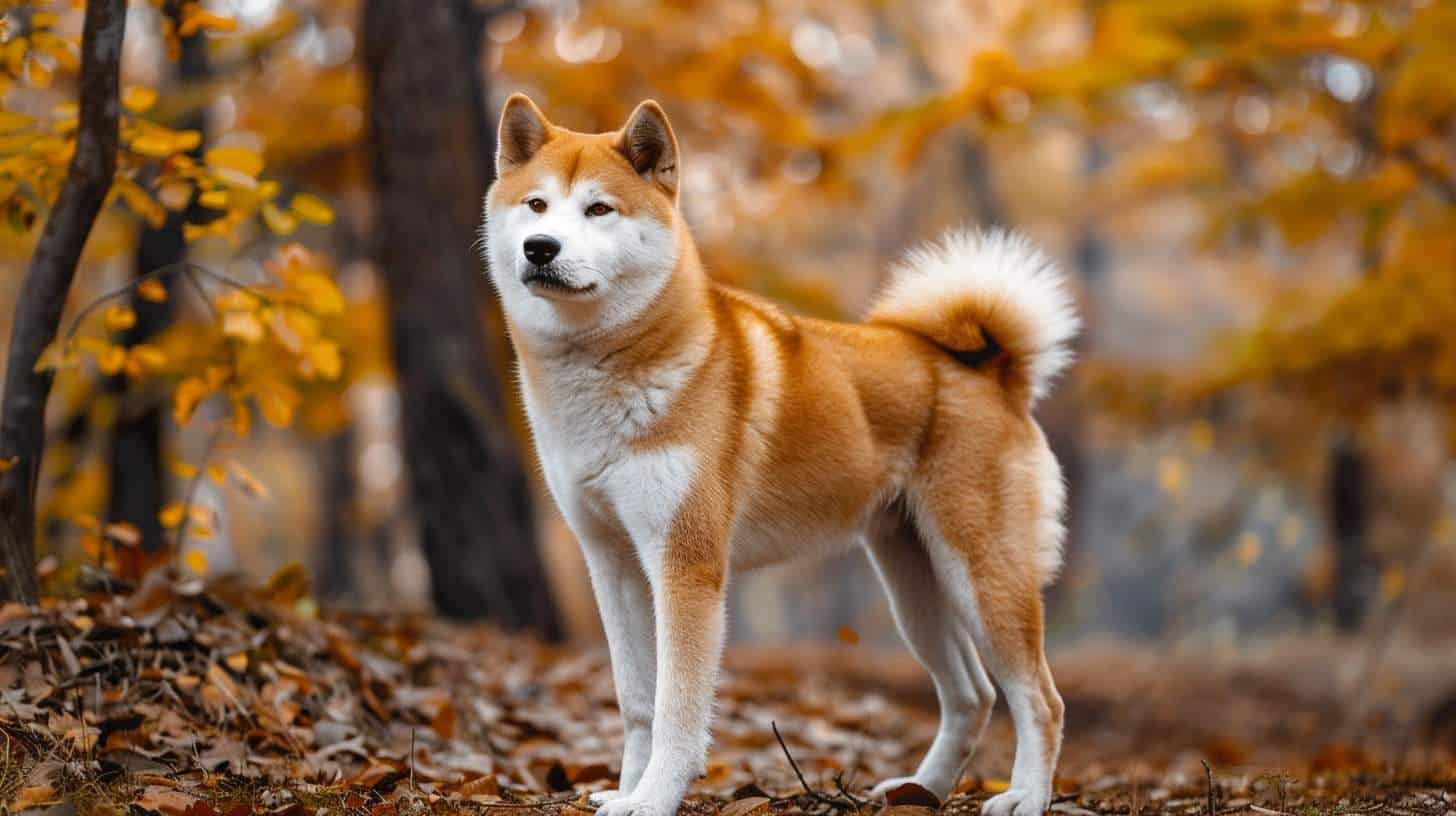
The split between Japanese and American Akitas resulted from different breeding priorities after World War II. American breeders selected for larger size, heavier build, and a broader range of colors. Japanese breeders worked to restore the original pre-war type – more refined, with a fox-like head and a restricted color palette.
| Feature | Japanese Akita (Akita Inu) | American Akita |
|---|---|---|
| Head shape | Fox-like – more refined and pointed | Bear-like – broader and heavier |
| Size | Smaller – 65-85 lbs males | Larger – 100-130 lbs males |
| Colors | Red, fawn, white, brindle – no black mask | All colors, including black mask and pinto |
| Build | Lighter, more agile | Heavier, more powerful |
| Temperament nuance | Slightly more reserved | Slightly more outgoing |
| FCI recognition | Yes – as Akita | As American Akita (separate breed) |
Both types share the core Akita temperament – loyalty, independence, dignity, and strong protective instinct. The choice between them is primarily aesthetic and size-based.
Akita Temperament: What to Expect Living With One
Loyalty and the Family Bond
The Akita’s loyalty to its family is its most celebrated characteristic – the quality that Hachiko’s story made famous globally. Akitas bond deeply and completely with their household members and show this loyalty through constant attentiveness, physical proximity, and an instinctive protectiveness that requires no training to activate.
This loyalty, however, is selective. The Akita reserves its affection for its family – not distributing it broadly to strangers or casual acquaintances. Toward unfamiliar people, most Akitas are reserved and watchful rather than friendly. This natural caution is appropriate breed behavior, not a training failure.
Independence and the Training Challenge
Hunters bred Akitas to work independently in remote mountain terrain, making their own decisions about tracking, hunting, and navigating challenging conditions without human direction. This working history produced an intelligence that focuses on solving problems according to its own assessment rather than pleasing its handler.
In practical terms, this means an Akita that understands a command will evaluate whether compliance serves its current interest before responding. This is not disobedience – it is the expression of an independent working mind. Training an Akita requires patience, consistency, high-value motivation, and a handler who earns respect through calm confidence rather than demanding it through force.
Dignity and Sensitivity
Akitas carry themselves with a dignity that owners consistently describe as the breed’s most distinctive behavioral characteristic. They are not excitable dogs. They do not rush toward every new person or situation. Instead, they observe, assess, and then respond with measured deliberateness. This composure under normal conditions coexists with a decisive, powerful response when the Akita judges that action is required.
Despite this dignified exterior, Akitas are sensitive dogs. They respond to their owner’s emotional state, are affected by household tension, and do not tolerate harsh handling. Punitive training creates anxiety and defensive aggression in a breed with the physical capability to cause serious harm.
Same-Sex Aggression
Same-sex aggression is a documented and significant trait in Akitas. Two males or two females in the same household can coexist if owners introduce them carefully and manage them consistently. However, the risk of serious conflict is real and ongoing. Male-female pairings are significantly more stable. Households considering multiple Akitas should research this trait carefully and establish a management plan before acquisition.
Exercise Requirements: Moderate but Purposeful
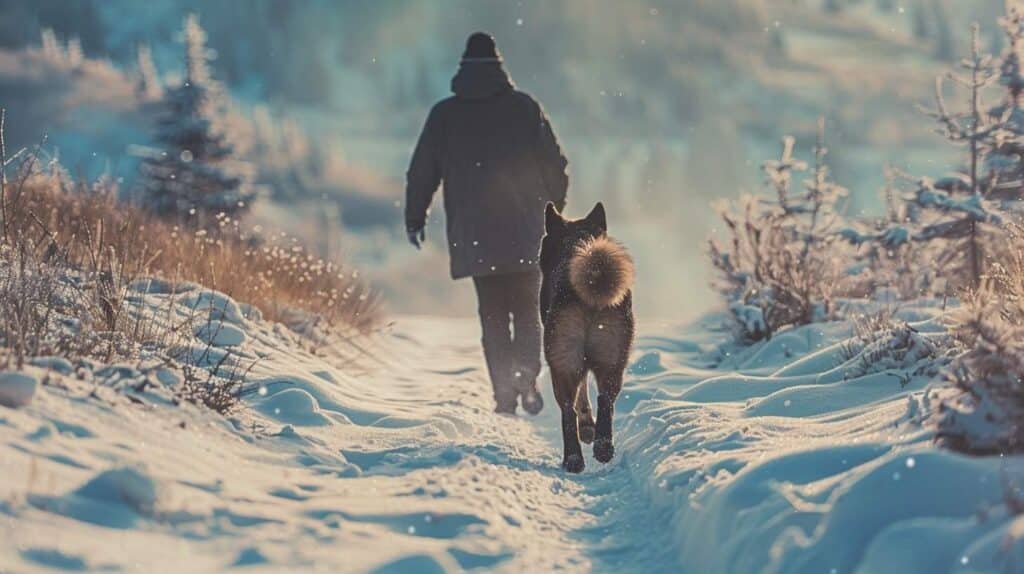
Akitas need 60-90 minutes of moderate to vigorous daily exercise. They are not extreme-endurance athletes like Siberian Huskies or Border Collies – they are powerful working dogs built for sustained effort rather than continuous high-speed activity.
| Exercise Type | Suitability | Notes |
|---|---|---|
| Brisk walking and hiking | Excellent | Primary daily activity – varied terrain preferred |
| Off-leash in securely fenced area | Good | Prey drive makes secure fencing essential |
| Swimming | Good | Most Akitas enjoy water – low-impact exercise |
| Pulling activities (weight pull, carting) | Excellent | Breed-appropriate working activity |
| Dog parks | Not recommended | Same-sex aggression and prey drive create risk |
| Running off-leash in unfenced areas | Avoid | Prey drive and independence make recall unreliable |
Heat Sensitivity
The Akita’s dense double coat provides exceptional cold-weather insulation but limits heat dissipation. Therefore, exercise in temperatures above 75°F should be restricted to early morning and evening. Air conditioning is important in warm climates. Akitas are genuinely cold-climate dogs that struggle in sustained heat.
For guidance on recognizing heat-related emergencies, read our guide on 10 warning signs your dog needs emergency vet care.
Grooming: Managing the Spitz Double Coat
The Akita’s thick double coat sheds year-round and produces two dramatic seasonal coat blows in spring and autumn. Outside of these periods, weekly brushing manages normal shedding. During coat blows, however, daily brushing is essential.
| Grooming Task | Frequency | Notes |
|---|---|---|
| Brushing (regular periods) | Weekly | Slicker brush and undercoat rake |
| Brushing (coat blow periods) | Daily | Spring and autumn – volume is very significant |
| Bathing | Every 6-8 weeks | Thorough drying essential – dense coat retains moisture |
| Ear cleaning | Every 2 weeks | Check for debris and odor |
| Nail trimming | Every 3-4 weeks | Large nails require heavy-duty clippers or grinder |
| Teeth brushing | 3-5 times per week | Large breed dental maintenance |
The Akita’s natural cat-like self-grooming behavior keeps the coat cleaner than many double-coated breeds, reducing the frequency of full baths needed.
Health: Common Conditions in Akitas
| Health Condition | Prevalence | Signs to Watch For | Action |
|---|---|---|---|
| Hip dysplasia | High | Stiffness, reluctance to exercise, abnormal gait | OFA evaluation on both parents |
| Bloat (GDV) | High | Distended abdomen, unproductive retching, collapse | Emergency vet immediately |
| Hypothyroidism | High – one of highest rates in any breed | Weight gain, lethargy, skin and coat changes | Annual thyroid panel – critical in this breed |
| Progressive retinal atrophy (PRA) | Moderate | Night blindness progressing | Annual eye exam, DNA testing |
| Immune-mediated diseases | Elevated | Various – skin, blood, joints affected | Veterinary diagnosis and management |
| Uveodermatologic syndrome (VKH) | Moderate – breed-specific | Eye inflammation, skin and coat depigmentation | Immediate ophthalmology referral |
| Sebaceous adenitis | Moderate – breed-specific | Scaling, hair loss, coat texture changes | Dermatology referral – management focused |
| Pemphigus foliaceus | Moderate | Crusting, scaling around nose and face | Veterinary dermatology |
Hypothyroidism: A Primary Concern
Akitas have one of the highest rates of hypothyroidism of any dog breed. Annual thyroid panels are not a precautionary recommendation – they are a genuine breed health necessity. Hypothyroidism in Akitas responds well to management when veterinarians identify it early. However, undiagnosed cases cause progressive weight gain, lethargy, skin and coat deterioration, and behavioral changes.
Uveodermatologic Syndrome (VKH)
Uveodermatologic syndrome – also called VKH-like syndrome – is a breed-specific immune-mediated condition that affects Akitas. It causes inflammation of the uveal tract of the eye alongside depigmentation of the skin, nose, lips, and footpads. It can cause permanent blindness if owners do not treat it promptly. Any Akita showing sudden eye inflammation or unexpected depigmentation of the face or footpads requires immediate veterinary evaluation.
Training: Working With an Independent Working Breed
Akitas respect and respond to calm, consistent leadership from a handler who provides clear structure without force. They do not respond to emotional pressure, raised voices, or physical corrections – these approaches produce anxiety and defensive behavior rather than compliance.
| Training Element | Effectiveness | Notes |
|---|---|---|
| High-value food rewards | Excellent | Primary motivator – use real meat |
| Calm, consistent structure | Essential | Akitas need clear rules maintained consistently |
| Short, varied sessions | Best results | 10-15 minutes – Akitas disengage from repetition |
| Positive reinforcement | Only effective approach | Any other approach is counterproductive |
| Experienced handler | Strongly recommended | First-time owners need professional support |
Socialization: Non-Negotiable
Early and ongoing socialization is critical with Akitas due to their natural wariness toward strangers and strong protective instinct. An under-socialized Akita is not simply shy – it is an unpredictable large, powerful dog that treats a wide range of normal situations as threats. This outcome is preventable through consistent socialization from puppyhood but very difficult to correct in adulthood.
Is an Akita Right for You?
Owners Who Succeed With Akitas
Akitas thrive with experienced dog owners who have handled large, independent breeds. They also suit active households that can provide daily exercise and consistent training. Additionally, owners who want a devoted, dignified companion rather than a broadly social dog find the breed deeply rewarding. Homes with securely fenced yards are essential. Above all, anyone who finds the breed’s independent character and cultural heritage genuinely compelling will form a profound bond with an Akita.
Households That Struggle With Akitas
Akitas are consistently challenging for first-time dog owners without professional support. They also struggle in households with multiple same-sex dogs, families with cats or small dogs without a very careful management plan, owners in hot climates without air conditioning, and anyone expecting a consistently obedient, easily trained companion.
New puppy? Find a name that fits their personality.
Browse 600+ dog names by gender and personality type — playful, calm, bold, elegant, funny or mysterious.
Try Pet Name FinderFrequently Asked Questions
Akita History and Culture
Who was Hachiko? Hachiko was an Akita owned by Professor Hidesaburo Ueno of Tokyo Imperial University. From 1924, Hachiko met his owner at Shibuya Station every evening when he returned from work. In May 1925, Professor Ueno died of a cerebral hemorrhage while at work and never returned. Hachiko continued returning to Shibuya Station every day at the time of the evening train for the next nine years, nine months, and fifteen days until his own death in 1935. His story became internationally known, and a bronze statue erected at Shibuya Station in 1934 remains one of the most visited spots in Tokyo.
Are there two separate Akita breeds? Yes. The FCI recognizes the Japanese Akita (Akita Inu) and the American Akita as two separate breeds. The AKC recognizes both under the single designation Akita but acknowledges the two types. Japan’s Akiho preservation society maintains the Japanese type separately. For buyers, the practical distinction is primarily size and color – American Akitas are larger and come in more colors, Japanese Akitas are smaller and have a more restricted color palette.
What makes Akitas different from other Japanese spitz breeds? The Akita is the largest of the six native Japanese dog breeds the Nihon Ken Hozonkai (NIPPO) recognizes. The others – Shiba Inu, Kishu Ken, Shikoku Ken, Hokkaido Ken, and Kai Ken – are all smaller. All share spitz characteristics of erect ears, curled tail, and double coat, but the Akita stands out through its size, its bear-hunting heritage, and its status as the only Japanese breed that received official national treasure designation.
Akita Health and Management
Can Akitas live with cats? Occasionally – with very careful introduction and ongoing management. Their high prey drive means most Akitas will pursue cats that run. Households with cats that owners cannot separate when unsupervised carry ongoing risk. Some Akitas raised with cats from puppyhood develop peaceful coexistence – but this is the exception rather than the default, and owners should never assume it.
What is sebaceous adenitis in Akitas? Sebaceous adenitis is an inflammatory condition affecting the sebaceous glands of the skin, causing progressive hair loss, scaling, and changes to coat texture. It occurs more commonly in Akitas than most other breeds. Affected dogs typically develop a distinctive musty odor and the coat loses its normal sheen and texture. No cure exists, but management through oil treatments, medicated shampoos, and in some cases immunosuppressive medication controls the condition effectively.
How much do Akitas shed? Significantly – particularly during the two annual coat blows in spring and autumn. During blow periods, the volume of shed undercoat is extraordinary. Daily brushing significantly reduces indoor hair accumulation during these periods. Outside of blow periods, weekly brushing manages year-round shedding. Akita ownership means accepting dog hair as a permanent household feature.
Are Akitas good family dogs? With careful socialization and experienced handling, yes. Akitas are typically devoted to all family members and particularly gentle with children in their own household. Their size and instinctive protectiveness require supervision with visitors’ children and careful management around unfamiliar people.
Key Takeaways
- Hachiko’s story is not mythology – the 10-year wait at Shibuya Station is historically documented and remains the breed’s defining cultural legacy
- Hypothyroidism is unusually common in Akitas – annual thyroid panels are a genuine health necessity for this breed
- Same-sex aggression is a real and serious breed trait – household composition requires careful planning
- VKH-like syndrome can cause permanent blindness – any sudden eye inflammation requires immediate veterinary attention
- Socialization from puppyhood is the single most important investment in a safe adult Akita
- Two distinct types exist – Japanese and American – with different sizes, colors, and FCI recognition status
- Sebaceous adenitis and pemphigus foliaceus are breed-specific skin conditions that owners should know before acquisition
- The combination of loyalty, dignity, and independence makes the Akita one of the most profound companion relationships available – but only in the right hands
This article is for informational purposes only. Breed characteristics represent general tendencies and do not predict the behavior or health of any individual dog. Always consult a veterinarian for health advice.