Border Collie: Complete Breed Guide – Temperament, Care, Health & More (2026)
- 🐕 QUICK ANSWER: BORDER COLLIE BREED GUIDE
- ✅ Border Collies are ranked the world’s most intelligent dog breed – they learn new commands in under 5 repetitions
- ✅ Exceptionally loyal, athletic, and trainable – the top breed in agility, obedience, and herding competitions globally
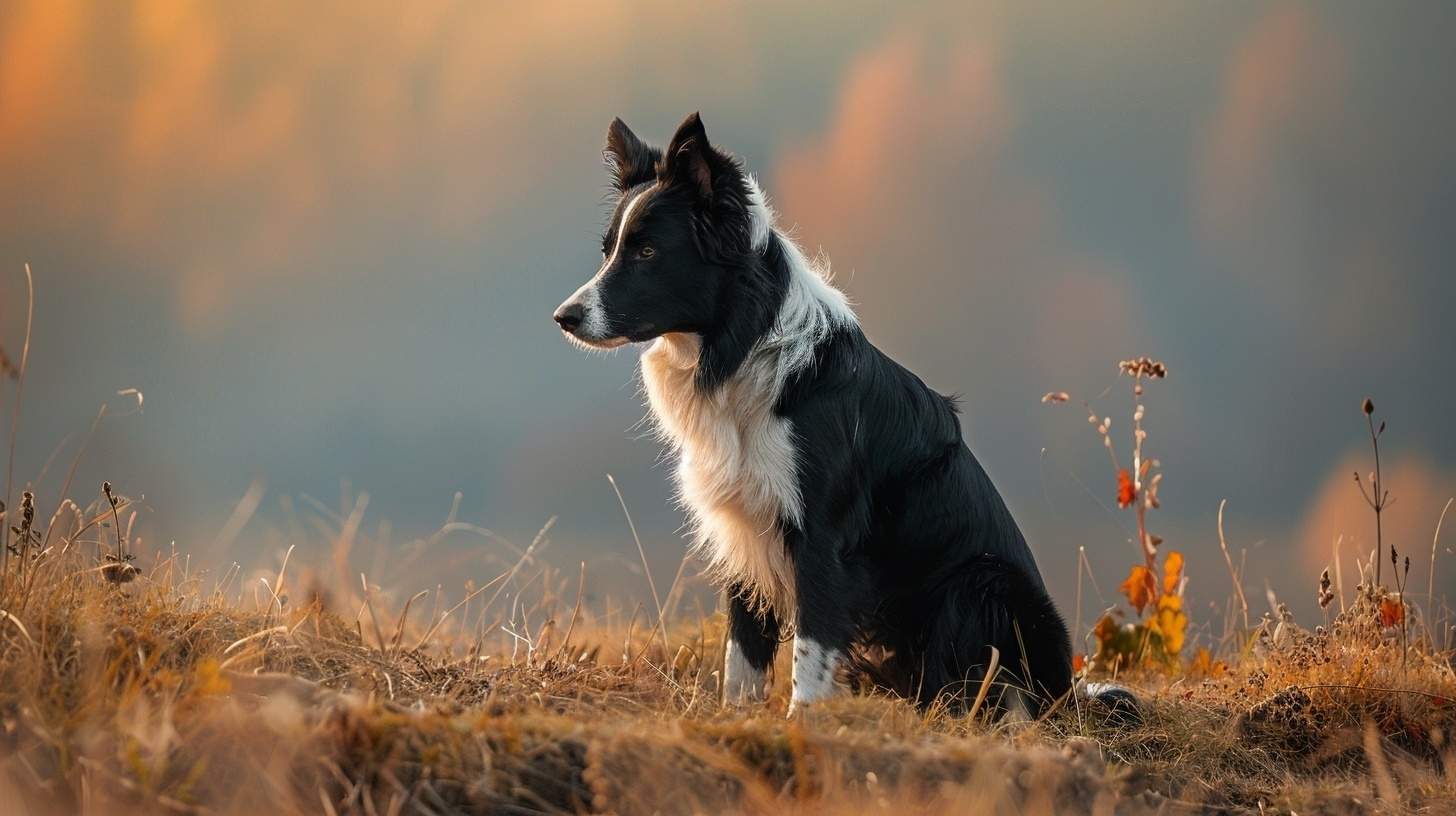
- ✅ Medium-sized: Males 30-55 lbs, Females 27-42 lbs – athletic and agile rather than heavy
- ✅ Two coat varieties: rough (long) and smooth (short) – both require regular brushing
- ✅ Lifespan 12-15 years – one of the healthiest and longest-lived medium breeds available
- ⚠️ Without 2-3 hours of vigorous daily exercise AND mental stimulation, Border Collies develop compulsive, anxious, and destructive behaviors
- ⚠️ The herding instinct is intense and always active – children, cars, bikes, and other animals will be herded
- ⚠️ Noise sensitivity is a significant breed trait – thunderstorms, fireworks, and loud environments cause genuine distress in many Border Collies
- ⚠️ MDR1 gene mutation affects approximately 35% of Border Collies – certain medications are dangerous for affected dogs
- ❌ Do NOT acquire a Border Collie as a status symbol, for its appearance, or without a serious activity plan – they are working dogs, not lifestyle accessories
- ❌ Do NOT leave a Border Collie under-stimulated – boredom in this breed produces compulsive behaviors that are extremely difficult to reverse
- This article is based on breed standards from the American Border Collie Association (ABCA) and the Border Collie Society of America (BCSA), health research from the BCSA Health Committee, and clinical guidance from veterinary neurologists and canine behaviorists specializing in high-drive working breed behavior.
- Last Updated: May 2026
What Kind of Dog Is a Border Collie?
The Border Collie is not simply a very intelligent dog. It is a dog that breeders developed, over centuries of intensive selection, to do one thing better than any other animal on Earth: think. The border regions of England and Scotland produced a herding dog whose value was measured not in strength or speed but in the ability to make independent decisions – reading livestock, anticipating movement, problem-solving under pressure, and responding to handler signals across distances – for hours at a time.
Dr. Stanley Coren’s landmark research on dog intelligence placed the Border Collie first among all breeds in working and obedience intelligence. This ranking reflects what shepherds have known for centuries: the Border Collie operates on a cognitive level that has no parallel in domestic dogs. It learns new commands after fewer than five repetitions and obeys known commands on the first request more than 95% of the time. Furthermore, it does all of this while simultaneously monitoring livestock, terrain, weather, and handler position with a neural processing capacity that remains extraordinary even in a domestic setting.
This cognitive capacity is inseparable from the demands it creates. A brain built to process complex information continuously, given nothing to process, turns inward. As a result, Border Collies deprived of adequate mental engagement do not simply become bored – they develop compulsive behaviors with a reliability that makes them one of the most frequently surrendered breeds despite being one of the most capable. Shadow chasing, ball obsession, compulsive circling, fence running, and anxiety-driven behaviors are not personality flaws – they are the predictable outcomes of placing a working brain in a context that offers no work.
At a Glance: Border Collie Quick Reference
| Category | Details |
|---|---|
| AKC group | Herding Group |
| Origin | Anglo-Scottish border region |
| Male height | 19-22 inches |
| Female height | 18-21 inches |
| Male weight | 30-55 lbs |
| Female weight | 27-42 lbs |
| Lifespan | 12-15 years |
| Energy level | Extremely high |
| Exercise needed | 2-3 hours per day – vigorous |
| Mental stimulation needed | Very high – equal priority to exercise |
| Coat varieties | Rough (long) and smooth (short) |
| Shedding | Moderate to high |
| Trainability | Exceptional – world’s most trainable breed |
| Good with children | Moderate – herding instinct requires management |
| Good with other dogs | Generally yes with socialization |
| Good with cats | Variable – high herding and prey drive |
| MDR1 mutation risk | Moderate – 35% of breed |
| Noise sensitivity | High – significant breed trait |
| Apartment suitable | No |
| First-time owner suitable | Not recommended |
Border Collie Temperament: What to Expect Living With One
The Eye: The Border Collie’s Defining Behavior
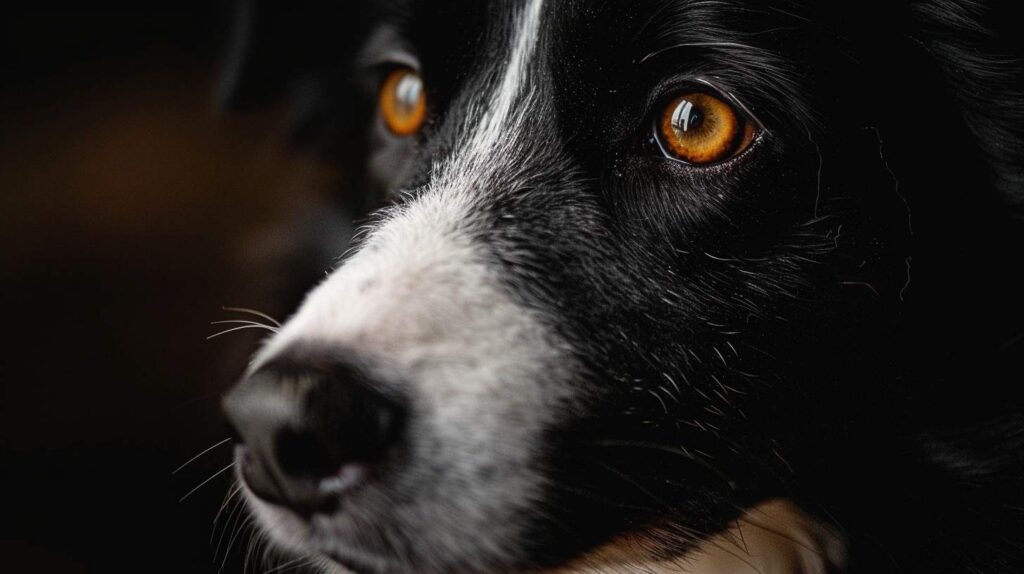
Border Collies control livestock using an intense, unwavering stare called the eye – a fixed, hypnotic gaze that causes sheep to move away from the pressure of the dog’s focused attention. This behavior is instinctive, ancient, and completely active in domestic Border Collies.
In a home setting, the eye is directed at anything that moves: children running, cats crossing a room, cars passing outside, balls rolling, bicycles, and joggers. The dog drops its head, fixes its gaze, crouches slightly, and moves in a controlled arc around its target. Although this is not aggression, its expression toward children and small animals requires consistent management and training.
Intelligence and Obsession
Border Collies do not simply learn – they become expert at things. When introduced to a ball, a Border Collie develops an interest that can escalate into obsession. After mastering a trick sequence, it immediately requires a more complex one. Given a puzzle to solve, it will solve it and then dismantle it looking for additional challenge.
This depth of engagement is the Border Collie’s greatest gift and its most challenging characteristic. Owners who match their dog’s engagement level find a partner of extraordinary capability. However, owners who cannot sustain this level of interaction find a dog that creates its own engagement, usually in ways the household finds destructive or alarming.
Sensitivity and Reactivity
Border Collies are among the most emotionally sensitive dog breeds. They respond intensely to tone of voice, body language, and environmental changes. Harsh corrections, angry voices, and unpredictable handling create anxiety that degrades both the relationship and the dog’s behavior.
Additionally, noise sensitivity affects a significant proportion of Border Collies – many are genuinely distressed by thunderstorms, fireworks, and sudden loud sounds in ways that require management strategies including desensitization training, sound-masking, and sometimes veterinary support for severe cases.
The Herding Instinct and Children
A Border Collie’s response to running children is instinctive and immediate. The dog crouches, uses the eye, moves to intercept the child’s path, and nips at heels – standard herding behavior that is entirely normal in this breed. Young children find this frightening, and the nipping can cause injury even without aggressive intent.
Managing this behavior requires consistent training, providing legitimate herding outlets such as herding balls or structured treibball, and ensuring the dog’s exercise needs are thoroughly met so that herding drive is not amplified by excess energy.
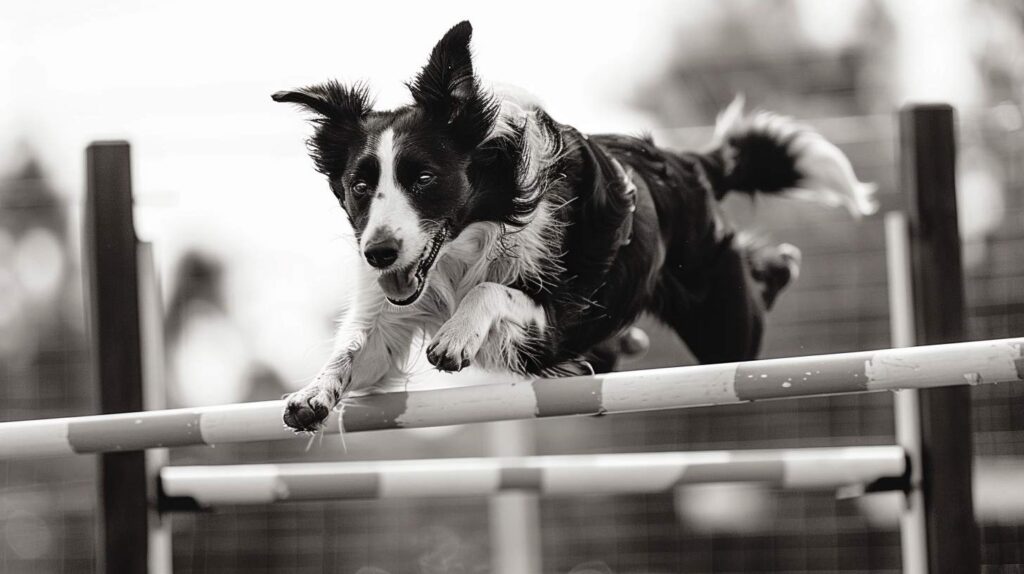
Exercise Requirements: Built to Run All Day
What Adequate Exercise Actually Means
Border Collies in working condition can sustain physical activity for 8-12 hours. A domestic Border Collie does not require this level of activity, but 2-3 hours of vigorous daily exercise is a genuine requirement rather than a theoretical guideline. A 30-minute walk does not meet this need, and even a 90-minute walk does not fully satisfy it. Vigorous, high-intensity, mentally engaging activity is the only approach that works.
| Exercise Type | Suitability | Notes |
|---|---|---|
| Off-leash running in fenced area | Excellent | Essential daily outlet |
| Agility training | Exceptional | Ideal breed activity – physical and mental |
| Herding (livestock or herding balls) | Exceptional | Returns to breed function |
| Frisbee / disc dog | Excellent | High-intensity, athletic, engaging |
| Canicross / bikejoring | Excellent | Sustained cardiovascular activity |
| Swimming | Good | Low-impact, excellent cardiovascular |
| Fetch | Good with limits | Can become obsessive – manage frequency |
| Hiking | Excellent | Mental engagement from varied terrain |
| Leash walking only | Insufficient | Cannot meet this breed’s needs |
The Fetch Problem
Fetch is a useful exercise tool for Border Collies but carries a specific risk: ball obsession. Some Border Collies develop a compulsive relationship with ball games that overrides all other behaviors – they cannot settle, cannot respond to other commands, and become intensely distressed when the ball is unavailable. Consequently, limiting fetch sessions in duration and frequency, and ensuring the dog has other activities available, prevents this pattern from developing.
Mental Stimulation: As Important as Physical Exercise
A Border Collie that receives 2 hours of physical exercise but no mental engagement is not a satisfied dog. The combination of vigorous exercise and cognitive challenge is what produces a calm, settled dog. The following activities provide meaningful mental stimulation:
| Activity | Engagement Level | Notes |
|---|---|---|
| Advanced obedience training | Very high | Border Collies progress to competition level quickly |
| Agility course work | Exceptional | Combines physical and cognitive perfectly |
| Scent detection / nose work | Very high | Calming and deeply engaging |
| Herding balls (treibball) | Very high | Channeled herding drive |
| Learning trick sequences | High | Short sessions – progress rapidly |
| Interactive puzzle feeders | Moderate | Supplement only – not sufficient alone |
| Livestock herding | Exceptional | The truest expression of breed function |
MDR1 Mutation: Important Health Information
The MDR1 gene mutation – the same mutation present in Australian Shepherds – affects approximately 35% of Border Collies. In affected dogs, certain drugs reach toxic concentrations in the brain because the blood-brain barrier pump is impaired.
| Drug | Risk to MDR1-Affected Dogs |
|---|---|
| Ivermectin | Severe neurotoxicity – commonly fatal at standard doses |
| Milbemycin | Neurotoxicity at higher doses |
| Loperamide (Imodium) | Neurotoxicity |
| Acepromazine | Prolonged or excessive sedation |
| Butorphanol | Enhanced sedation |
Every Border Collie should receive a DNA test for MDR1 before any medications are administered. Inform all veterinarians, emergency clinics, and kennels of the dog’s MDR1 status in writing.
Grooming: Managing Two Coat Types
Rough Coat (Long)
The rough coat Border Collie has a longer, feathered coat that requires more regular maintenance. Brushing 2-3 times per week prevents the tangles that form behind the ears, in armpits, and on the feathering of the legs. During seasonal coat blows, daily brushing is necessary to manage the volume of shed undercoat.
Smooth Coat (Short)
The smooth coat variety has a shorter, more close-lying coat that requires significantly less maintenance. Weekly brushing manages shedding effectively during normal periods. During coat blows, twice-weekly brushing is sufficient for most dogs.
| Grooming Task | Rough Coat | Smooth Coat |
|---|---|---|
| Brushing (normal periods) | 2-3 times per week | Once per week |
| Brushing (coat blow) | Daily | 2-3 times per week |
| Bathing | Every 6-8 weeks | Every 6-8 weeks |
| Ear cleaning | Every 2 weeks | Every 2 weeks |
| Nail trimming | Every 3-4 weeks | Every 3-4 weeks |
| Teeth brushing | 3-5 times per week | 3-5 times per week |
| Professional grooming | Every 8-12 weeks (rough) | Minimal need (smooth) |
Health: A Generally Hardy Breed
Border Collies are one of the healthier purebred breeds, with fewer genetic conditions than many popular breeds. Their working dog origins and historically function-based selection have preserved robust overall health.
| Health Condition | Prevalence | Signs to Watch For | Action |
|---|---|---|---|
| MDR1 mutation | 35% | No visible signs – DNA test only | Test before any medication |
| Hip dysplasia | Moderate | Stiffness, reluctance to exercise | OFA evaluation on both parents |
| Progressive retinal atrophy (PRA) | Moderate | Night blindness progressing | Annual eye exam, DNA testing |
| Collie eye anomaly (CEA) | Moderate | Variable – puppy eye exam required | Exam at 6-8 weeks by ophthalmologist |
| Epilepsy | Moderate | Seizures | Neurological evaluation |
| Deafness (merle-to-merle breeding) | High risk in double merle | Lack of response to sound | BAER hearing test on puppies |
| Osteochondrosis (OCD) | Low-moderate | Foreleg lameness in young dogs | Orthopaedic evaluation |
| Neuronal ceroid lipofuscinosis (NCL) | Rare – DNA testable | Progressive neurological decline | DNA test available |
| Imerslund-Grabeck syndrome | Rare – DNA testable | Vitamin B12 deficiency, poor growth | DNA test available |
Merle Breeding Warning
Double merle Border Collies – produced by breeding two merle-coated parents – face a very high risk of blindness, deafness, and other neurological deficits. Responsible breeders never breed merle to merle. Therefore, when acquiring a merle Border Collie, always verify that only one parent carries the merle gene.
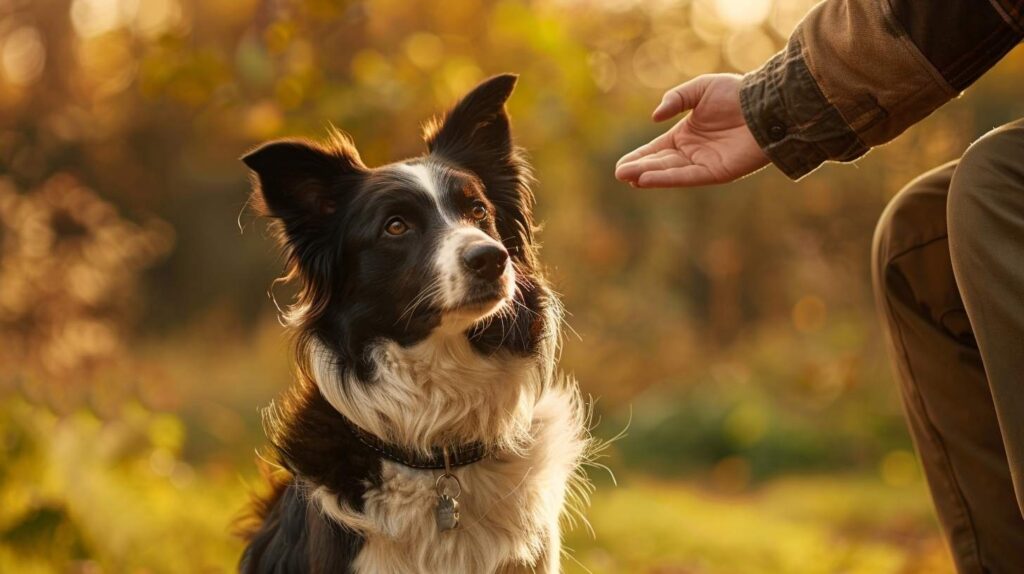
Training: Working With the World’s Most Trainable Dog
What Makes Border Collie Training Different
Training a Border Collie is less about overcoming resistance than about keeping pace with the dog’s learning rate. Border Collies master basic commands rapidly and require progressive challenge to stay engaged. A training program that would take months with most breeds takes only weeks with a Border Collie – which means owners must have a clear plan for what comes next.
| Training Element | Effectiveness | Notes |
|---|---|---|
| Positive reinforcement (food + play) | Excellent | Primary method – most effective |
| Marker training (clicker) | Exceptional | Precision the Border Collie brain rewards |
| Rapid progression to advanced work | Essential | Basic commands mastered quickly – move forward |
| Dog sports from early age | Highly recommended | Channels drive productively |
| Short, varied sessions | Best results | 10-15 minutes – end before engagement drops |
| Repetitive drills of mastered behaviors | Counterproductive | Border Collies disengage from tasks they consider solved |
Managing Compulsive Behaviors
If a Border Collie has already developed compulsive behaviors – shadow chasing, obsessive ball fixation, compulsive circling – structured behavior modification with a certified behaviorist experienced in working breed compulsions is required. Prevention is vastly easier than treatment. Ensuring adequate exercise and mental stimulation from the beginning is the only reliable prevention.
Is a Border Collie Right for You?
Owners Who Succeed With Border Collies
Border Collies thrive with active owners who participate in dog sports, herding, or structured outdoor activities, with households that can provide 2-3 hours of vigorous daily activity, with experienced dog owners who understand working breed requirements, in rural or suburban settings with outdoor space, and with anyone who genuinely wants a highly engaged, deeply responsive working partnership with their dog.
Households That Struggle With Border Collies
Border Collies are poor fits for apartment residents, for owners who work full-time away from home without an activity plan, for families with young children as the primary reason for acquisition, for first-time dog owners without access to professional guidance, and for anyone whose primary attraction to the breed is its appearance or intelligence reputation rather than a commitment to meeting its working needs.
New puppy? Find a name that fits their personality.
Browse 600+ dog names by gender and personality type — playful, calm, bold, elegant, funny or mysterious.
Try Pet Name FinderFrequently Asked Questions
Are Border Collies good family dogs?
For the right family, yes. Active families that exercise daily, have older children, and can commit to the breed’s stimulation requirements find Border Collies exceptional family companions – loyal, engaged, and protective. However, for families seeking a calm, low-maintenance dog or those with young children as the primary consideration, the Border Collie is not the appropriate choice.
How smart is a Border Collie really?
Exceptionally so. Stanley Coren’s research placed Border Collies first in working and obedience intelligence among all breeds. In practice, this means they understand approximately 200+ words on average, learn complex behavior sequences after a handful of repetitions, and solve problems with creativity that surprises even experienced owners. Chaser, a Border Collie studied by psychologists, learned the names of over 1,000 individual objects – the largest vocabulary of any non-human animal ever tested.
Can Border Collies live with cats?
Sometimes – with careful management and early socialization. The herding instinct means a Border Collie may pursue cats, not with predatory intent but with herding behavior that terrifies and injures the cat nonetheless. A Border Collie and cat that grow up together often coexist peacefully. However, adult Border Collies introduced to cats require careful, gradual desensitization.
Why does my Border Collie stare at everything?
This is the eye – the herding behavior that makes Border Collies the world’s most effective livestock herding dogs. It is completely instinctive. Your dog is not threatening what it stares at – rather, it is applying herding pressure to control its movement. Training an incompatible behavior and providing legitimate herding outlets reduces its expression toward inappropriate targets.
Are Border Collies good for first-time owners?
Not without professional support. Their intelligence, sensitivity, high drive, and specific behavioral needs make them one of the most demanding breeds for inexperienced owners. Therefore, first-time dog owners who genuinely want a Border Collie should work with an experienced trainer from day one, ideally someone with specific working breed experience.
How do I prevent compulsive behaviors in my Border Collie?
Prevention is substantially easier than treatment. Ensure adequate physical exercise from the beginning, provide daily mental stimulation through training or sport, avoid allowing any single behavior to become excessive or obsessive, and work with a trainer experienced in herding breeds from puppy stage. A Border Collie whose working needs are met from the start rarely develops compulsive patterns.
What dog sport is best for a Border Collie?
Agility is the most popular and widely available sport for Border Collies, and the breed dominates competition at every level. Herding trials are the most true to breed function. Disc dog competition, flyball, obedience trials, and treibball are all excellent options. Ultimately, the best sport is the one the specific dog and owner both enjoy – consistency and enthusiasm matter more than sport choice.
Key Takeaways
- Border Collies are the world’s most intelligent dogs – this is a requirement, not a feature, and demands matching commitment
- 2-3 hours of vigorous daily activity combined with mental stimulation is the minimum – not a guideline
- The herding instinct is always active – children, cars, and small animals will be herded without training intervention
- Compulsive behaviors are the predictable outcome of under-stimulation – prevention through adequate activity is essential
- MDR1 DNA testing must be done before any medications are administered – 35% of the breed carry the mutation
- Noise sensitivity affects many Border Collies significantly – storm and firework management is a genuine care consideration
- Never breed merle to merle – double merle puppies face very high rates of blindness and deafness
- This breed is a working partnership, not a pet – owners who approach it as such find it extraordinary
This article is for informational purposes only. Breed characteristics represent general tendencies and do not predict the behavior or health of any individual dog. Always consult a veterinarian for health advice and a certified behaviorist experienced with working breeds for behavioral guidance.