Dachshund: Complete Breed Guide – Temperament, Care, Health & More (2026)
- 🐕 QUICK ANSWER: DACHSHUND BREED GUIDE
- ✅ Dachshunds are bold, curious, and affectionate – they form extremely strong bonds with their primary person
- ✅ Three coat types (smooth, wirehaired, longhaired) and two sizes (standard and miniature) – all share identical temperament
- ✅ Standard: up to 32 lbs, Miniature: under 11 lbs – both require the same care with size-specific adaptations
- ✅ Low to moderate exercise needs – two daily walks of 20-30 minutes satisfy most Dachshunds well
- ✅ Surprisingly courageous and alert – will bark confidently at threats far larger than themselves
- ⚠️ Intervertebral disc disease (IVDD) affects up to 25% of Dachshunds – spinal health management is a lifelong priority
- ⚠️ Dachshunds are notoriously difficult to housetrain – more patience and consistency is required than with most breeds
- ⚠️ Prey drive is high – bred to pursue and kill badgers underground, this instinct remains active in domestic life
- ⚠️ Stubbornness and independent thinking make training more challenging than their small size suggests
- ❌ Do NOT allow Dachshunds to jump on and off furniture freely – repeated impact stresses the spine and accelerates disc disease
- ❌ Do NOT let a Dachshund become obese – excess weight dramatically increases IVDD risk and is the most preventable health threat
- This article is based on breed standards from the Dachshund Club of America (DCA) and the Dachshund Club of Great Britain, health research from the DCA Health and Genetics Committee, and clinical guidance from veterinary neurologists and orthopaedic specialists with expertise in chondrodystrophic breed spinal disease.
- Last Updated: May 2026
What Kind of Dog Is a Dachshund?
The Dachshund – known in Germany as the Dackel or Teckel – is one of the most distinctive and recognizable dogs in the world. Its elongated body, short legs, and determined expression reflect a working history that few owners appreciate fully. Developed in Germany from at least the 15th century as a badger-hunting dog, the Dachshund was purpose-built for underground work: long enough to enter a badger’s den, courageous enough to confront one, and loud enough to alert hunters above ground to its location.
The word Dachshund literally translates as “badger dog” in German – Dachs meaning badger and Hund meaning dog. This etymology reveals everything about the breed’s temperament. The instincts required to hunt a badger underground independently – tenacity, courage that borders on recklessness, a willingness to bark persistently, and a strong independent streak – are the same traits that define the domestic Dachshund today.
Furthermore, the Dachshund’s physical structure is not simply aesthetic. Its elongated spine and shortened legs are the result of chondrodysplasia – a genetic mutation that was selectively retained because it produced a dog capable of entering narrow underground tunnels. That same mutation is responsible for the breed’s primary health vulnerability, intervertebral disc disease, which every Dachshund owner must understand before acquiring the breed.
At a Glance: Dachshund Quick Reference
| Category | Standard Dachshund | Miniature Dachshund |
|---|---|---|
| Weight | 16-32 lbs | Under 11 lbs |
| Height | 8-9 inches | 5-6 inches |
| Lifespan | 12-16 years | 12-16 years |
| AKC group | Hound Group | Hound Group |
| Energy level | Moderate | Moderate |
| Exercise needed | 45-60 min/day | 30-45 min/day |
| Grooming | Varies by coat type | Varies by coat type |
| Shedding | Low (smooth) to moderate (longhaired) | Same |
| Trainability | Moderate – independent thinker | Same |
| Good with children | Moderate – better with older children | More fragile – older children only |
| Good with other dogs | Good with socialization | Same |
| IVDD risk | High – up to 25% | Same |
| Housetraining | Difficult – requires extra patience | Same |
| Barking tendency | High | High |
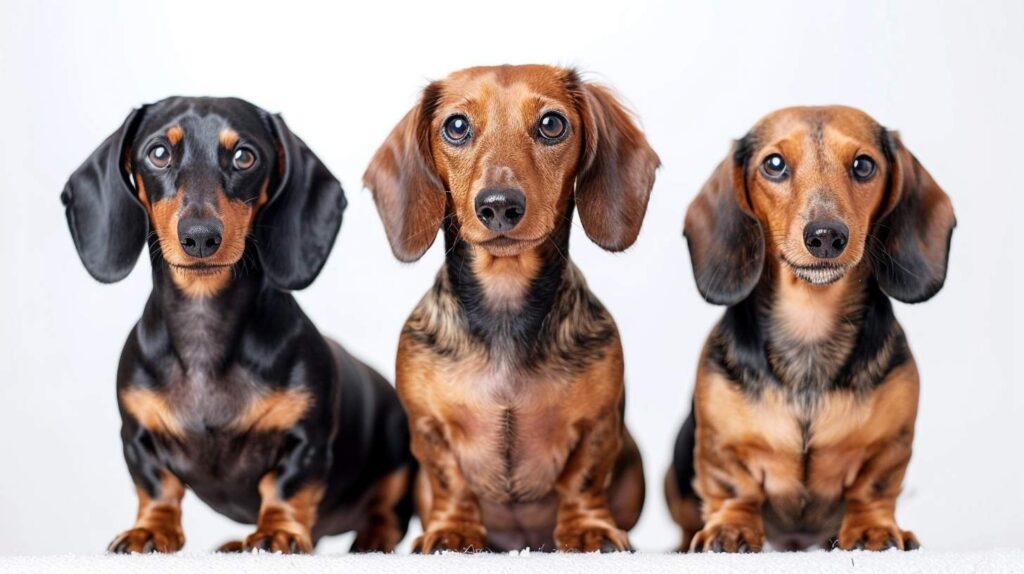
Dachshund Coat Types: Three Varieties, One Personality
All three Dachshund coat types share identical temperament – the coat is purely aesthetic and influences grooming requirements rather than behavior.
| Coat Type | Appearance | Grooming Needs | Origin of the Coat |
|---|---|---|---|
| Smooth | Short, shiny, close-fitting | Minimal – weekly wipe or brush | Original hunting coat |
| Wirehaired | Coarse, dense, bristly with beard and eyebrows | Moderate – weekly brushing, hand-stripping twice yearly | Added for bramble protection in field |
| Longhaired | Silky, flowing coat with feathering | Moderate – brushing 2-3 times per week | Added from spaniel crosses |
The wirehaired variety is often considered the most independent and terrier-like in behavior. The longhaired variety tends to be slightly calmer on average. The smooth variety sits in the middle. These are general tendencies, not reliable predictors of individual temperament.
Dachshund Temperament: What to Expect Living With One
The Bold, Tenacious Nature
Dachshunds are brave dogs. They are almost comically unaware of their own size, confronting dogs, people, and situations many times larger than themselves with absolute confidence. This courage, deeply bred into them for underground hunting, means Dachshunds are not intimidated by the world around them – which makes them entertaining, engaging companions and occasionally challenging ones.
The tenacity that kept a Dachshund in a badger’s den until the job was done now manifests as persistence in getting what it wants, selective hearing when a command conflicts with a more interesting agenda, and an independent approach to problem-solving that bypasses the owner’s input entirely.
The Bond With Their Person
Dachshunds tend to bond extremely deeply with one or two people. Within the family, they often show a clear primary preference, following that person from room to room and seeking physical proximity at every opportunity. This intense attachment is endearing but also means that Dachshunds frequently develop separation anxiety when their primary person is absent.
Dachshunds and Children
Dachshunds can coexist with children, but several considerations apply. First, their long back is vulnerable to injury from rough handling – being picked up incorrectly, dropped, or squeezed can cause or worsen spinal problems. Second, their low pain tolerance means they respond to discomfort with snapping, which can be misread as unpredictable aggression. Households with children under 8 should approach Dachshund ownership cautiously. Older children who understand how to handle a small dog carefully are generally compatible with the breed.
Spinal Health: The Most Important Dachshund Topic
Intervertebral Disc Disease (IVDD)
IVDD is the single most important health issue in Dachshunds and the aspect of ownership that requires the most ongoing attention. The breed’s chondrodystrophic genetics cause the spinal discs to calcify and harden prematurely – unlike healthy discs that compress like cushions, calcified discs can rupture and press on the spinal cord. This compression causes pain, weakness, and in severe cases, complete paralysis.
Studies estimate that 19-25% of Dachshunds experience at least one significant IVDD episode during their lifetime. The condition can strike any Dachshund at any age, though it is most common between 3-7 years.
IVDD Risk Factors and Prevention
| Risk Factor | Modifiable? | Management |
|---|---|---|
| Obesity | Yes – most important | Keep the dog lean throughout life – excess weight dramatically increases disc pressure |
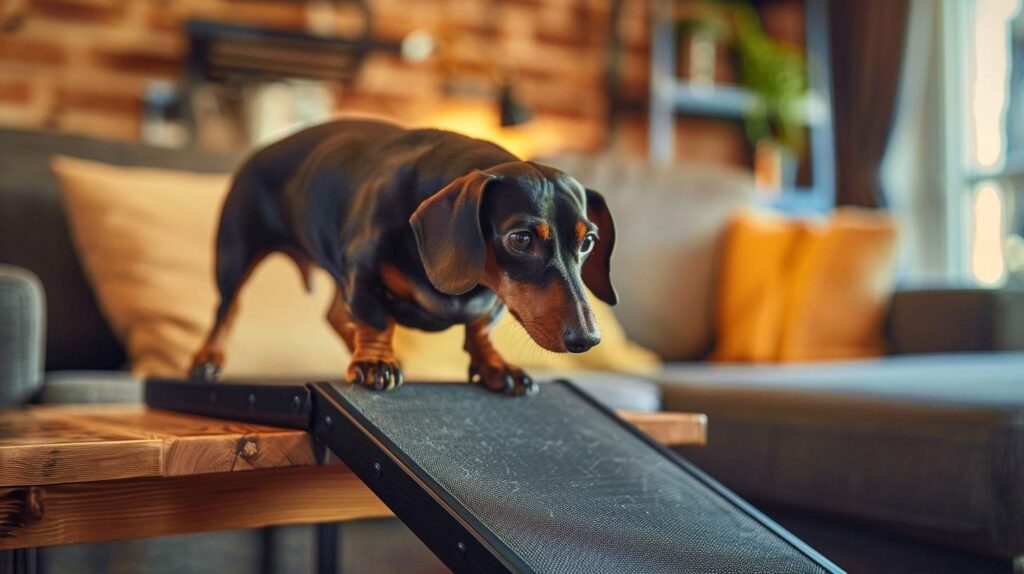
| Jumping on/off furniture | Yes | Dog ramps and steps for all furniture access – no free jumping |
| Stairs | Partially | Limit stair use – carry up and down if possible |
| Rough play or wrestling | Yes | Supervise play – discourage activities involving twisting and landing |
| Genetics | No | Choose breeders who MRI screen breeding dogs |
| Age | No | Risk increases with age – maintain all other precautions throughout life |
Warning Signs of IVDD
Recognizing IVDD early significantly improves treatment outcomes. Contact a veterinarian immediately if a Dachshund shows any of the following:
| Sign | Urgency |
|---|---|
| Back pain – yelping when touched or picked up | Same-day vet visit |
| Reluctance to climb or descend stairs previously used normally | Same-day vet visit |
| Hunched back posture | Same-day vet visit |
| Wobbly or uncoordinated rear legs | Emergency – same day |
| Dragging rear legs | Emergency – immediate |
| Loss of bladder or bowel control | Emergency – immediate |
IVDD is not something to watch and wait – early intervention with conservative management (rest, medication) or surgery dramatically improves the dog’s prognosis. Delayed treatment, especially in severe cases, can mean the difference between full recovery and permanent paralysis.

Exercise and Weight Management: Inseparable for Dachshunds
Exercise Needs
Dachshunds have moderate exercise needs that are well matched to most lifestyles. Two walks of 20-30 minutes daily satisfy the average Dachshund. They enjoy sniffing, exploring, and following scent trails, so mentally engaging walks in varied environments satisfy them better than repetitive routes.
Despite their short legs, Dachshunds are athletic and enthusiastic. Many enjoy longer hikes, and working-line Dachshunds used for hunting have considerably higher exercise tolerances than typical pet Dachshunds. The breed’s energy level is moderate, not low – a Dachshund that receives insufficient exercise becomes bored and destructive.
Weight Management: Non-Negotiable
Weight management in Dachshunds is not about aesthetics – it is spinal medicine. Every kilogram of excess weight on a Dachshund’s body applies significantly greater pressure to an already vulnerable spine. Studies consistently show that obese Dachshunds experience IVDD at higher rates and with worse outcomes than lean ones.
| Weight Status | IVDD Risk | Action |
|---|---|---|
| Lean (ribs easily felt, waist visible) | Baseline | Maintain current diet and exercise |
| Slightly overweight | Elevated | Reduce portions by 15-20%, increase exercise |
| Overweight | Significantly elevated | Veterinary dietary guidance, weight loss plan |
| Obese | High | Urgent veterinary intervention – spinal risk is immediate |
A lean Dachshund is a healthier Dachshund. This is not negotiable.
Grooming by Coat Type
Smooth Dachshund
The smooth coat is the lowest-maintenance of the three varieties. Weekly wiping with a damp cloth or soft brush removes loose hair and maintains coat condition. Bathing every 6-8 weeks is sufficient. Seasonal shedding is minimal.
Wirehaired Dachshund
The wirehaired coat requires weekly brushing with a stiff bristle brush or slicker. Twice per year, the coat should be hand-stripped – a process of removing the dead outer coat by hand – to maintain correct texture. Clipping softens the coat texture over time, which is undesirable in show dogs but acceptable for pets. Professional grooming every 3-4 months is standard for most owners.
Longhaired Dachshund
The longhaired coat requires brushing 2-3 times per week to prevent tangles, particularly behind the ears, in the armpits, and on the feathering of the legs and chest. Bathing every 4-6 weeks. Professional grooming every 8-12 weeks for trimming and maintenance.
Universal Grooming Tasks
| Task | Frequency | Notes |
|---|---|---|
| Ear cleaning | Every 2 weeks | Floppy ears trap moisture – infection risk |
| Nail trimming | Every 3-4 weeks | Long nails change gait and add spinal stress |
| Teeth brushing | 3-5 times per week | Small breeds highly prone to dental disease |
Health: Beyond IVDD
| Health Condition | Prevalence | Signs to Watch For | Action |
|---|---|---|---|
| IVDD | Very high – 19-25% | Back pain, weakness, paralysis | See spinal health section above |
| Obesity | Very high | Ribs not felt easily, no waist | Weight management – see above |
| Dental disease | High | Bad breath, reluctance to eat | Regular brushing, annual cleanings |
| Progressive retinal atrophy (PRA) | Moderate | Night blindness progressing | Annual eye exam, DNA testing |
| Cushing’s disease | Moderate | Pot belly, increased thirst/urination, hair loss | Veterinary diagnosis with bloodwork |
| Lafora disease (wirehaired) | Moderate – variety-specific | Seizures, muscle jerks in older dogs | DNA test available |
| Patellar luxation | Moderate – miniatures | Skipping, holding leg up | Orthopaedic evaluation |
| Ear infections | Moderate | Head shaking, scratching ears, odor | Weekly ear inspection and cleaning |
Training: Working With the Dachshund Brain
The Housetraining Challenge
Housetraining a Dachshund is genuinely more difficult than most breeds. The combination of stubbornness, a preference for comfort over compliance, and a strong dislike of wet or cold conditions means Dachshunds are notorious for holding out on outdoor elimination – and having accidents inside – for longer than owners expect.
Success requires a rigorous schedule, positive reinforcement for outdoor elimination, and absolute consistency. Punishing indoor accidents is counterproductive – it teaches the dog to hide elimination, not to go outside.
Most Dachshund owners reach reliable housetraining by 6-9 months with consistent effort. Some never reach complete reliability and use belly bands or dog diapers as management tools permanently.
Training Approach
| Training Element | Effectiveness | Notes |
|---|---|---|
| High-value food rewards | Excellent | Primary motivator for most Dachshunds |
| Short sessions (5-10 min) | Best results | Attention span is limited – keep sessions brief |
| Positive reinforcement | Essential | Harsh methods shut down a Dachshund’s cooperation entirely |
| Consistency between family members | Critical | Dachshunds exploit inconsistency with impressive precision |
| Patience with repetition | Required | May need more repetitions than larger working breeds |
Is a Dachshund Right for You?
Owners Who Succeed With Dachshunds
Dachshunds are an excellent fit for owners who want a characterful, entertaining, and deeply loyal companion, who live in apartments or smaller homes where a large breed would be impractical, who have the patience for a more extended housetraining process, who are committed to weight management and spinal health precautions throughout the dog’s life, and who appreciate an opinionated, spirited personality in a compact package.
Households That Struggle With Dachshunds
Dachshunds are consistently challenging for families with very young children who cannot handle a small dog carefully, for owners who want a highly obedient, responsive dog without independent tendencies, for households that cannot manage IVDD risk factors (furniture access, weight), and for owners who underestimate the housetraining commitment.
New puppy? Find a name that fits their personality.
Browse 600+ dog names by gender and personality type — playful, calm, bold, elegant, funny or mysterious.
Try Pet Name FinderFrequently Asked Questions
What is the most common cause of death in Dachshunds?
Neurological disease – primarily IVDD – and cardiac disease are among the leading causes of death. However, Dachshunds are a long-lived breed with median lifespans of 12-16 years, meaning many live into their early to mid-teens with good management.
Are miniature Dachshunds healthier than standards?
Not significantly. Both sizes share the same chondrodystrophic genetics and comparable IVDD rates. Miniatures are more fragile physically due to their smaller size, which increases injury risk from drops and rough handling. Standards are slightly more robust but carry equivalent spinal disease risk.
How do I pick up a Dachshund correctly?
Always support both the chest and the hindquarters simultaneously – never lift a Dachshund by grasping only the front of the body. Allowing the spine to hang unsupported during lifting increases disc stress. Hold the dog horizontally against the body rather than allowing the hindquarters to drop.
Can Dachshunds go up and down stairs?
With restrictions. Frequent stair use – particularly descending – increases spinal disc stress. Many veterinary neurologists recommend limiting stair access and using ramps or stairs with shallow treads where possible. At minimum, carrying a Dachshund down stairs when frequent trips are unavoidable reduces cumulative disc loading.
Are Dachshunds good apartment dogs?
Among the best, with some management. Their moderate exercise needs, small size, and comfort-seeking nature suit apartment living well. The main consideration is barking – Dachshunds alert loudly to sounds in hallways and neighboring apartments. Training a reliable quiet command and ensuring adequate mental stimulation reduces this significantly.
Why are Dachshunds so hard to housetrain?
A combination of factors: stubbornness, a strong preference for warmth and comfort over going outside in unfavorable weather, a history as independent-working dogs that did not require human direction, and – in some lines – a smaller bladder capacity in miniatures. Success requires a rigid schedule, extremely high-value rewards for outdoor elimination, and patience measured in months rather than weeks.
Do Dachshunds get along with other dogs?
Generally well, particularly with other Dachshunds. Their pack hunting background makes them naturally comfortable with canine company. However, their confident, assertive temperament means they occasionally challenge dogs much larger than themselves – socialization from puppyhood reduces but does not eliminate this tendency.
Key Takeaways
- IVDD affects up to 25% of Dachshunds – weight management, ramps for furniture, and limiting jumping are lifelong commitments
- Weight is a spinal issue, not just a health one – every excess kilogram significantly increases disc disease risk
- Pick up a Dachshund correctly every time – support both chest and hindquarters, never allow the spine to hang unsupported
- Housetraining takes longer than expected – patience and rigorous scheduling produce results over months, not weeks
- Dachshunds are bold, tenacious, and deeply loyal – their personality is larger than their body in every possible way
- Annual eye exams and dental cleanings are essential – PRA and dental disease are significant breed concerns
- Wirehaired Dachshunds have an additional condition to screen for: Lafora disease – DNA testing is available
- Dachshunds are long-lived companions – a 14-16 year commitment is realistic and should be planned for financially
This article is for informational purposes only. Breed characteristics represent general tendencies and do not predict the behavior or health of any individual dog. Always consult a veterinarian for health advice, and seek emergency veterinary care immediately for any signs of IVDD.