Can Dogs Eat Eggs? Benefits, Risks & How to Serve Them Safely
Eggs are in your fridge. Your dog is watching you cook breakfast with great interest.
Can you share?
The answer is yes — eggs are actually one of the most nutritious foods you can give your dog. Packed with protein, healthy fats, vitamins, and minerals, eggs are a whole food that most dogs love.
But there are important things to know about how to serve them, how many are safe, and what to avoid.
This complete guide covers everything about dogs and eggs.
New puppy? Find a name that fits their personality.
Browse 600+ dog names by gender and personality type — playful, calm, bold, elegant, funny or mysterious.
Try Pet Name FinderCan Dogs Eat Eggs?
Yes — eggs are safe and nutritious for dogs.
Eggs are non-toxic and genuinely beneficial. They are often recommended by veterinarians as a healthy addition to a dog’s diet.
The rules:
- Cooked eggs are safe and recommended
- Raw eggs carry risks (more on this below)
- Plain only — no salt, butter, oil, onion, or seasoning
- Appropriate portions based on dog size

Health Benefits of Eggs for Dogs
1. Excellent Source of Protein
Eggs contain all essential amino acids.
- High biological value protein
- Supports muscle development and maintenance
- Helps repair body tissues
- Particularly valuable for active dogs and growing puppies
2. Rich in Healthy Fats
Egg yolks contain beneficial fats.
- Support brain function
- Promote healthy skin and shiny coat
- Provide sustained energy
- Aid absorption of fat-soluble vitamins
3. Packed with Vitamins
Key vitamins in eggs:
- Vitamin A: Eye health, immune function
- Vitamin D: Bone health, calcium absorption
- Vitamin E: Antioxidant, skin health
- Vitamin B12: Nerve function, red blood cell production
- Riboflavin (B2): Energy metabolism
- Folate: Cell growth and function
4. Important Minerals
- Selenium: Antioxidant, thyroid function
- Iron: Oxygen transport in blood
- Zinc: Immune function, wound healing
- Phosphorus: Bone and teeth health
5. Contains Lutein and Zeaxanthin
Supports eye health.
- Antioxidants that protect the eyes
- May help reduce risk of cataracts
- Beneficial for aging dogs especially
6. Great for Coat and Skin
The combination of protein, fat, and biotin in eggs:
- Promotes shiny, healthy coat
- Supports skin barrier function
- Often recommended for dogs with dull coats

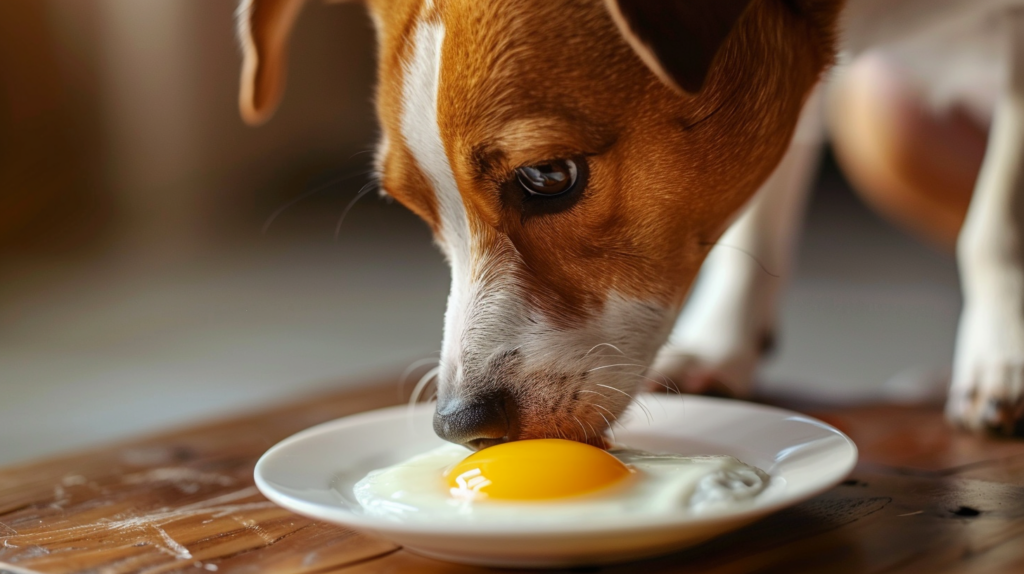
What About Raw Eggs?
This is where it gets complicated.
Arguments for raw eggs:
- Raw food proponents claim raw eggs retain more nutrients
- Some dogs eat raw diets that include raw eggs
Arguments against raw eggs:
Salmonella risk:
- Raw eggs can contain Salmonella bacteria
- Can cause vomiting, diarrhea, fever in dogs
- Can also be transmitted to humans in the household
- Higher risk for puppies, senior dogs, and immunocompromised dogs
Did your dog eat something dangerous? Find out right now.
Enter what they ate and their weight — get an instant toxicity assessment for 35+ substances.
Check Toxicity NowAvidin problem:
- Raw egg whites contain avidin
- Avidin binds to biotin (vitamin B7) and prevents absorption
- Chronic raw egg white feeding causes biotin deficiency
- Symptoms: poor coat, skin problems, lethargy
Verdict: Cooked eggs are safer and still highly nutritious. The cooking process deactivates avidin and kills bacteria.
If you choose to feed raw: Yolk only is safer than whole raw egg.
How to Cook Eggs for Dogs
Plain is always the rule.
Best cooking methods:
Scrambled (no additives):
- Cook in dry pan (no butter or oil)
- No salt, pepper, or seasoning
- No onion or garlic (toxic to dogs)
- Let cool before serving
Hard boiled:
- Easiest and most convenient
- Easy to portion and store
- No shell (or remove shell before serving)
Poached:
- No oil or butter needed
- Gentle cooking method
Fried (plain):
- Use minimal oil only if necessary
- No salt or seasoning
What to avoid:
- Butter, oil, salt, pepper (cause digestive upset and add unnecessary calories)
- Onion and garlic (toxic to dogs)
- Cheese (high calories, some dogs lactose intolerant)
- Anything from a restaurant or pre-made (unknown additives)
Can Dogs Eat Eggshells?
Yes, with some caveats.
Eggshells are a good source of:
- Calcium carbonate (very high calcium content)
- Phosphorus
For dogs who need extra calcium:
- Crushed eggshells can supplement calcium
- Especially useful for homemade raw diets
Caution:
- Whole eggshells are a choking hazard
- Always crush finely before serving
- Do not supplement calcium for dogs already on complete commercial food (excess calcium causes problems)
How Many Eggs Can a Dog Eat?
One egg per day maximum for most dogs.
By size:
Small dogs (under 20 lbs): Half an egg maximum, a few times per week Medium dogs (20-50 lbs): One egg, a few times per week Large dogs (50+ lbs): One egg per day maximum
Eggs are relatively high in calories and fat.
- One large egg: approximately 70 calories
- One egg provides significant fat intake
Dogs with these conditions should limit or avoid eggs:
- Pancreatitis (high fat content is risky)
- Obesity (calorie-dense)
- Kidney disease (high protein — consult vet)
- Egg allergy (uncommon but possible)
Signs of Egg Allergy in Dogs
Uncommon but worth watching for on first introduction.
Signs of allergic reaction:
- Itching or skin redness
- Hives
- Vomiting or diarrhea
- Swelling
First time: Start with a small piece and wait a few hours before giving more.

Common Questions
Q: Can dogs eat eggs every day? A: Yes for most healthy dogs — one egg per day is generally safe. However, eggs should be treats/supplements, not replacing their main diet. For dogs with pancreatitis or weight issues, limit frequency.
Q: Can puppies eat eggs? A: Yes — cooked eggs are excellent nutrition for puppies. Start with small amounts (quarter egg) and monitor for any reaction.
Q: Are scrambled eggs good for sick dogs? A: Plain scrambled eggs are often recommended for dogs with mild stomach upset. Easy to digest, gentle on the stomach, and nutritious. If your dog is seriously ill, consult your vet first.
Q: Can dogs eat egg yolk only? A: Yes — egg yolks are very nutritious and the richest part of the egg. If feeding raw, yolk only is safer than whole raw egg due to avidin in raw whites.
Q: My dog stole a raw egg. Should I be worried? A: One raw egg is unlikely to cause serious harm. Monitor for any vomiting or diarrhea over the next 24 hours. Contact vet if symptoms develop.
Q: Can dogs eat egg fried rice? A: No — restaurant or home fried rice typically contains garlic, onion, soy sauce, and other ingredients toxic or harmful to dogs. Plain cooked eggs only.
The Bottom Line
Eggs are one of the most nutritious whole foods you can add to your dog’s diet.
Key takeaways:
Cook them: Cooked eggs eliminate Salmonella risk and deactivate avidin.
Plain only: No salt, butter, garlic, onion, or seasoning.
Portion matters: One egg per day maximum, fewer for small dogs.
Great for: Protein boost, coat health, overall nutrition.
Limit for: Dogs with pancreatitis, obesity, kidney disease.
Start small: Introduce gradually and watch for any allergic reaction.
Does your dog get eggs? How do they like them cooked? Share in the comments!
This article provides general information. Consult your veterinarian before significantly changing your dog’s diet, especially if your dog has health conditions.