Can Cats Eat Chicken?
Your cat watches you prepare chicken for dinner. Those pleading eyes ask: “Can I have some?”
You know cats are carnivores, so chicken should be safe, right? But is all chicken safe? Raw or cooked? What about bones?
The short answer: Yes, cats can eat chicken, but preparation and portions matter.
This complete guide covers everything about feeding chicken to cats: benefits, risks, safe preparation methods, and how much to feed.
New cat? Find a name as unique as their character.
Browse 600+ cat names by gender and personality type — because every cat has a story.
Try Pet Name FinderCan Cats Eat Chicken? The Quick Answer
YES, chicken is safe and healthy for cats when prepared properly.
Chicken is actually one of the best meats for cats. It’s:
High in protein cats need as obligate carnivores. Low in fat compared to other meats. Easy to digest. Rarely causes allergies. Affordable and widely available.
BUT: Preparation method and portions are critical.

Why Chicken Is Good for Cats
High-Quality Protein Source
Cats are obligate carnivores requiring animal protein to thrive.
Chicken provides:
Essential amino acids cats cannot produce themselves. Taurine: critical for heart and eye health. Complete protein with all necessary building blocks.
Protein content: Chicken breast is approximately 31% protein, making it ideal for cats.
Lean Meat
Compared to red meat, chicken is lower in fat.
Benefits:
Reduces obesity risk. Easier on digestive system. Good for cats needing weight management. Lower saturated fat content.
White meat (breast) is leaner than dark meat (thighs, legs).
Highly Digestible
Most cats digest chicken easily.
Why digestibility matters:
Reduces stomach upset. Maximizes nutrient absorption. Gentle on sensitive stomachs. Good choice for cats with digestive issues.
Low Allergy Risk
While food allergies exist in cats, chicken is less allergenic than many proteins.
Common allergens for cats:
Beef. Dairy. Fish.
Chicken allergies are possible but less common. If your cat has food allergies, chicken may be safe alternative after vet consultation.
Did your cat eat something dangerous? Find out right now.
Enter what they ate and their weight — get an instant toxicity assessment for 35+ substances.
Check Toxicity NowSafe Ways to Feed Chicken to Cats
Cooked Chicken (Best Option)
Cooking chicken kills harmful bacteria like Salmonella and Campylobacter.
How to prepare:
Plain boiled or baked chicken. No seasoning whatsoever: no salt, garlic, onion, pepper. Remove all bones before feeding. Cut into small, bite-sized pieces. Cool to room temperature before serving.
Why plain chicken:
Seasonings and additives can be toxic to cats. Garlic and onion damage red blood cells. Salt causes dehydration and kidney issues. Butter and oils add unnecessary fat.
Raw Chicken (Controversial)
Some cat owners feed raw diets including raw chicken.
Potential benefits claimed:
More natural diet mimicking wild prey. Enzymes and nutrients preserved. Better dental health from chewing.
Significant risks:
Salmonella and other bacteria can cause serious illness. E. coli contamination. Parasites. Nutritional imbalances if not properly formulated. Risk to immunocompromised family members from bacteria.
Most veterinarians don’t recommend raw chicken due to bacterial risks.
If you choose raw:
Use human-grade chicken only. Handle with extreme hygiene. Freeze for several weeks first to kill some parasites. Consult veterinarian nutritionist for balanced diet. Never feed raw chicken to kittens, senior cats, or immunocompromised cats.
Commercial Chicken Cat Food (Safest)
Commercially prepared cat food with chicken as primary ingredient.
Benefits:
Nutritionally complete and balanced. Safe preparation and quality control. Convenient. Includes necessary vitamins and minerals. Regulated and tested.
Chicken-based cat foods offer chicken benefits without preparation concerns.
Which Parts of Chicken Are Safe?
Safe Chicken Parts
Chicken breast (white meat):
Leanest option. Highest protein. Lowest fat. Best for weight management.
Chicken thighs (dark meat):
Higher fat content than breast. More flavorful; some cats prefer. Still safe in moderation.
Chicken liver:
Rich in vitamins A, B, and iron. Very nutritious. Feed sparingly; too much vitamin A is toxic. Limit to once or twice weekly, small portions.
Chicken heart:
Good source of taurine. Nutritious organ meat. Feed occasionally in small amounts.
Dangerous Chicken Parts
Cooked chicken bones:
Splinter easily. Cause choking. Puncture digestive tract. Can be fatal.
NEVER feed cooked bones of any kind to cats.
Raw chicken bones:
Safer than cooked but still risky. Can splinter. Choking hazard. Most vets don’t recommend.
If feeding raw bones: Only under veterinary guidance. Must be appropriate size. Supervise closely.
Chicken skin:
High in fat. Can cause pancreatitis. Difficult to digest. Avoid or feed very rarely.
How Much Chicken Can Cats Eat?
As Treat or Supplement
If adding chicken to regular cat food:
Portion size: 10% of daily calories maximum.
For average 10-pound cat:
Daily calorie needs: approximately 200-250 calories. Chicken as treat: 20-25 calories = about 1 tablespoon cooked chicken. Feed 2-3 times weekly, not daily.
Why limit:
Commercial cat food is nutritionally balanced. Too much chicken creates imbalance. Cats may become picky, refusing regular food. “Chicken and rice syndrome”: cats hold out for chicken treats.
As Primary Diet
Some owners feed homemade diets with chicken as main protein.
CRITICAL: Chicken alone is NOT nutritionally complete.
Cats need:
Taurine (found in heart, some in muscle meat). Calcium (found in bones). Vitamins A, D, E. Fatty acids. Other nutrients.
Plain chicken lacks:
Adequate calcium. Sufficient taurine in breast meat. Complete vitamin profile. Proper ratio of nutrients.
If feeding homemade diet:
Must work with veterinary nutritionist. Supplement appropriately. Follow tested recipes. Monitor cat’s health closely.
Improper homemade diets cause serious health problems: heart disease from taurine deficiency, bone problems from calcium deficiency, vision issues.
Preparing Chicken for Your Cat
Boiling Method
Steps:
Place boneless, skinless chicken breast in pot. Cover with water. Bring to boil. Reduce heat and simmer 15-20 minutes until fully cooked. No pink inside; internal temp 165°F. Remove chicken and let cool completely. Cut into small, bite-sized pieces. Discard cooking water (contains bacteria).
Do NOT add:
Salt. Seasonings. Broth cubes or bouillon. Anything except water.

Baking Method
Steps:
Preheat oven to 350°F. Place boneless, skinless chicken breast on baking sheet. Bake 25-30 minutes until fully cooked. Check internal temperature: 165°F minimum. Cool completely before feeding. Cut into small pieces.
Again, no seasonings of any kind.
Storage
Cooked chicken for cats:
Refrigerate in airtight container. Use within 3-4 days. Can freeze in portions for up to 3 months. Thaw in refrigerator, never at room temperature.
Chicken and Rice for Sick Cats
Plain chicken and rice is common bland diet for cats with digestive upset.
When used:
Vomiting or diarrhea. Upset stomach. Transitioning between foods. Post-surgery recovery.
Recipe:
1 part boiled chicken (chopped fine). 3 parts plain white rice (well-cooked). Mix together. Feed small portions several times daily. Gradually transition back to regular food after 2-3 days.
Always consult vet before changing diet for sick cat.
Chicken-Based Commercial Cat Food
High-quality chicken cat foods provide benefits without risks of home preparation.
What to look for:
Chicken or chicken meal as first ingredient. AAFCO complete and balanced statement. No by-products (though these aren’t necessarily bad). Appropriate life stage: kitten, adult, or senior. Grain-free or with grains based on your cat’s needs.
Quality brands:
Wellness CORE Grain-Free Chicken. Blue Buffalo Wilderness Chicken. Hill’s Science Diet Chicken. Purina Pro Plan Chicken & Rice.
Foods Cats Should NEVER Eat With Chicken
Even if you’re adding chicken to meals, avoid these toxic ingredients:
Garlic and onions:
All forms: raw, cooked, powder. Damage red blood cells. Cause anemia. Even small amounts dangerous.
Grapes and raisins:
Cause kidney failure. Mechanism unknown. Even tiny amounts dangerous.
Chocolate:
Contains theobromine. Toxic to cats. Can be fatal.
Alcohol:
Extremely toxic. Causes liver and brain damage.
Xylitol (artificial sweetener):
Found in sugar-free products. Causes liver failure.
Raw dough:
Expands in stomach. Produces alcohol as it ferments.
Macadamia nuts:
Toxic to cats. Causes weakness and tremors.
Signs Your Cat Should NOT Eat Chicken
Chicken Allergies
Rare but possible. Signs include:
Itching and scratching. Skin redness or rashes. Hair loss. Ear infections. Vomiting or diarrhea. Chronic digestive issues.
If suspected chicken allergy:
Stop feeding chicken immediately. Consult veterinarian. May need elimination diet trial. Blood or skin testing possible.

Pancreatitis
Cats with pancreatitis need low-fat diets.
Stick to lean chicken breast only.
Avoid:
Chicken skin. Dark meat. Fried chicken. High-fat preparations.
Kidney Disease
Cats with chronic kidney disease need special diets.
Considerations:
May need reduced protein (though this is debated). Must have proper phosphorus levels. Consult vet before adding chicken to kidney diet.
Common Mistakes to Avoid
Mistake 1: Feeding Cooked Bones
Cooked chicken bones are extremely dangerous.
They cause:
Choking. Intestinal blockage. Perforation of digestive tract. Death.
ALWAYS remove bones completely before feeding.
Mistake 2: Seasoning the Chicken
Garlic, onion, and salt are toxic or harmful to cats.
Keep chicken completely plain.
Mistake 3: Making Chicken the Entire Diet
Chicken alone lacks complete nutrition.
Cats fed only chicken develop:
Nutritional deficiencies. Heart disease. Bone problems. Shortened lifespan.
Use chicken as supplement or part of balanced homemade diet only.
Mistake 4: Feeding Raw Chicken Without Precautions
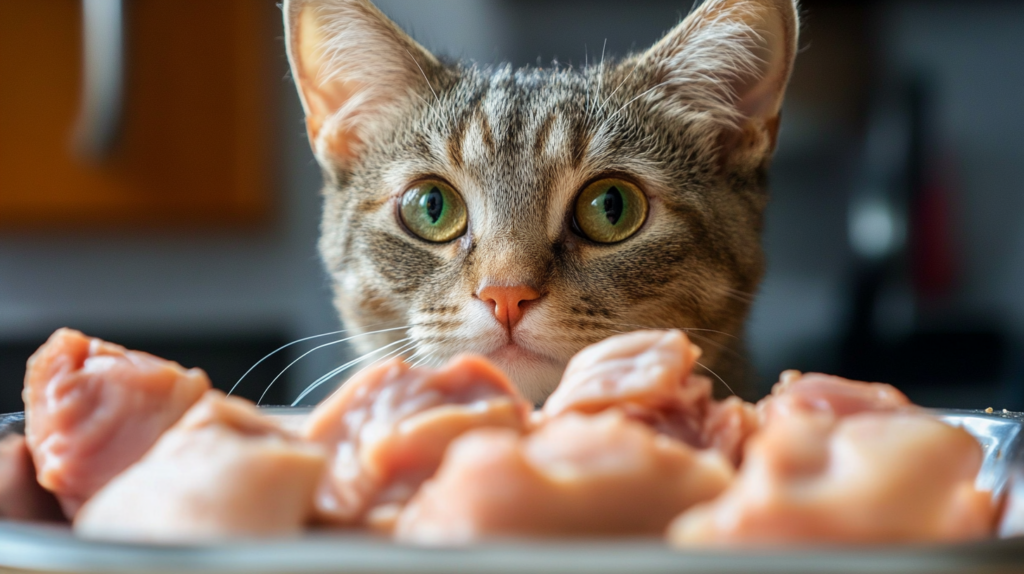
Raw chicken carries bacteria.
If feeding raw:
Only human-grade chicken. Extreme hygiene. Freeze first. Separate preparation areas from human food.
Many vets recommend against raw feeding entirely.
Mistake 5: Overfeeding Chicken
Too much chicken creates picky eaters.
Limit to 10% of diet as treats.
Special Situations
Kittens
Kittens can eat chicken but need complete kitten food as primary diet.
Chicken for kittens:
Must be fully cooked. Cut very small. Only as occasional treat, not meal replacement. Kitten food provides growth nutrients chicken lacks.
Senior Cats
Older cats often benefit from chicken’s high protein.
Considerations:
Easier to chew than dry food. Good protein source for maintaining muscle. May have reduced kidney function; consult vet. Smaller, more frequent portions easier to digest.
Pregnant or Nursing Cats
Pregnant and nursing cats have increased protein needs.
Chicken can help but:
Must be part of complete diet. Pregnant/nursing cat food is best option. Chicken as supplement acceptable. Always fully cooked, never raw.
Chicken vs. Other Proteins for Cats
Protein | Safety | Notes
Chicken: Very Safe | Lean, digestible, affordable
Turkey: Very Safe | Similar to chicken, leaner
Beef: Safe | Higher fat, more allergenic
Pork: Safe (cooked) | Avoid raw; parasite risk
Fish: Safe (limited) | High mercury, can cause addiction
Lamb: Safe | Hypoallergenic option
Common Questions
Q: Can cats eat rotisserie chicken?
A: Not recommended. Contains seasonings, salt, and garlic that are harmful. Plain home-cooked chicken is safer.
Q: Can cats eat fried chicken?
A: No. Too much fat and breading. Seasonings harmful. Can cause pancreatitis.
Q: Can cats eat chicken nuggets?
A: No. Processed, breaded, seasoned. Contain harmful additives.
Q: How often can I feed my cat chicken?
A: As treat: 2-3 times weekly. As part of balanced homemade diet: daily, but must be properly supplemented.
Q: Can cats eat chicken baby food?
A: Check ingredients carefully. If it’s ONLY chicken and water, occasionally okay. Avoid if contains onion or garlic powder. Not nutritionally complete for regular feeding.
Q: My cat refuses cat food and only wants chicken. What do I do?
A: Cat is holding out for preferred food. Transition gradually back to cat food. Don’t give in; cat won’t starve. May take several days of persistence.
The Bottom Line
Cats can safely eat chicken and it’s actually one of the best meats for them.
Key guidelines:
Always fully cooked. No seasonings whatsoever. No bones. Small, bite-sized pieces. Limit to 10% of diet as treats or supplement. Choose lean cuts: breast meat. Never replace complete cat food entirely.
Chicken provides excellent protein but isn’t nutritionally complete alone.
When prepared safely and fed in appropriate amounts, chicken is healthy, delicious treat your cat will love.
Does your cat love chicken? How do you prepare it? Share in the comments!
This article provides general guidance. If your cat has health conditions or food allergies, consult your veterinarian before adding new foods to their diet.