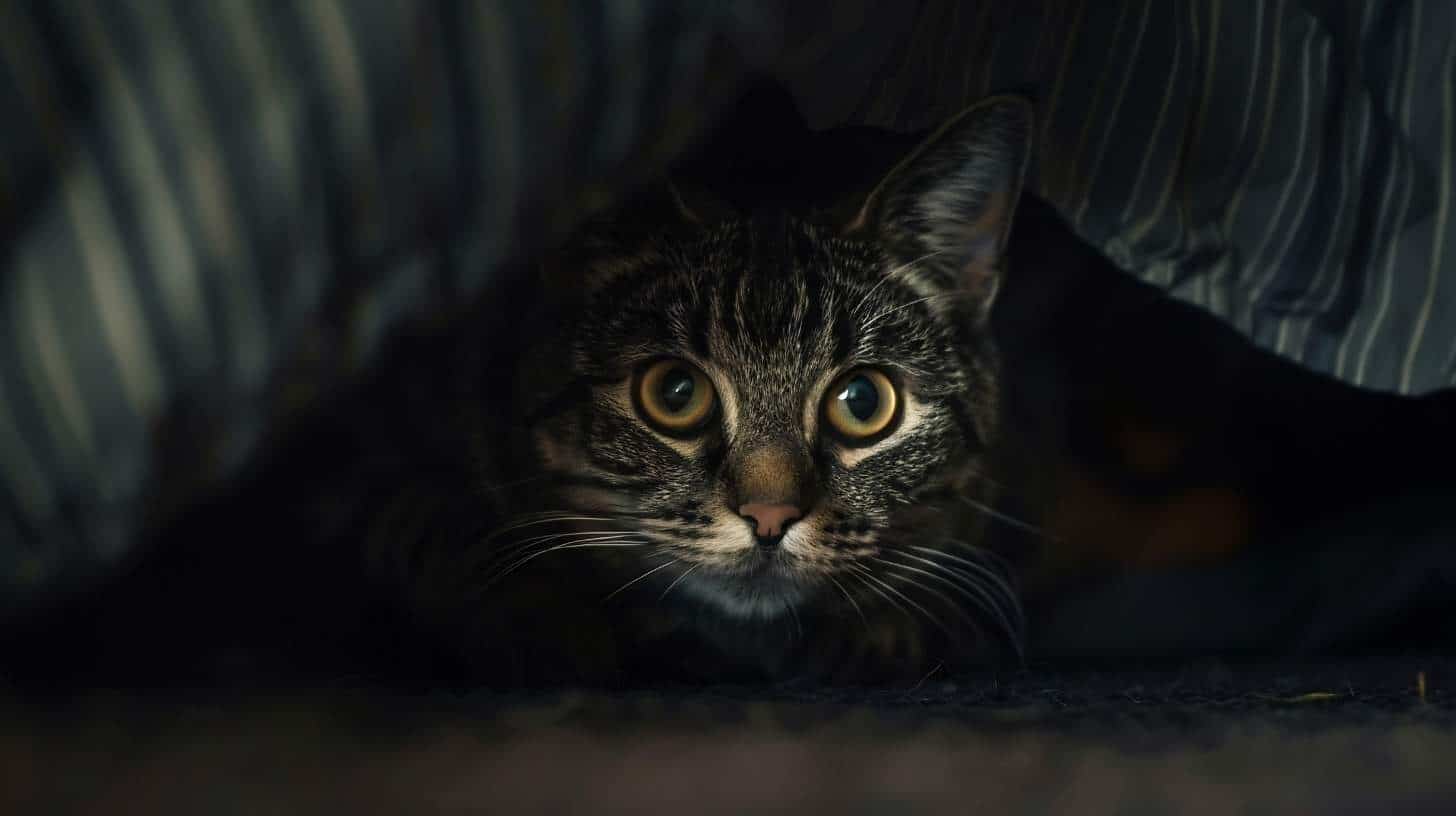
Cat Anxiety: Signs, Causes & How to Help Your Stressed Cat
- Quick Answer: Cat anxiety affects an estimated 20-25% of cats and can manifest as hiding, over-grooming, litter box avoidance, aggression, or changes in appetite. Common causes include environmental changes, separation from owners, new pets, loud noises, and past trauma. Treatment combines environmental management, pheromone diffusers, behaviour modification, calming supplements, and in more severe cases, prescription medication from your vet. Anxiety in cats rarely resolves on its own – early intervention gives the best outcome.
Last Updated: April 2026
Cats have a reputation for being independent and emotionally self-sufficient. In reality, cats are highly sensitive animals whose wellbeing is closely tied to routine, environment, and social bonds. When those things feel uncertain or threatening, anxiety is a natural response.
The challenge is that cats rarely signal their distress obviously. They do not pace or bark like dogs might. Instead, they hide, over-groom, stop eating, or avoid the litter box – behaviours that owners often misread as stubbornness, laziness, or a medical problem.
Understanding cat anxiety – what it looks like, why it happens, and what actually helps – can significantly improve your cat’s quality of life and your relationship with them.
What Is Cat Anxiety?
Cat anxiety is a persistent state of apprehension or fear that affects a cat’s behaviour and physical health. It is different from a brief, appropriate fear response – a cat startled by a loud noise and then returning to normal within minutes is responding appropriately. A cat that remains fearful, hides for hours or days, or shows recurring signs of distress is likely experiencing anxiety.
Veterinary behaviourists estimate that anxiety affects somewhere between 20% and 25% of cats seen in clinical practice – making it one of the most common behavioural problems in pet cats.
There are several overlapping categories of anxiety in cats:
Situational anxiety is triggered by specific, often predictable events: vet visits, travel, loud noises such as fireworks or thunderstorms, or the presence of visitors. The anxiety is intense but time-limited.
Generalised anxiety is a more pervasive state in which the cat seems chronically tense, vigilant, or unsettled without a clear single trigger.
Separation anxiety occurs when a cat becomes distressed specifically in the absence of their owner or a bonded companion. Though often associated with dogs, cat separation anxiety is well-documented and more common than most owners realise.
Social anxiety involves fear or over-reactivity around unfamiliar people, other cats, or other animals.
Signs of Anxiety in Cats
Cats mask vulnerability instinctively – a survival behaviour from their evolutionary history as both predator and prey. This means anxiety in cats can be subtle and easy to miss or misinterpret. Watch for these signs, particularly if multiple are present or if behaviours have changed from your cat’s normal baseline:
Behavioural Signs
| Sign | What It May Look Like |
|---|---|
| Hiding | Spending unusual amounts of time under furniture, in cupboards, or in isolated spots |
| Excessive vocalisation | Persistent meowing, yowling, or crying — especially a distressed-sounding call |
| Over-grooming | Licking, chewing, or pulling fur to the point of thinning or bald patches |
| Litter box avoidance | Urinating or defecating outside the litter box despite no physical health issues |
| Aggression | Hissing, scratching, or biting that is out of character or disproportionate |
| Destructive behaviour | Scratching furniture or objects excessively, particularly when left alone |
| Clinginess | Unusually needy behaviour, following owner constantly, distress when owner leaves |
| Freezing | Becoming completely still, wide-eyed, in response to triggers |
| Reduced play | Losing interest in toys, play, or interaction |
New cat? Find a name as unique as their character.
Browse 600+ cat names by gender and personality type — because every cat has a story.
Try Pet Name FinderPhysical Signs
- Flattened or rotated ears
- Dilated pupils
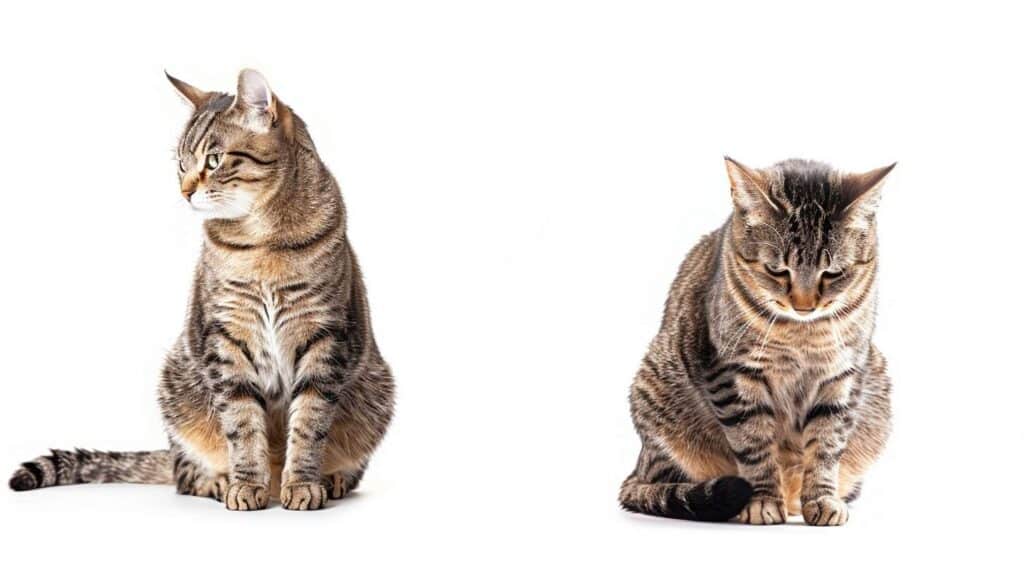
- Tail tucked tight against the body or curled low
- Tense, hunched posture
- Hair along the spine standing up (piloerection)
- Rapid breathing or panting (unusual in cats)
- Reduced appetite or complete food refusal
- Vomiting or diarrhoea triggered by stress
An important note: many of these physical signs can also indicate pain or illness rather than – or in addition to – anxiety. A veterinary examination to rule out medical causes is always the essential first step.
Common Causes of Cat Anxiety
Understanding what is driving your cat’s anxiety is critical to addressing it effectively. The same behaviour in two different cats may have completely different causes and therefore require different approaches.
Environmental Changes
Cats are creatures of routine and territory. Even changes that seem minor to humans can be genuinely destabilising for a cat. Commonly reported triggers include moving to a new home, rearranging furniture, introducing new items with unfamiliar smells, changing the type or brand of litter, or construction noise nearby.
New People or Animals in the Home
The arrival of a new baby, partner, or housemate can unsettle a cat’s sense of security. The introduction of a new pet – particularly another cat – is one of the most common triggers for chronic anxiety. Cats are not inherently social in the way dogs are, and improper introductions can establish lasting territorial conflict.
Separation
Despite the stereotype of cats as indifferent to their owners, many cats form deep attachments and experience genuine distress when left alone. Separation anxiety tends to be more common in cats that were hand-reared, rehomed as adults, or have spent their lives in very close contact with their owner.
Signs of separation anxiety typically appear only when the owner is absent: vocalising, destructive behaviour, litter box accidents, and sometimes self-neglect in the form of reduced eating or grooming while alone.
Loud Noises
Fireworks, thunderstorms, loud music, building work, and vehicles can all trigger intense fear responses in noise-sensitive cats. Some cats have a genetic predisposition to noise phobia, and it can worsen over time if not addressed.
Past Trauma
Cats with a history of abuse, neglect, abandonment, or early negative experiences may carry lasting fear responses. These can be difficult to identify because the original trauma is unknown, but they often present as generalised anxiety or extreme reactivity to specific triggers.
Underlying Medical Conditions
This is critical: anxiety-like behaviours in cats can be caused by pain, hyperthyroidism, cognitive dysfunction syndrome (in older cats), neurological problems, or feline lower urinary tract disease. Excessive vocalisation in an older cat may be dementia rather than anxiety. Litter box accidents may be a urinary infection. Aggression may be pain-related.
Never assume a behavioural change is “just anxiety” without ruling out a medical cause first.
How to Help an Anxious Cat
Treatment for cat anxiety is most effective when it addresses the root cause. There is no single solution – the most successful outcomes come from combining several approaches simultaneously.
1. Create a Safe Environment
Every anxious cat benefits from having places where they feel completely secure. High perches, enclosed hiding spots, and quiet rooms away from household activity allow cats to regulate their own stress by withdrawing when they need to.
Practical steps:
- Provide at least one elevated hiding spot (cats feel safer when they can observe from height)
- Offer covered beds, cat caves, or cardboard boxes as retreat spaces
- Ensure each cat in a multi-cat household has their own resources – food bowl, water source, litter box, and sleeping area – to reduce competition
- Maintain routine: consistent feeding times, consistent owner behaviour, and minimal unexpected changes
2. Pheromone Diffusers and Sprays
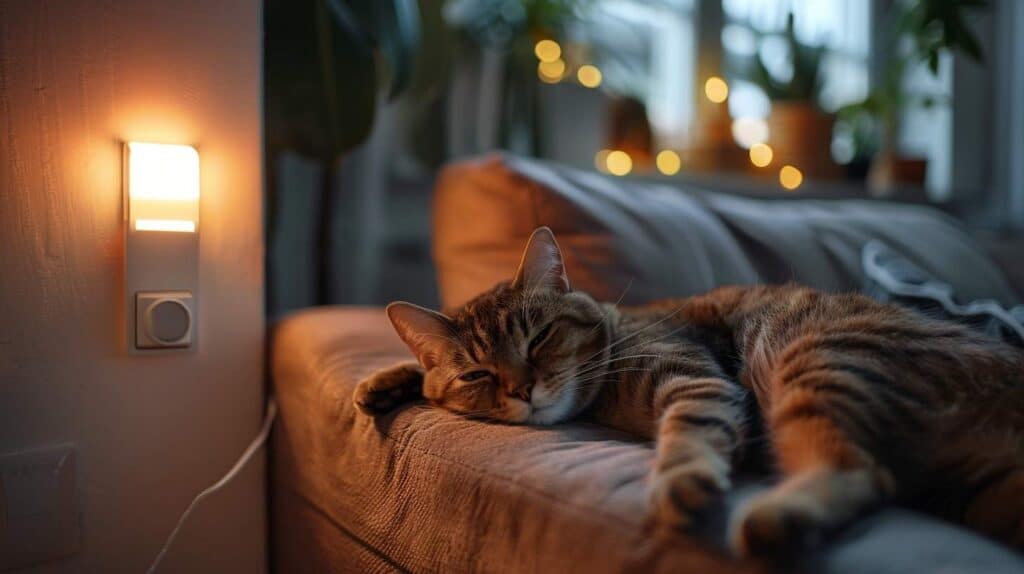
Synthetic feline pheromones – most commonly the Feliway brand – mimic the natural facial pheromones cats deposit when rubbing their faces on surfaces they consider safe. These chemical signals communicate “this is a safe, familiar place” to other cats.
Research on pheromone products shows mixed but generally positive results for mild to moderate anxiety. They are not effective for all cats and do not address severe anxiety on their own, but they are safe, easy to use, and worth trying as part of a broader approach.
Use a diffuser plugged in to the room where your cat spends most of their time. Spray products can be applied to bedding, the inside of a carrier, or in the car before travel.
3. Play and Enrichment
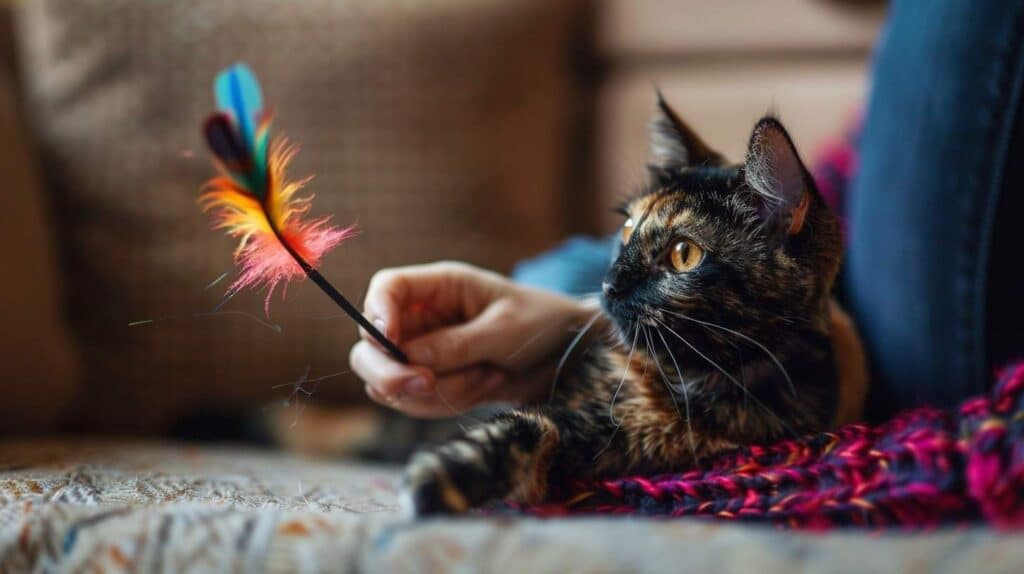
Regular, structured play addresses anxiety on two levels: it burns physical energy that might otherwise express itself as anxious behaviour, and it builds a cat’s confidence through successfully executing hunting behaviours.
Aim for two play sessions of 10-15 minutes daily with an interactive wand or feather toy. Allow the cat to “catch” the toy regularly – frustrated hunting without success can increase rather than reduce tension. Puzzle feeders, window perches with bird feeders outside, and regular rotation of toys can supplement structured play sessions.
4. Behaviour Modification
For anxiety triggered by specific stimuli, two techniques recommended by veterinary behaviourists are desensitisation and counterconditioning.
Desensitisation involves exposing the cat to the trigger at such a low intensity that it does not produce a fear response, then very gradually increasing intensity over time. For example, a cat anxious about visitors might begin with the owner sitting quietly near the closed front door, then progress to brief, calm visits from a single familiar person.
Counterconditioning pairs the trigger with something the cat enjoys – a favourite treat, a play session – to gradually shift their emotional association from negative to positive.
Both techniques require patience, consistency, and the ability to read your cat’s stress signals accurately. A veterinary behaviourist can design a specific programme and guide you through it.
5. Calming Supplements
Several supplements are marketed for feline anxiety, with varying levels of evidence:
| Supplement | Evidence Level | Notes |
|---|---|---|
| L-theanine (e.g. Zylkene) | Moderate | Amino acid with calming properties, well-tolerated |
| Alpha-casozepine (e.g. Anxitane) | Moderate | Derived from milk protein, mild anxiolytic effects |
| Probiotics (e.g. Purina Calming Care) | Moderate | May reduce cortisol markers of stress |
| Valerian | Weak | Limited feline data |
| CBD | Very limited | No feline clinical trials; anecdotal reports only |
Supplements are appropriate for mild anxiety and as adjuncts to other treatment approaches. Always discuss with your vet before starting any supplement, particularly if your cat is on other medications.
6. Prescription Medication
For moderate to severe anxiety, prescription medication from a veterinarian may be necessary – particularly if other approaches have not provided sufficient relief, or if the cat’s quality of life is significantly affected.
Long-term medications such as fluoxetine, paroxetine, or clomipramine change brain chemistry over weeks to reduce baseline anxiety. They are appropriate for generalised or chronic anxiety and typically need to be given for 4-8 weeks before full effect is evident.
Short-term medications such as gabapentin, trazodone, alprazolam, or lorazepam work within hours and are appropriate for predictable, time-limited events such as vet visits, travel, or fireworks.
The goal of medication is a calmer, happier cat – not sedation or personality change. Your vet will adjust the dose and monitor with periodic blood tests. Never give cats human anxiety medications without veterinary guidance – many are toxic to cats.
When to See a Vet
Do not wait for anxiety to resolve on its own. Cat anxiety tends to worsen over time without intervention. Seek veterinary advice promptly if:
- Your cat has stopped eating or dramatically reduced food intake
- There are litter box accidents in a previously house-trained cat
- Your cat is over-grooming to the point of skin damage or bald patches
- Your cat has become unexpectedly aggressive
- Hiding is persistent – more than a day or two
- Your cat seems unable to relax or settle at any point during the day
- The anxiety appears to have come on suddenly without an obvious trigger (which may indicate an underlying medical cause)
Frequently Asked Questions About Cat Anxiety
Understanding Anxiety
How do I know if my cat has anxiety or is just being a cat? The key is change from baseline. A naturally cautious cat that has always been reserved is different from a previously confident cat that has started hiding, stopped eating, or begun over-grooming. Anxiety involves a change in behaviour that persists, recurs, or worsens. If you are unsure, recording videos of your cat’s behaviour to show your vet is one of the most helpful things you can do.
Can cats have separation anxiety? Yes, and it is more common than most owners realise. Signs typically appear in the owner’s absence and may include vocalising, litter box accidents, destructive behaviour, and refusal to eat while alone. Some owners only discover this when a neighbour mentions hearing the cat, or when they review footage from a pet camera.
Do indoor cats get more anxiety than outdoor cats? Indoor cats are protected from many physical dangers but may have reduced opportunities for natural behaviours like territory exploration, hunting, and environmental variety. This under-stimulation can contribute to anxiety. Enriching the indoor environment — vertical space, puzzle feeders, window watching, regular play – is particularly important for indoor-only cats.
Treatment Questions
Do pheromone diffusers actually work for cat anxiety? Feliway and similar synthetic pheromone products work for some cats and not others. Studies show meaningful improvement in a significant proportion of cats with mild to moderate anxiety. They are not effective for severe anxiety used alone, but they are safe, easy to use, and a reasonable first step alongside environmental management. Results typically become noticeable within 2-4 weeks.
Can I give my cat human anxiety medication? No. Many human anxiety medications are toxic to cats. Even medications that are used in cats – such as diazepam – require veterinary dosing and monitoring to use safely. Always consult your vet before giving any medication to your cat.
How long does it take to treat cat anxiety? It depends on the severity and the cause. Situational anxiety with pheromones and supplements may improve within weeks. Generalised anxiety treated with prescription medication and behaviour modification typically requires 2-4 months to see significant improvement. Severe anxiety with deep-rooted causes may require long-term management rather than resolution.
The Bottom Line
Cat anxiety is common, often underdiagnosed, and genuinely treatable. The most important things to know are: always rule out medical causes first, start treatment early before anxiety becomes entrenched, and combine approaches rather than relying on a single product or strategy.
A cat’s anxiety is not stubbornness, attention-seeking, or spite – it is genuine distress that your cat cannot explain in any other way. With the right environment, consistent routine, appropriate enrichment, and veterinary support when needed, most anxious cats can lead significantly calmer and happier lives.
This article is for informational purposes only and does not constitute veterinary advice. If your cat is showing signs of anxiety, consult your veterinarian for an accurate diagnosis and personalised treatment plan.