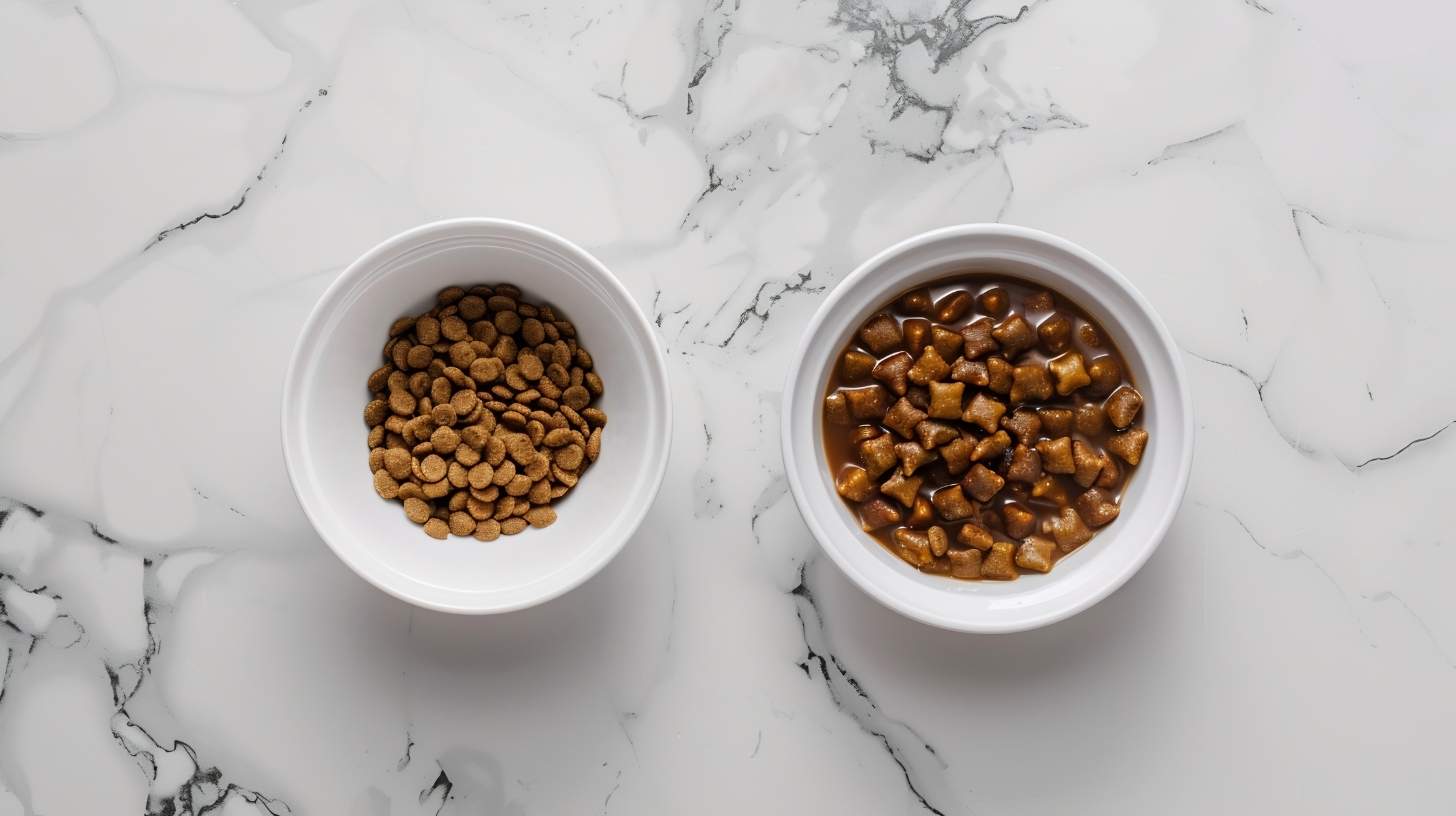
Wet vs Dry Cat Food: Which Is Better for Your Cat? (Vet-Backed Guide 2026)
- Quick Answer: Both wet and dry cat food can be nutritionally complete and appropriate – the right choice depends on your individual cat’s health, age, hydration habits, and your budget. Wet food has a clear advantage for hydration and urinary health. Dry food wins on cost and convenience. Most vets recommend a combination of both. If your cat has urinary tract issues, kidney disease, or struggles with weight, wet food is the stronger choice. If your cat is healthy and drinks well, a high-quality dry food works fine.
- Expert Source: Guidance in this article is drawn from the VCA Animal Hospitals veterinary team, International Cat Care (iCatCare), the Merck Veterinary Manual, Cornell University College of Veterinary Medicine, and the Association of American Feed Control Officials (AAFCO) nutritional standards for cat food.
- Last Updated: April 2026
Walk into any pet shop and the cat food aisle tells you everything about how complicated this question has become. There are dozens of brands, hundreds of varieties, and strong opinions on every side. Some vets swear by wet food, others say quality dry food is perfectly fine. Some owners have fed their cats exclusively dry food for 15 years without issue. Others would never feed dry food.
The truth is more nuanced than either camp admits – and understanding the actual differences between wet and dry food lets you make the right decision for your specific cat.
The Key Difference: Water Content
The most fundamental difference between wet and dry cat food is not protein, not price, not ingredients – it is water.
| Food Type | Water Content | Dry Matter |
|---|---|---|
| Wet / canned food | 70-80% | 20-30% |
| Dry food / kibble | 6-10% | 90-94% |
This single difference has cascading effects on how much you feed, how the food affects hydration, how it interacts with urinary health, and how filling it feels per calorie.
Wet Food: Advantages and Disadvantages
Advantages of Wet Food
Hydration support. Cats evolved as desert animals and have a naturally low thirst drive – they are designed to get most of their water from prey rather than from a separate water source. Studies show that cats eating dry diets often drink more water but still consume less total fluid than cats on wet diets. Canned wet food contains around 80% water, helping cats meet hydration needs without relying on voluntary drinking. This is particularly important for cats prone to urinary tract disease or kidney problems.
Urinary and kidney health. Veterinary literature consistently links higher-moisture diets with lower risk of feline lower urinary tract disease (FLUTD) and kidney stress. The higher fluid intake from wet food dilutes urine, reduces mineral concentration, and helps flush the urinary system – all of which reduce the risk of crystal and stone formation.
Weight management. Because wet food contains so much water, it is significantly less calorie-dense than dry food for the same physical volume. A cat eating wet food tends to feel fuller on fewer calories – making it easier to maintain or lose weight. This is particularly relevant given that approximately 60% of cats in the US are estimated to be overweight or obese.
Palatability. Wet food is generally more aromatic and texturally appealing than dry kibble. Picky eaters, senior cats with reduced appetite, and cats recovering from illness often accept wet food more readily.
Easier to eat. Soft texture requires no chewing effort – important for senior cats with dental pain or missing teeth, kittens just transitioning from milk, or cats recovering from dental procedures.
Higher protein, lower carbohydrates. Wet foods generally contain higher percentages of animal protein and fewer carbohydrates than dry foods, which is well-suited to cats as obligate carnivores.
Disadvantages of Wet Food
Cost. Wet food is significantly more expensive per calorie than dry food. For multi-cat households or budget-conscious owners, this is a genuine constraint.
Short shelf life once opened. Opened wet food must be refrigerated and used within 3-5 days. Food left in the bowl at room temperature should be discarded after 1-2 hours – sooner in warm weather. This requires more attention and produces more food waste.
Not suitable for free-feeding. Because it spoils relatively quickly, wet food cannot be left out all day for cats who prefer to graze. It requires scheduled mealtimes.
Storage. Canned food takes up more storage space and is heavier to transport than dry food bags.
Dry Food: Advantages and Disadvantages
Advantages of Dry Food
Convenience. Dry kibble can be left in the bowl for extended periods without spoiling – making it practical for busy owners or cats that prefer to graze. It is also easy to measure, store, and travel with.
Cost. Dry food provides significantly more calories per pound of cost than wet food – making it the more economical choice, especially for larger cats or multi-cat households.
Dental benefits (limited). Some dry diets with specific kibble textures and sizes can help mechanically reduce plaque accumulation. However, the gold standard for feline dental health remains tooth brushing – not diet type. Standard kibble does not clean teeth in the way many owners assume, and cats sometimes swallow kibble whole without chewing at all.
Puzzle feeders and enrichment. Dry food works well with puzzle feeders, slow feeders, and food-dispensing toys that provide mental stimulation at mealtimes – something wet food is generally not suitable for.
Calorie density – useful for some cats. For cats that are underweight, have poor appetites, or are picky eaters, the high calorie density of dry food means they can get significant nutrition from a small volume.
Disadvantages of Dry Food
Low moisture. Cats eating dry-food-only diets consistently have lower total fluid intake than cats eating wet diets – even if they drink from a bowl. This is the primary concern with exclusive dry feeding, particularly for male cats and cats with a history of urinary issues.
Higher carbohydrate content. Most dry foods require starch to form kibble during the extrusion manufacturing process. This means dry foods typically contain more carbohydrates than wet foods – including grains, legumes, or other plant sources. Cats do not have a dietary requirement for carbohydrates and have limited ability to digest them efficiently.
Overconsumption risk. The high calorie density of dry food means small volume differences have large calorie effects. Free-feeding dry food is a reliable way to produce an overweight cat.
Head-to-Head Comparison
| Factor | Wet Food | Dry Food |
|---|---|---|
| Water content | 70-80% | 6-10% |
| Protein content | Higher | Moderate |
| Carbohydrate content | Lower | Higher |
| Calorie density | Lower | Higher |
| Cost per calorie | Higher | Lower |
| Convenience | Lower | Higher |
| Shelf life (opened) | 1-2 hrs at room temp; 3-5 days fridge | Several weeks sealed |
| Urinary health support | Strong | Weaker |
| Weight management | Easier | Harder |
| Dental benefit | Minimal | Minimal (unless dental diet) |
| Suitable for puzzle feeders | No | Yes |
| Suitable for free-feeding | No | Yes (with measured portions) |
Did your cat eat something dangerous? Find out right now.
Enter what they ate and their weight — get an instant toxicity assessment for 35+ substances.
Check Toxicity NowWhat the Evidence Says: Key Research Findings
Hydration: Studies consistently show that cats on wet food diets have higher total fluid intake than cats on dry diets, even accounting for compensatory drinking. This matters for urinary tract and kidney health.

Urinary disease: Veterinary literature links higher-moisture diets with reduced risk of feline lower urinary tract disease (FLUTD). Male cats are particularly vulnerable to urinary blockages and benefit most from improved hydration through diet.
Dental health: Tufts University School of Veterinary Medicine confirms that both wet and dry food can cause plaque buildup. Only specific dental diets assessed by the Veterinary Oral Health Council (VOHC) have demonstrated genuine benefit. Standard kibble does not clean teeth.
Obesity: Dry food does not directly cause obesity – overfeeding causes obesity. However, because dry food is more calorie-dense and easier to overfeed, it is associated with higher rates of overfeeding in practice.
Nutritional completeness: Both wet and dry foods can be nutritionally complete and appropriate. The key is choosing food that carries the AAFCO statement for your cat’s life stage – this confirms minimum nutritional standards are met.
The Combination Approach
Both dry and wet food have pros and cons, and the majority of cat owners feed a combination of both. This is a sensible middle ground:
- Wet food as the primary component provides hydration, palatability, and lower calorie density
- A small amount of dry food can be used for puzzle feeders, dental benefit where applicable, and to maintain acceptance of dry textures for future flexibility
If feeding a combination, always adjust total daily portions to account for calories from both sources – adding wet food on top of an existing dry food ration without adjustment will cause weight gain.

Which Should YOU Choose for Your Cat?
Use this as a guide – always confirm with your vet for cats with health conditions.
| Cat Profile | Recommended Approach |
|---|---|
| Healthy adult cat | Combination wet + dry, or either alone if hydration is good |
| History of urinary tract issues | Wet food primary – hydration is critical |
| Kidney disease | Wet food strongly preferred – supports fluid intake |
| Overweight cat | Wet food – lower calorie density, more filling per calorie |
| Underweight / picky eater | Wet food – more palatable and aromatic |
| Senior cat (dental pain) | Wet food – soft texture, easier to eat |
| Kitten | Wet food preferred initially; expose to both early |
| Tight budget | High-quality dry food + some wet food where possible |
| Multiple cats with different diets | Dry food simplifies logistics; wet adds hydration |
| Cat that rarely drinks water | Wet food strongly recommended |
How to Read a Cat Food Label
Regardless of format, these markers indicate a high-quality food:
AAFCO statement: Look for “complete and balanced” – this confirms nutritional adequacy for the stated life stage. Foods labelled “for intermittent or supplemental feeding only” are not complete diets.
First five ingredients: Meat, poultry, or fish should appear first. Cheaper foods lead with grains, corn, or plant proteins.
Named protein sources: “Chicken,” “salmon,” or “beef” is better than generic “meat meal” or “animal by-products.”
Life stage: Choose food formulated for your cat’s life stage – kitten, adult, or senior. “All life stages” formulas are acceptable.
No need to overpay for marketing terms: “Premium,” “natural,” “grain-free,” and “holistic” are marketing terms with no regulated nutritional definition.
Common Myths About Wet vs Dry Cat Food
Myth: Dry food cleans cats’ teeth. Fact: Standard kibble provides minimal dental benefit. Cats often swallow kibble without chewing. Only specific dental diets with VOHC approval have demonstrated genuine benefit.
Myth: Dry food causes obesity. Fact: Overfeeding causes obesity – not dry food itself. A cat eating correctly portioned dry food will not become obese. However, dry food is easier to accidentally overfeed due to its calorie density.
Myth: Wet food is nutritionally superior to dry food. Fact: Both can be nutritionally complete. A high-quality dry food meets all feline nutritional requirements. The advantages of wet food are primarily hydration and lower calorie density – not inherent nutritional superiority.
Myth: Grain-free is better for cats. Fact: Cats have no nutritional requirement for grains, but grain-free does not automatically mean better. Many grain-free dry foods replace grains with other carbohydrate sources like potatoes or legumes. The ingredient quality matters more than whether grains are present.
Frequently Asked Questions About Wet vs Dry Cat Food
Nutrition and Health Questions
Do cats need wet food? Most veterinarians say cats do not absolutely need wet food as long as they are well-hydrated through drinking. However, wet food is strongly recommended for cats with urinary tract issues, kidney disease, weight problems, or dental pain – and is broadly considered the better choice for most cats if budget allows.
Is dry food bad for cats? No – a high-quality dry food that meets AAFCO standards is nutritionally complete and appropriate for healthy cats that drink adequately. The primary concern with exclusive dry feeding is lower total fluid intake. Providing multiple fresh water sources, a cat water fountain, and regular monitoring of hydration status mitigates this.
Can I mix wet and dry cat food? Yes – and this is what most veterinary nutritionists recommend as the practical optimum. Mixing provides the hydration benefits of wet food while keeping costs manageable. Adjust total daily portions when adding wet food to an existing dry ration to avoid unintentional weight gain.
My cat only eats dry food. Should I worry? Monitor hydration carefully. Signs of adequate hydration include pale yellow urine, normal litter box frequency, supple skin (the scruff should return quickly when gently lifted), and normal energy. Consider a cat water fountain – many cats prefer running water and drink more readily from fountains than static bowls. Try warming wet food to increase its aroma if you want to introduce it.
Practical Questions
How long can wet food sit out? Wet cat food should not sit out at room temperature for more than 1-2 hours. In warm conditions, 30-60 minutes is safer. Refrigerate opened cans and use within 3-5 days. Serve refrigerated wet food at room temperature rather than cold – cold food is less appealing and may cause digestive upset.
Is more expensive cat food always better? Not necessarily. Price reflects ingredient quality, palatability research, and manufacturing standards – but expensive marketing does not guarantee nutritional superiority. Look for the AAFCO statement, named protein sources in the first ingredients, and a brand with a dedicated veterinary nutritionist on staff. Recommendations from your vet are more reliable than brand marketing.
My cat refuses to eat wet food. What can I try? Transition gradually – mix a tiny amount of wet food into dry food and increase the proportion over 2-4 weeks. Try warming wet food slightly to increase aroma. Try different textures – some cats prefer pate, others prefer chunks in gravy. Try different protein sources. Some cats simply have very strong dry food preferences, particularly if they have eaten dry food exclusively for years.
Key Takeaways
The wet vs dry debate does not have a universal winner – it has a right answer for your individual cat. Wet food is the stronger choice for hydration, urinary health, weight management, and palatability. Dry food wins on cost and convenience. A combination of both, carefully portioned, is what most veterinary nutritionists recommend for most healthy cats. For cats with urinary tract issues, kidney disease, or weight problems, wet food becomes the clear priority. Whatever you choose, look for the AAFCO nutritional statement, prioritise named animal protein sources, and confirm appropriate portions with your vet at each annual check-up.
New cat? Find a name as unique as their character.
Browse 600+ cat names by gender and personality type — because every cat has a story.
Try Pet Name FinderThis article is for informational purposes only and does not replace advice from a qualified veterinarian. For dietary decisions specific to your cat’s health, always consult your vet.