
Hedgehog Care for Beginners: Complete Setup & Care Guide (2026)
QUICK ANSWER: IS A HEDGEHOG RIGHT FOR YOU?
- Hedgehogs are fascinating, low-odor, and quiet small exotic pets
- They need a large enclosure (min. 60×90 cm), a solid wheel, and daily handling
- Diet: high-quality cat food or hedgehog pellets + insects + vegetables
- Hedgehogs are solitary and nocturnal – most activity happens at night
- Check local laws – hedgehogs are illegal to own in some US states and countries
- This article is based on peer-reviewed veterinary research and best practices recommended by exotic and small animal veterinarians.
Hedgehogs are one of the most distinctive small pets available today. Their iconic spiny appearance, compact size, and generally quiet nature make them appealing to owners who want something different from the typical small animal. However, hedgehogs carry a reputation for being difficult – and that reputation is partially earned. They are not naturally inclined to enjoy handling, they require significant patience to socialize, and they have specific husbandry needs that differ substantially from more common small pets.
That said, a well-socialized hedgehog that trusts their owner is an incredibly rewarding pet. They will unroll from a defensive ball, explore your hands and lap with their delicate noses, and develop recognizable individual personalities. For owners willing to invest the time and respect the hedgehog’s pace, the relationship is genuinely special.
This guide reflects current best practices from the hedgehog husbandry community and exotic veterinary medicine – not the outdated advice that ships with most starter kits.
New pet? Find a name that truly fits who they are.
Browse 6,500+ names for dogs, cats, birds, reptiles, rabbits and more — filtered by personality.
Try Pet Name FinderUnderstanding Hedgehogs
Before purchasing a hedgehog, understanding their natural biology prevents the most common care mistakes and helps set realistic expectations.
African pygmy hedgehogs (Atelerix albiventris) — the most commonly kept species — are native to the dry savanna and grassland regions of central Africa. In the wild, they are solitary, wide-ranging animals that cover considerable ground each night foraging for insects, worms, and small prey items. This context explains their primary care requirements: large enclosures, running wheels, foraging opportunities, and warm ambient temperatures.
| Fact | Detail |
|---|---|
| Lifespan | 3–6 years (average 4–5 years with good care) |
| Adult weight | 250–600 grams |
| Adult size | 15–25 cm body length |
| Activity pattern | Strictly nocturnal — active from dusk to dawn |
| Social nature | Solitary — never house two hedgehogs together |
| Temperature requirement | 22–26°C — cold causes hibernation attempts, which can be fatal |
| Legal status | Illegal in several US states (California, Georgia, Hawaii, Pennsylvania) and some countries |
| Scent | Very low odor compared to most small mammals |
The hibernation danger: African pygmy hedgehogs are not true hibernators — they originate from warm regions that do not experience cold winters. However, when exposed to temperatures below approximately 18°C, they may attempt to hibernate anyway. This is a life-threatening response in this species. A hedgehog that becomes lethargic, cold to the touch, and unresponsive during cool weather is experiencing dangerous torpor and needs to be warmed gradually and seen by a vet immediately.

Sourcing Your Hedgehog
Where you purchase your hedgehog significantly affects their temperament, health, and your overall experience.
Reputable breeders are the best source for most new owners. A good breeder handles kits daily from birth, resulting in hedgehogs that are significantly easier to socialize. They can also provide full health history, parent information, and ongoing support.
Rescues and shelters sometimes have adult hedgehogs available for adoption. Adult hedgehogs can certainly bond with new owners, though the process takes longer. Adopting is a wonderful option for owners willing to invest extra patience.
Pet stores generally sell hedgehogs from large commercial breeders where minimal individual handling occurs. These hedgehogs tend to be more fearful and require more intensive socialization work. Check that the animal appears healthy, alert, and well-fed before purchasing.
Warning signs to avoid: Lethargic behavior during the evening hours, discharge from eyes or nose, visible wobbling or loss of coordination (a sign of Wobbly Hedgehog Syndrome), extremely underweight appearance, or any sign of respiratory distress.
Housing Requirements
Enclosure Type and Size
Minimum enclosure size: 60 x 90 cm floor space. Larger is always better — many experienced owners provide 60 x 120 cm or create custom enclosures.
Best enclosure types:
Large plastic storage bins converted into enclosures offer excellent size at low cost. Cut ventilation panels in the lid and sides, cover with wire mesh secured with zip ties, and you have a spacious, easy-to-clean enclosure that outperforms most commercial hedgehog cages.
Wire cages with solid bases work well if the floor space is adequate. Avoid wire mesh floors — they cause foot and leg injuries. Ensure the wire spacing is narrow enough that the hedgehog cannot push through or get limbs caught (maximum 2.5 x 2.5 cm spacing).
Avoid: Multi-level wire cages with ramps — hedgehogs have poor spatial awareness and fall from heights easily. Keep the enclosure single-level.

Temperature Control
Temperature is non-negotiable in hedgehog care. Maintain the enclosure between 22–26°C at all times.
During cooler months, or if your home drops in temperature at night, use a ceramic heat emitter, a radiant heat panel mounted above the enclosure, or an under-tank heater (placed under one end only, so the hedgehog can choose their temperature). A digital thermometer inside the enclosure confirms the actual temperature rather than relying on the room thermostat.
Never use heat rocks — they cause thermal burns. Never rely on room heating alone during colder months without confirming enclosure temperature independently.
Bedding
Provide 5–10 cm of soft substrate. Recommended options include paper-based bedding (Carefresh, Boxo), fleece liners (easy to wash and replace), or kiln-dried aspen. Avoid cedar and pine shavings — the aromatic phenols irritate the respiratory tract.
Lighting
Hedgehogs require a regular light cycle to maintain healthy biological rhythms — approximately 12–14 hours of light and 10–12 hours of darkness. In rooms without natural light variation, use a lamp on a timer to provide a consistent cycle. Irregular or constant lighting disrupts their sleep-wake cycle and contributes to stress.
The Wheel: Essential and Life-Improving
Like hamsters, hedgehogs in the wild travel significant distances each night. A running wheel is not optional — it is one of the most important items in the enclosure.
Required specifications:
- Minimum 30 cm diameter — 28 cm is acceptable but 30+ cm is better for adult hedgehogs
- Completely solid running surface — no mesh, no spokes, no gaps that can trap feet
- Easy to clean — hedgehogs often defecate while running (normal behavior)
Recommended wheels: Niteangel, Carolina Storm Wheel, Wodent Wheel Senior (large size). Avoid any wheel with a mesh or barred surface, or any wheel under 28 cm diameter.
Diet and Nutrition
Hedgehogs are insectivores — their natural diet consists primarily of insects, worms, and occasionally small prey. In captivity, a combination of a quality protein-based dry food and live insects most closely mirrors this.
The Base Diet
High-quality cat food or hedgehog pellets: A premium dry cat food (not kitten food — higher fat content) with chicken or turkey as the primary ingredient, protein content of 28–35%, and fat content of 10–15% forms an excellent base. Avoid fish-based foods — the strong odor affects the hedgehog’s scent marking behavior. Specifically formulated hedgehog foods are also available — choose one with quality protein as the first ingredient, not corn or other grains.
Quantity: Most adult hedgehogs need approximately 1–2 tablespoons of dry food per night. Monitor weight regularly — both obesity and underweight are common problems. A healthy hedgehog should have a defined waist visible from above when uncurled.
Insects — The Essential Protein Supplement
Offering live or dried insects 3–5 times per week provides essential protein, enrichment, and natural foraging stimulation.
| Insect | Safety | Notes |
|---|---|---|
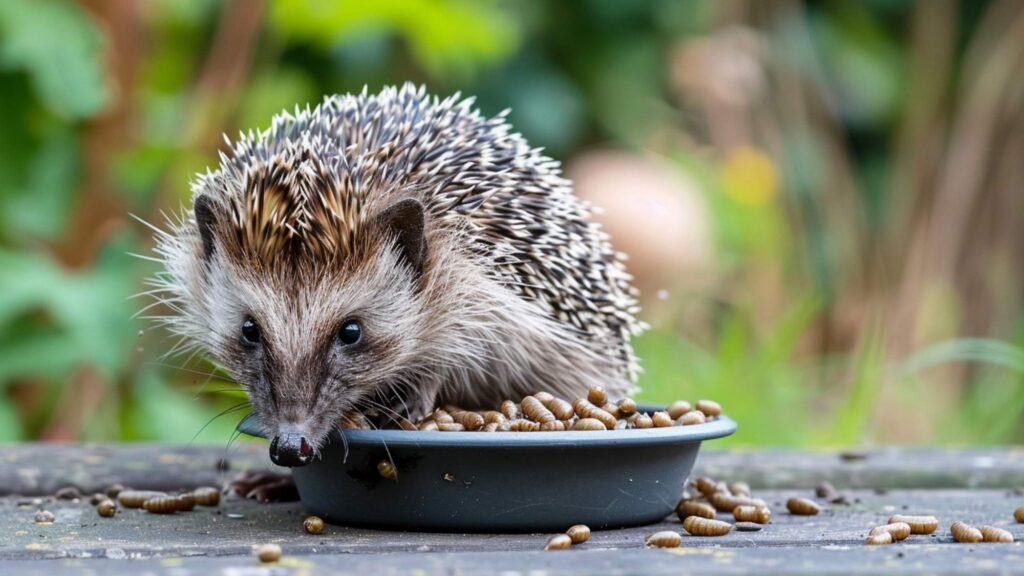
| Mealworms | ✅ Safe | High fat — limit to 3–4 per feeding |
| Crickets | ✅ Excellent | High protein, great enrichment |
| Dubia roaches | ✅ Excellent | Excellent protein-to-fat ratio |
| Waxworms | ⚠️ Occasional only | Very high fat — treats only |
| Superworms | ✅ Safe | Good size for adult hedgehogs |
| Wild-caught insects | ❌ Avoid | Risk of pesticide exposure and parasites |
Always source insects from reputable reptile and exotic pet suppliers — the same suppliers that stock food for leopard geckos and other insectivores — rather than collecting them outside (pesticide and parasite risk).
Safe Fruits and Vegetables
Offer small amounts of fresh food as supplements — not as a meal replacement. Safe options include cooked chicken (plain, no seasoning), cooked egg, apple (no seeds), banana (small amounts), blueberries, cooked sweet potato, cooked carrot, and cooked green beans.
Foods to never feed: Grapes and raisins (toxic), avocado (toxic), onion and garlic (toxic), citrus fruits (too acidic), raw meat unless specifically recommended by your vet, seeds and nuts (choking risk, high fat), milk and dairy (lactose intolerant), and any seasoned, processed, or salted human food.
Handling and Socialization
This is the area where most new hedgehog owners face the steepest learning curve. Hedgehogs are not naturally social with humans — they are prey animals with a defensive reflex that involves rolling into a tight ball and presenting their spines. Building trust requires consistent, patient work and genuine respect for the hedgehog’s pace.
The Huffing and Spiking Response
When a hedgehog encounters something unfamiliar — a new smell, sound, or touch — they may huff loudly and erect their spines defensively. New owners sometimes interpret this as hostility or dislike, but it is simply a natural protective reflex. With regular, positive handling, this response diminishes significantly as the hedgehog learns that you are not a threat.
Never wear gloves when handling your hedgehog for bonding purposes — the goal is for them to recognize your specific scent. Gloves prevent this entirely and slow socialization dramatically.
Building a Bond: Step by Step
Days 1–5: Allow the hedgehog to settle into the new enclosure undisturbed. Place an item with your scent (an unwashed t-shirt or piece of worn fabric) inside the enclosure — this helps them associate your smell with safety and comfort.
Days 6–14: Begin handling sessions during their active evening hours. Cup the hedgehog in both hands and allow them to unroll at their own pace. Hold them gently but securely over a low surface initially. Sessions of 15–20 minutes each evening build familiarity steadily.
Ongoing: Consistency is the most important factor. Daily handling, even brief contact, maintains and deepens the bond. Irregular handling allows the hedgehog to regress to defensive behavior.
Bonding pouch: Many hedgehog owners use a small fleece pouch or bonding bag — the hedgehog rests inside against the owner’s body while they go about daily activities. This passive, low-stress contact is excellent for building familiarity and trust.
Health Care
Finding the Right Vet
Hedgehogs require an exotics-experienced veterinarian. Many general practice vets have limited hedgehog knowledge. Search for a vet specifically listing exotic animals or small mammals in their specialties, and locate one before any health emergency occurs.
Signs of a Healthy Hedgehog
- Active and alert during evening hours
- Good appetite and normal water consumption
- Smooth, straight gait without wobbling
- Clear eyes without discharge
- Normal droppings — small, dark brown, formed pellets
- Good body condition — neither obese nor visibly underweight
- Clean ears, feet, and face
Most Common Health Problems
Wobbly Hedgehog Syndrome (WHS): A progressive, fatal neurological disease affecting the muscles, beginning in the hindquarters and advancing forward. Affected hedgehogs display an unsteady, wobbly gait, falling over, and eventual paralysis. WHS has a genetic component and no cure — management focuses on quality of life. Any wobbling in gait warrants immediate veterinary assessment.
Obesity: Extremely common in captive hedgehogs fed too much high-fat food and given insufficient exercise. An obese hedgehog cannot fully roll into a ball — their fat deposits prevent complete protection. Obesity significantly reduces lifespan and contributes to liver disease and heart problems.
Dental disease: Periodontal disease affects a large proportion of hedgehogs over 3 years old. Symptoms include drooling, difficulty eating, weight loss, and bad breath. Annual dental assessments and appropriate diet help manage risk.
External parasites: Mites are common in hedgehogs — symptoms include excessive scratching, quill loss, and flaky skin. Treatment with veterinary anti-parasitic medications is straightforward and effective.
Cancer: Hedgehogs have a high cancer rate compared to many other small pets. Oral tumors, uterine cancer in females, and skin tumors are most common. Regular physical examinations by an exotic vet allow earlier detection.
Respiratory infections: Symptoms include wheezing, labored breathing, nasal discharge, and reduced activity. These require prompt veterinary treatment.

Frequently Asked Questions
Setup, Behavior & Daily Care
Q: Do hedgehogs make good pets for beginners? A: Hedgehogs suit dedicated beginners who research thoroughly before acquiring one and commit to daily handling. They are not ideal for owners expecting a quick-to-warm, cuddly pet — the bonding process requires weeks of consistent work. For patient, research-oriented owners, however, hedgehogs offer a uniquely rewarding experience.
Q: Do hedgehogs bite? A: Hedgehogs can bite, particularly when startled or during early socialization. Their bite is surprisingly firm for their size. However, biting becomes very rare in well-socialized hedgehogs that trust their owners. Most biting incidents occur when the hedgehog smells something interesting on the owner’s hands — particularly food smells. Always wash hands before handling.
Q: How do I know if my hedgehog likes me? A: A hedgehog that trusts you will unroll and explore your hands calmly, show curiosity without huffing, relax their spines flat, and approach your hands voluntarily. They may rest chin-down on your palm or fall asleep while being held — the ultimate sign of comfort. These behaviors typically develop gradually over weeks to months of consistent handling.
Q: Can I keep two hedgehogs together? A: No. African pygmy hedgehogs are strictly solitary animals. Housing two together causes serious stress, territorial aggression, and injuries. Each hedgehog must have their own enclosure, and housing locations should ideally prevent them from hearing or smelling each other constantly.
Health, Hibernation & Lifespan
Q: My hedgehog is not moving and feels cold — what do I do? A: This is a veterinary emergency. African pygmy hedgehogs attempting torpor or hibernation in cold temperatures can die if not warmed carefully and promptly. Warm the hedgehog gradually in your hands against your body — do not use direct heat sources. Once they show signs of recovery, see an exotic vet immediately and permanently address the enclosure temperature to prevent recurrence.
Q: How long do hedgehogs live? A: With excellent care — proper temperature, diet, regular vet checkups, and daily exercise via a wheel — hedgehogs typically live 4–6 years. The most common causes of early death are hibernation attempts from cold exposure, obesity, and late-detected disease.
Q: Do hedgehogs need vaccinations? A: Unlike ferrets, hedgehogs do not require vaccinations. However, annual wellness exams with an exotics vet are strongly recommended — hedgehogs hide illness effectively, and many conditions are far more treatable when caught early. Annual exams become especially important once hedgehogs reach 2–3 years of age.
Related Articles
- Hamster Care for Beginners — Another popular small exotic pet with specific space requirements
- Ferret Care for Beginners — Active, social small pets requiring significant daily interaction
- Pet Rat Care for Beginners — Highly intelligent social small mammals ideal for hands-on owners
This article is for informational purposes only. For health concerns, always consult an exotic or small animal veterinarian.