Best Aquarium Filter Types
You’ve set up your aquarium, added water, and you’re ready for fish. But then you realize: Which filter should I use? There are so many types!
Choosing the right aquarium filter is one of the most important decisions you’ll make.
A good filter keeps your water clean, your fish healthy, and maintenance manageable. A bad filter? Cloudy water, sick fish, and constant frustration.
This complete guide breaks down the 5 main types of aquarium filters, their pros and cons, and—most importantly—which one is right for YOUR tank.
New pet? Find a name that truly fits who they are.
Browse 6,500+ names for dogs, cats, birds, reptiles, rabbits and more — filtered by personality.
Try Pet Name FinderWhy Aquarium Filtration Matters
The 3 Types of Filtration
All good filters provide three types of filtration:
1. Mechanical Filtration
- Removes physical debris (uneaten food, fish waste, plant matter)
- Uses sponges, pads, or floss to trap particles
- Keeps water clear
2. Biological Filtration
- Uses beneficial bacteria to break down toxic ammonia → nitrite → nitrate
- THE MOST IMPORTANT type of filtration
- Happens in filter media (ceramic rings, bio-balls, sponges)
3. Chemical Filtration
- Removes dissolved impurities (odors, discoloration, medications)
- Uses activated carbon or specialized media
- Optional but helpful
A complete filter should provide all three types.

The 5 Main Aquarium Filter Types
Quick Comparison Table
| Filter Type | Best For | Tank Size | Price | Maintenance |
|---|---|---|---|---|
| Canister | Large tanks, planted tanks | 40+ gal | $$$ | Monthly |
| Hang-On-Back (HOB) | Beginners, most tanks | 10-75 gal | $$ | Weekly |
| Sponge | Shrimp, fry, small tanks | 5-20 gal | $ | Bi-weekly |
| Internal | Nano tanks, tight spaces | 5-30 gal | $ | Weekly |
| Undergravel | Budget setups (not ideal) | 10-40 gal | $ | Monthly |
Let’s dive deep into each type.
1. Canister Filters
What Are They?
External filters that sit below the tank.
How they work:
- Water is drawn from tank via intake tube
- Passes through multiple filter media chambers inside canister
- Returns to tank via output tube (spray bar or nozzle)
Popular brands: Fluval, Eheim, Marineland, SunSun
Pros of Canister Filters
✅ Exceptional filtration capacity
- Multiple media stages (mechanical, biological, chemical)
- Large volume of media = superior biological filtration
- Best water quality results
✅ Quiet operation
- Sits outside tank (vibrations don’t transfer)
- Very low noise compared to other types
✅ Hidden from view
- Stored in cabinet below tank
- Maintains clean tank aesthetic
✅ Powerful flow
- High GPH (gallons per hour) ratings
- Suitable for large tanks (50-200+ gallons)
- Adjustable flow rates
✅ Versatile media options
- Customize filtration (activated carbon, ceramic rings, bio-balls, specialized media)
- Easy to upgrade or change
Cons of Canister Filters
❌ Expensive
- Initial cost: $80-$300+
- Replacement media costs add up
❌ Complex setup
- Requires priming (removing air)
- Multiple hoses and connections
- Not beginner-friendly
❌ Maintenance is messy
- Must disconnect hoses
- Canister is heavy when full
- Water spillage risk
❌ Leak potential
- O-rings can fail
- Hose connections may loosen
- Requires regular inspection
❌ Takes up floor space
- Needs cabinet or stand
- Not ideal for small apartments

Best For:
✅ Large tanks (40+ gallons)
✅ Planted tanks (gentle flow, CO2 retention)
✅ Discus, cichlids, or other sensitive fish
✅ Experienced aquarists
✅ Overstocked tanks (high bioload)
❌ Not ideal for:
- Small tanks (under 20 gallons)
- Beginners (too complex)
- Tight budgets
Top Picks (2026):
Best Overall: Fluval FX6 (up to 400 gal, self-priming, multi-stage)
Best Value: SunSun HW-302 (75 gal, budget-friendly)
Best for Planted Tanks: Eheim Classic 2217 (smooth flow, silent)
2. Hang-On-Back (HOB) Filters
What Are They?
External filters that hang on the back rim of the tank.
How they work:
- Intake tube draws water from tank
- Water flows through filter media inside unit
- Clean water cascades back into tank (creates surface agitation)
Popular brands: AquaClear, Marineland Penguin, Tetra Whisper
Pros of HOB Filters
✅ Beginner-friendly
- Easy to install (no priming!)
- Simple maintenance (lift lid, replace cartridge)
- Clear instructions
✅ Affordable
- Initial cost: $20-$60
- Replacement cartridges: $5-15
✅ Good for most tanks
- Works for 10-75 gallon tanks
- Adjustable flow on many models
- Suitable for community tanks
✅ Easy maintenance
- Access from top of tank (no disconnecting)
- Quick cartridge changes
- Less messy than canister
✅ Creates surface agitation
- Increases oxygen exchange (good for fish!)
- Prevents biofilm buildup
Cons of HOB Filters
❌ Visible and somewhat noisy
- Sits on tank rim (not hidden)
- Water splashing sound
- Motor hum (varies by brand)
❌ Limited biological filtration
- Smaller media capacity than canisters
- Less surface area for beneficial bacteria
- May require additional bio-media
❌ Takes up back space
- Blocks some tank area
- Must leave room behind tank for unit
- Can’t push tank flush against wall
❌ Cartridge system = ongoing cost
- Proprietary cartridges expensive
- Need replacements every 2-4 weeks
- Can’t customize media easily (unless using AquaClear style)
❌ Can stop during power outages
- Requires repriming if water level drops
- Not self-starting
Best For:
✅ Beginners (easiest to use!)
✅ 10-75 gallon community tanks
✅ Goldfish, tetras, guppies, platys
✅ Tight budgets
✅ Tanks without cabinet space
❌ Not ideal for:
- Very large tanks (100+ gallons)
- Fry tanks (strong intake can suck up babies)
- Shrimp tanks (same intake issue)

Top Picks (2026):
Best Overall: AquaClear 70 (refillable media, adjustable flow)
Best Budget: Tetra Whisper IQ 30 (quiet, good for 30 gal)
Most Popular: Marineland Penguin 350 (bio-wheel, easy cartridges)
3. Sponge Filters
What Are They?
Simple internal filters powered by an air pump.
How they work:
- Air pump pushes air through tube into sponge
- Rising bubbles create suction, drawing water through sponge
- Sponge traps debris and grows beneficial bacteria
- Clean water exits at top
Popular brands: Aquarium Co-Op, Hikari Bacto-Surge, Hydro-Sponge
Pros of Sponge Filters
✅ Safest for fry and shrimp
- Gentle flow (won’t suck up babies)
- No intake tubes (no traps)
- Ideal for breeding tanks
✅ Excellent biological filtration
- Entire sponge surface grows bacteria
- One of the best biofilters
- Very efficient for bio-load
✅ Virtually indestructible
- No motors to break
- No impellers to clog
- Lasts years
✅ Cheapest option
- Filter: $5-15
- Air pump: $10-20
- No replacement media needed
✅ Easy maintenance
- Squeeze sponge in old tank water
- Rinse and return to tank
- Takes 5 minutes
✅ Provides aeration
- Bubbles increase oxygen
- Good for bettas, goldfish
Cons of Sponge Filters
❌ Takes up tank space
- Sits inside tank (visible)
- Can obstruct view
- Not aesthetic
❌ Requires air pump
- Extra equipment needed
- Air pump noise (can be loud)
- Air line tubing visible
❌ Limited mechanical filtration
- Only traps large debris
- Doesn’t polish water like other filters
- Tank may look slightly cloudy
❌ Not suitable for large tanks
- Limited flow capacity
- Best for tanks under 20 gallons
- Need multiple sponges for larger tanks
❌ Can move around
- Lightweight (floats if not weighted)
- Fish can push it
- May need to secure
Best For:
✅ Shrimp tanks (BEST choice!)
✅ Fry grow-out tanks
✅ Betta tanks (gentle flow)
✅ Hospital/quarantine tanks
✅ Small tanks (5-20 gallons)
❌ Not ideal for:
- Large tanks (over 30 gallons)
- Tanks requiring polished crystal-clear water
- Aesthetic-focused display tanks
Top Picks (2026):
Best Overall: Aquarium Co-Op Sponge Filter (excellent value, multiple sizes)
Best Budget: Hikari Bacto-Surge (reliable, affordable)
Best for Breeding: Hydro-Sponge Pro (dual sponge, maximum bio)
4. Internal Filters
What Are They?
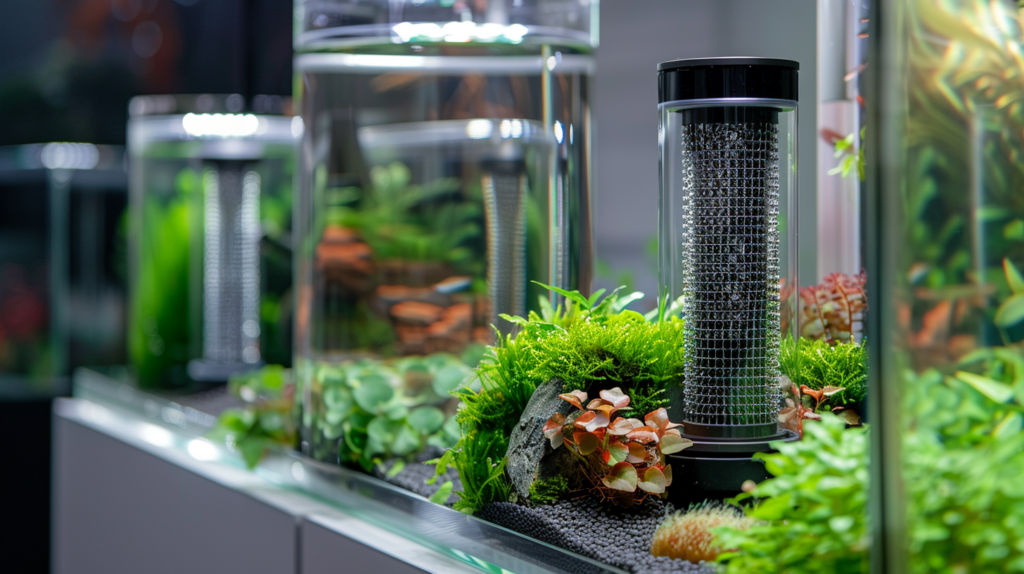
Submersible filters that sit inside the tank.
How they work:
- Motor draws water through intake
- Water passes through sponge or cartridge
- Clean water exits via adjustable nozzle
- Entire unit submerged
Popular brands: Fluval U-Series, Aqueon QuietFlow, Penn Plax Cascade
Pros of Internal Filters
✅ Space-saving
- No external equipment needed
- Good for tight spaces
- Nothing hangs on back
✅ Adjustable flow direction
- Can aim output (surface agitation or gentle flow)
- Good for directional currents
✅ Easy installation
- Suction cups attach to glass
- Plug in and go
- No priming needed
✅ Quiet operation
- Submerged = muffled sound
- Less noisy than HOB
✅ Affordable
- $15-40
- Lower cost than canister
Cons of Internal Filters
❌ Takes up tank space
- Visible in tank
- Obstructs swimming area
- Hard to hide
❌ Limited capacity
- Small media chamber
- Not suitable for large tanks
- Less biological filtration
❌ Requires in-tank maintenance
- Must reach into tank to clean
- Can disturb fish
- Gets hands wet
❌ Heats water slightly
- Motor generates heat
- May raise tank temp 1-2°F
- Issue in summer
❌ Suction cups fail
- Can fall off glass
- May need replacement
- Filter floats if detached
Best For:
✅ Nano tanks (5-15 gallons)
✅ Turtle tanks (powerful, can’t hang on back)
✅ Tight spaces (no room for HOB or canister)
✅ Bettas (adjustable gentle flow)
❌ Not ideal for:
- Large tanks (over 30 gallons)
- Overstocked tanks
- Aquascapes (aesthetics)
Top Picks (2026):
Best Overall: Fluval U2 (adjustable flow, spray bar option)
Best Budget: Aqueon QuietFlow Internal 10 (compact, quiet)
Best for Bettas: Penn Plax Cascade 100 (gentle, adjustable)
5. Undergravel Filters (UGF)
What Are They?
Plates that sit under gravel, using substrate as filter media.
How they work:
- Perforated plates sit on tank bottom
- Gravel placed on top (3-4 inches deep)
- Air pump or powerhead draws water down through gravel
- Water returns via uplift tubes
Note: Old-school technology, rarely recommended today.
Pros of Undergravel Filters
✅ Hidden from view
- Completely concealed under substrate
- No visible equipment
- Clean aesthetic
✅ Large biological filtration area
- Entire gravel bed becomes biofilter
- Lots of surface area for bacteria
✅ Cheap
- Plates: $10-20
- Air pump or powerhead: $10-30
- Very budget-friendly
✅ Low maintenance (initially)
- No cartridges to replace
- No media to clean
- Set and forget

Cons of Undergravel Filters
❌ Gravel becomes filter media
- Traps debris deeply in substrate
- Becomes clogged over time (months/years)
- Very hard to clean properly
❌ Not suitable for planted tanks
- Disrupts root growth
- Constant flow through substrate stresses plants
- Can’t use nutrient-rich substrate
❌ Limits substrate choice
- Requires gravel (not sand, can clog)
- Must be specific size (not too fine)
- Pebbles too large won’t work
❌ Maintenance nightmare long-term
- Eventually requires full tank teardown
- Must remove all gravel to clean plates
- Very disruptive to fish
❌ Poor mechanical filtration
- Debris sinks into substrate (out of sight)
- Looks clean but isn’t
- Detritus buildup
❌ Outdated technology
- Better options available
- Rarely used by experienced aquarists
Best For:
✅ Extreme budget setups (if absolutely necessary)
✅ Goldfish tanks (no plants, heavy bioload)
❌ Not recommended for:
- Planted tanks
- Shrimp tanks
- Long-term setups
- Beginners (better options exist!)
How to Choose the Right Filter
Consider These Factors:
1. Tank Size
| Tank Size | Recommended Filter |
|---|---|
| 5-10 gal | Sponge or small internal |
| 10-30 gal | HOB or internal |
| 30-75 gal | HOB or canister |
| 75+ gal | Canister (or multiple HOBs) |
2. Fish Type
Betta fish:
- Sponge filter (gentle flow)
- Internal filter with adjustable output
Goldfish:
- Canister (heavy bioload!)
- HOB with high GPH
Shrimp:
- Sponge filter (SAFEST!)
- Never use intake tubes
Cichlids:
- Canister (powerful filtration needed)
- HOB as secondary
Community tanks (tetras, guppies):
- HOB (easiest)
- Internal works too
3. Budget
Under $30:
- Sponge filter + air pump
- Small HOB
- Internal filter
$30-$100:
- Quality HOB (AquaClear, Marineland)
- Entry-level canister (SunSun)
$100+:
- Premium canister (Fluval FX series, Eheim)
4. Maintenance Preference
Low maintenance:
- Sponge (squeeze every 2 weeks)
- Canister (monthly cleaning)
Quick maintenance:
- HOB (replace cartridge weekly)
Don’t mind mess:
- Canister (deep clean monthly)

5. Aesthetic Priorities
Want hidden filter:
- Canister (stored below tank)
- Undergravel (not recommended though!)
Don’t mind visible:
- Sponge
- Internal
- HOB
GPH (Gallons Per Hour) Guide
How Much Flow Do You Need?
Rule of thumb: Filter should turn over tank volume 4-6 times per hour.
Example:
- 30-gallon tank
- Minimum GPH: 120 (30 × 4)
- Ideal GPH: 150-180 (30 × 5-6)
BUT consider fish preferences:
High-flow fish (goldfish, cichlids): 6-10x turnover
Low-flow fish (bettas, gouramis): 3-4x turnover
Shrimp: 2-3x turnover (very gentle!)
Maintenance Guide (By Filter Type)
Canister Filters
Monthly:
- Disconnect hoses
- Remove canister
- Rinse mechanical media (sponges, pads) in old tank water
- Check biological media (replace if falling apart)
- Clean impeller housing
- Replace activated carbon if using
- Reassemble and prime
Every 6 months:
- Replace O-rings
- Deep clean all components
HOB Filters
Weekly/Bi-weekly:
- Replace or rinse cartridge (depends on brand)
- Wipe down intake tube
- Check impeller
Monthly:
- Deep clean impeller housing
- Replace activated carbon
Sponge Filters
Bi-weekly:
- Remove sponge from tank
- Squeeze in bucket of old tank water (NEVER tap water!)
- Rinse until water runs clear
- Return to tank
Never replace sponge unless it’s falling apart! (Bacteria lives there)
Internal Filters
Weekly:
- Remove filter from tank
- Rinse sponge in old tank water
- Wipe down intake/output
Monthly:
- Replace cartridge if applicable
- Clean impeller
Common Mistakes to Avoid
1. Oversizing Filter
Mistake: Buying too powerful filter for tank size
Problem: Creates excessive current, stresses fish
Fix: Match GPH to tank size and fish preferences. Use flow diverters if needed.
2. Replacing Bio-Media Too Often
Mistake: Replacing sponges, ceramic rings, bio-balls frequently
Problem: Removes beneficial bacteria, crashes cycle
Fix: Only replace bio-media when it’s literally falling apart (years of use). Mechanical media (cartridges, pads) can be replaced more often.
3. Using Tap Water to Clean Filter
Mistake: Rinsing filter media in tap water
Problem: Chlorine kills beneficial bacteria
Fix: ALWAYS use old tank water (from water changes) to rinse media.
4. Turning Off Filter During Feeding
Mistake: Stopping filter so food doesn’t get sucked in
Problem: Beneficial bacteria need constant oxygen (from flow)
Fix: Leave filter on 24/7. Feed in one area away from intake.
5. Buying Filter Based on Price Alone
Mistake: Choosing cheapest option without considering long-term costs
Problem: Cheap filters may require expensive replacement cartridges
Fix: Calculate long-term costs (cartridges, media, electricity).
Combining Filters (Advanced)
When to Use Multiple Filters:
Large tanks (75+ gallons):
- 2 HOBs on opposite ends
- Canister + HOB
- Better water circulation
High bioload (goldfish, cichlids):
- Canister + sponge
- 2 canisters
Shrimp breeding:
- Multiple sponge filters
- Redundancy if one fails
Benefits:
- Backup if one fails
- Can clean one while other runs (doesn’t crash cycle)
- Better water quality

Common Questions
Q: Can I run a tank without a filter?
A: Only in heavily planted tanks with very low bioload (like a single betta + lots of plants). Not recommended for beginners.
Q: How often should I replace my filter?
A: Filters last years if maintained properly. Only replace if motor fails or unit is damaged.
Q: Do I need activated carbon in my filter?
A: Not required! Carbon removes chemicals/odors but isn’t necessary for healthy tank. Use only if needed (after medication, for discoloration).
Q: Can I use a filter rated for a smaller tank?
A: Not ideal. Undersized filters can’t handle bioload. Always match or slightly exceed tank size.
Q: My filter is too loud. What do I do?
A: Check for clogs, impeller issues, water level (HOB needs proper water level). Some filters are just noisier than others.
Q: Should I turn off my filter at night?
A: NO! Filter must run 24/7 to maintain beneficial bacteria and oxygenation.
The Bottom Line
The “best” filter depends on YOUR specific needs.
Quick recommendations:
Best for beginners: Hang-On-Back (HOB)
Best for shrimp/fry: Sponge filter
Best for large tanks: Canister filter
Best budget option: Sponge filter
Best for planted tanks: Canister filter
Best for nano tanks: Internal or sponge filter
Most important: Choose a filter that:
- ✅ Matches your tank size
- ✅ Suits your fish type
- ✅ Fits your budget
- ✅ You can maintain consistently
A properly maintained “budget” filter beats a neglected “premium” filter every time.
What filter are you using? Share your experience in the comments!
This article is for informational purposes. Always research your specific fish species’ needs before choosing equipment.