Bullmastiff: Complete Breed Guide – Temperament, Care, Health & More (2026)
- 🐕 QUICK ANSWER: BULLMASTIFF BREED GUIDE
- ✅ The Bullmastiff is one of the most precisely documented creation stories in dog breeding – developed in 1860s England from a specific 60/40 Mastiff/Bulldog cross to a deliberate working specification
- ✅ Males: 110-130 lbs, Females: 100-120 lbs – large, powerful, and imposing with a calm, confident presence
- ✅ Naturally protective without training – the breed’s guarding instinct is functional from puppyhood
- ✅ Surprisingly low exercise needs for its size – 45-60 minutes daily is sufficient for most Bullmastiffs
- ✅ Loyal, gentle, and deeply devoted within the family – an affectionate companion despite the formidable exterior
- ⚠️ Bloat is the leading cause of premature death – prophylactic gastropexy and emergency planning are essential
- ⚠️ Hip and elbow dysplasia occur at high rates – OFA screening on both parents is non-negotiable
- ⚠️ Progressive retinal atrophy (PRA) affects Bullmastiffs – DNA testing required before purchase
- ⚠️ Not suitable for first-time owners – their size, strength, and protective instinct require confident, experienced handling
- ❌ Do NOT acquire a Bullmastiff without verifying that you can physically manage a 130 lb dog – strength and consistent handling are essential
- ❌ Do NOT skip early and extensive socialization – an under-socialized Bullmastiff’s protective instinct becomes unmanageable at this size
- This article draws on breed standards from the American Kennel Club (AKC) and The Bullmastiff Association (UK), health research from the American Bullmastiff Association (ABA) Health Committee, and clinical guidance from veterinary oncologists and cardiologists specializing in giant breed health.
- Last Updated: May 2026
What Kind of Dog Is a Bullmastiff?
The Gamekeeper’s Problem
The Bullmastiff’s origin story is one of the most precisely documented in dog breeding history. In 1860s England, large country estates employed gamekeepers whose primary task was protecting game birds and deer from poachers. Poaching had become a significant problem on estates, and gamekeepers patrolling at night faced real danger from desperate men willing to use violence.
Specifically, the gamekeeper needed a precise tool: a dog large and powerful enough to knock a man down and hold him, brave enough to work in darkness and silence, fast enough to cover ground quickly, but controllable enough not to maul the poacher it caught. The English Mastiff was too slow and too calm. The Old English Bulldog was too aggressive and too small. Consequently, neither alone provided the answer.
The Systematic Solution
The solution was systematic crossbreeding. Gamekeepers crossed the English Mastiff with the Old English Bulldog in a specific ratio – approximately 60% Mastiff blood to 40% Bulldog blood – that combined the Mastiff’s size and power with the Bulldog’s tenacity and speed. The resulting dog became known as the “Gamekeeper’s Night Dog” – a working description, not a breed name.
Breeders refined the program over decades. By the early 20th century, the type had stabilized sufficiently for formal breed development. Consequently, the English Kennel Club recognized the Bullmastiff as a pure breed in 1924, acknowledging the decades of consistent breeding that had produced a dog that bred true. The AKC then recognized the breed in 1933.
Official Recognition and the Founding Standard
A Bullmastiff named Farcroft Silvo is often credited as the foundation sire of the modern breed. Notably, early breed records described the Bullmastiff as “a fearless dog, faithful to his master and his master’s family, easily trained, not aggressive unless aroused.” This description remains an accurate portrait of the well-bred modern Bullmastiff.

At a Glance: Bullmastiff Quick Reference
| Category | Details |
|---|---|
| AKC group | Working Group |
| Origin | England – 1860s, Mastiff/Bulldog cross |
| Male height | 25-27 inches |
| Male weight | 110-130 lbs |
| Female height | 24-26 inches |
| Female weight | 100-120 lbs |
| Lifespan | 7-9 years |
| Energy level | Low to moderate |
| Exercise needed | 45-60 minutes per day |
| Grooming | Low – weekly brushing |
| Shedding | Moderate |
| Trainability | Good – willing but independent |
| Good with children | Yes – family children with supervision |
| Good with other dogs | Variable – same-sex aggression possible |
| Good with strangers | Reserved and watchful |
| Bloat risk | Very high – leading cause of death |
| Hip dysplasia risk | High |
| PRA risk | Moderate – DNA test required |
| Cancer risk | High – major health concern |
| First-time owner suitable | Not recommended |
Bullmastiff Temperament: What to Expect
The Gamekeeper’s Dog in a Modern Home
The Bullmastiff was built to knock a man down and pin him silently in the dark. This heritage produces a dog of formidable physical capability combined with the essential quality that made the Gamekeeper’s Night Dog work: a discriminating judgment about when to act. Indeed, a dog that attacked every sound or movement would be useless on a nighttime patrol. The Bullmastiff learned to observe, assess, and act decisively only when action was required.
This discriminating judgment is the breed’s most important temperamental characteristic. A well-socialized Bullmastiff does not react to every unfamiliar situation – instead, it watches, assesses, and responds proportionally. This composure is neither indifference nor timidity – it is the controlled confidence of a breed designed to operate effectively in challenging conditions.
Family Devotion
Within its established family, the Bullmastiff is genuinely affectionate. It seeks physical closeness, shows warmth toward family members, and develops particular protectiveness toward children it grows up with. Notably, this affection has a characteristic Bullmastiff quality – it expresses through steady presence and quiet devotion rather than the exuberant demonstrations of more socially driven breeds.
Stranger Response and Same-Sex Aggression
Bullmastiffs are naturally reserved toward strangers. They observe unfamiliar people with watchful assessment rather than friendly greeting. When their owner communicates welcome, however, most Bullmastiffs accept visitors with calm cordiality. The territorial instinct is strong and functional. Consequently, this instinct requires early and thorough socialization to ensure it activates appropriately rather than broadly.
Furthermore, same-sex aggression is a documented breed tendency, particularly between intact males. Male-female combinations are the most stable multi-dog configuration. Neutered males show reduced but not eliminated same-sex aggression. Multi-dog Bullmastiff households therefore require careful management.
Socialization: The Non-Negotiable Investment
A 120 lb dog with a natural protective instinct and strong territorial drive that has not received thorough socialization is not simply a management challenge – it is a genuine public safety concern. Consequently, early and extensive socialization calibrates the protective instinct to respond appropriately rather than broadly.
| Socialization Priority | Age | Notes |
|---|---|---|
| All types of people | 8-16 weeks | Children, elderly, uniformed, unfamiliar |
| Other animals | 8-16 weeks | Dogs, cats, smaller animals |
| Varied environments | 8-20 weeks | Urban, rural, traffic, crowds |
| Handling by strangers | Ongoing | Vets, groomers, visitors |
| Novel situations and sounds | Ongoing through adolescence | Reduces reactivity in adult life |
Exercise: Low Needs, Important Regularity
Bullmastiffs need only 45-60 minutes of daily exercise – notably low for their size. Their moderate energy level and the Mastiff heritage of controlled, steady work rather than sustained athletic output means they do not require the exercise intensity of sporting or herding breeds. However, regular daily movement is important for joint health and weight management.
| Exercise Type | Suitability | Notes |
|---|---|---|
| Brisk walks | Excellent | Primary daily activity |
| Off-leash in fenced area | Good | Must be genuinely secure |
| Swimming | Good | Low-impact, excellent for joints |
| Hiking | Good with limits | Avoid extreme heat or sustained intensity |
| Running | Avoid | Joint stress and overheating risk |
| Dog sports | Low interest | Not a natural fit for this breed |
Heat Sensitivity
The Bullmastiff’s brachycephalic facial structure – moderate compared to French Bulldogs but present – limits heat dissipation. Therefore, exercise in temperatures above 75°F must restrict to early morning or evening. Water access must remain constant. Any signs of overheating require an immediate response.

Health: Cancer, Bloat, and the Short Lifespan
The Lifespan Reality
Unfortunately, the Bullmastiff’s average lifespan of 7-9 years is among the shortest of any purebred dog. This compressed lifespan reflects the health burdens common to giant breeds – cancer, bloat, and orthopedic disease – that accumulate and progress more rapidly at extreme body size. Specifically, understanding this before acquisition is essential for realistic ownership planning.
Cancer: The Primary Health Challenge
Cancer is the leading cause of death in Bullmastiffs, and the breed develops a range of cancers at rates significantly above average. Consequently, annual comprehensive veterinary examinations from age 5 onwards, prompt biopsy of any new lump or swelling, and awareness of cancer warning signs are the practical owner responses.
Bloat: The Primary Emergency
Bloat is the leading cause of acute death in the breed. Therefore, every Bullmastiff owner must pre-plan emergency care before it is needed and seriously discuss prophylactic gastropexy at the time of spay or neuter.
| Prevention Measure | Implementation |
|---|---|
| Two meals daily – never one | Divide total daily food into morning and evening portions |
| No exercise 60-90 minutes after meals | Enforce strictly – every day |
| Slow-feeder bowl | Reduces air ingestion during eating |
| Prophylactic gastropexy | Discuss at spay/neuter – strongly recommended |
| Know the nearest emergency vet | Pre-plan before you need it |
Health Conditions Overview
| Health Condition | Prevalence | Signs to Watch For | Action |
|---|---|---|---|
| Cancer (various) | Very high | Weight loss, lethargy, lumps | Annual exam – prompt biopsy of any new mass |
| Bloat (GDV) | Very high | Distended abdomen, retching, collapse | Emergency vet immediately |
| Hip dysplasia | High | Stiffness, reluctance to move, abnormal gait | OFA evaluation on both parents |
| Elbow dysplasia | High | Foreleg lameness | OFA elbow evaluation |
| Progressive retinal atrophy (PRA) | Moderate | Night blindness progressing | DNA test on both parents |
| Hypothyroidism | Moderate | Weight gain, lethargy, coat changes | Annual thyroid panel |
| Cardiomyopathy | Moderate | Exercise intolerance, labored breathing | Annual cardiac exam after age 5 |
| Entropion | Moderate | Eye squinting, discharge | Surgical correction |
| Lymphoma | Moderate | Lymph node enlargement, lethargy | Prompt veterinary evaluation |
| Osteosarcoma | Moderate | Limb pain and swelling | Prompt biopsy – do not delay |
Grooming: Minimal Coat, Important Details
Overall, the Bullmastiff’s short coat requires very little professional grooming. However, daily jowl cleaning and weekly facial fold inspection are essential maintenance tasks that owners cannot skip.
| Grooming Task | Frequency | Notes |
|---|---|---|
| Brushing | Weekly | Rubber curry mitt or bristle brush |
| Bathing | Every 6-8 weeks | Thorough rinse essential – large body |
| Jowl and facial fold cleaning | Daily | Moisture and food accumulate rapidly |
| Ear cleaning | Every 2 weeks | Check for discharge and odor |
| Nail trimming | Every 3-4 weeks | Large nails require heavy-duty grinder |
| Teeth brushing | 3-5 times per week | Giant breed dental care |
| Wrinkle check | Weekly | Facial wrinkles trap moisture |
The Bullmastiff drools moderately – less than the Bloodhound or Saint Bernard but enough to require management. Dedicated slobber cloths in key household locations are a practical adaptation.
Training: Working With a Willing, Deliberate Mind
Bullmastiffs are willing but deliberate. They learn reliably when training is clear, consistent, and appropriately motivating. Importantly, they do not respond to force or harshness – these approaches produce resistance and anxiety rather than compliance. Positive reinforcement combined with calm, confident handling produces the most reliable results.
| Training Element | Effectiveness | Notes |
|---|---|---|
| Positive reinforcement (food + praise) | Excellent | Primary approach |
| Calm, confident handling | Essential | Bullmastiffs respect calm authority |
| Early puppy training | Critical | Establishes structure before size makes management difficult |
| Professional trainer (giant breed experience) | Strongly recommended | Particularly important for first-time large breed owners |
| Harsh corrections | Counterproductive | Creates resistance in a powerful breed |
Essential Commands
| Command | Why Essential |
|---|---|
| Sit, down, stay (reliable) | Impulse control – mandatory at this size |
| Come – reliable recall | Safety in all situations |
| Off | Controls jumping – critical at 120 lbs |
| Leave it | Prevents dangerous ingestion |
| Place / mat | Controls space around visitors |
Is a Bullmastiff Right for You?
Owners Who Succeed With Bullmastiffs
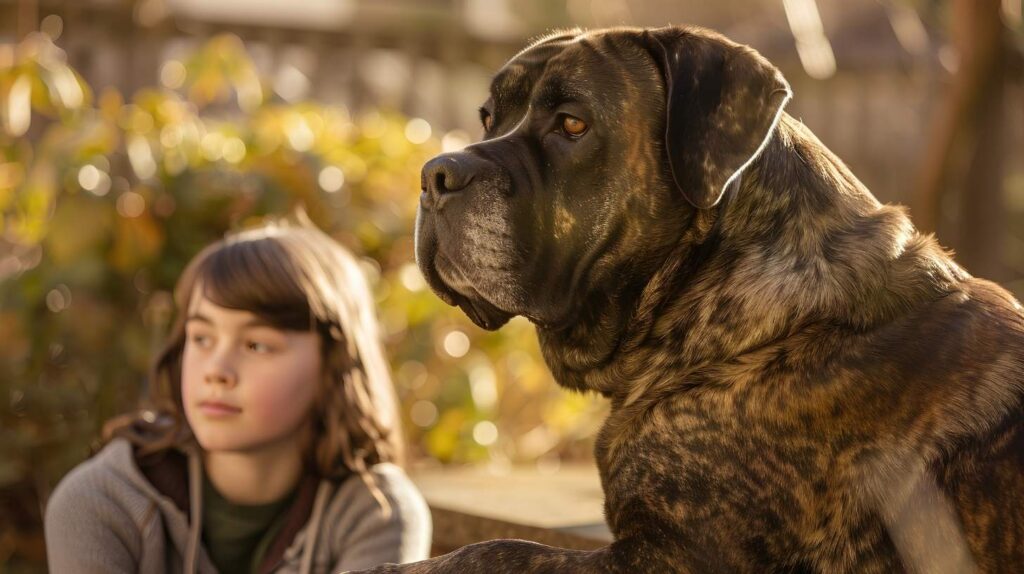
Bullmastiffs thrive with experienced large breed owners who commit to early socialization and ongoing training, and with active adults who exercise daily in homes with securely fenced yards. They also suit owners who approach the breed’s serious health profile – cancer, bloat, dysplasia – with proactive veterinary planning. Above all, anyone who finds the combination of imposing presence, quiet loyalty, and gentle family temperament genuinely compelling will form a deeply rewarding bond.
Households That Struggle With Bullmastiffs
In contrast, Bullmastiffs are consistently challenging for first-time owners, for households that cannot physically manage a 120-130 lb dog, and for apartments without adequate space and immediate outdoor access. Furthermore, owners not prepared for the significant veterinary costs associated with giant breed health issues, or anyone who cannot commit to the daily jowl cleaning and socialization maintenance the breed requires, will find ownership genuinely difficult.
New puppy? Find a name that fits their personality.
Browse 600+ dog names by gender and personality type — playful, calm, bold, elegant, funny or mysterious.
Try Pet Name FinderFrequently Asked Questions
Bullmastiff History and Identity
Is a Bullmastiff the same as a Mastiff? No – they are distinct breeds. The English Mastiff is larger (150-200+ lbs), calmer, and more extreme in its passive guardian temperament. The Bullmastiff was created from approximately 60% Mastiff blood to produce a more athletic, faster-reacting dog than the pure Mastiff. Specifically, both are giant breeds with protective instincts, but the Bullmastiff is more active and more reactive due to the Bulldog blood in its composition.
What colors do Bullmastiffs come in? Three recognized colors exist: fawn (light tan to deep reddish-brown), red, and brindle. All three have a distinctive black mask. The fawn variety is most common. Notably, all color varieties share identical temperament and health profiles.
Are Bullmastiffs good guard dogs? Exceptionally so – but in a different way than many people expect. They do not bark persistently, they do not pace and display aggressively, and they do not threaten every stranger. Instead, they observe, assess, and act decisively when they judge action necessary. This controlled response is more effective for genuine protection than theatrical aggression. Indeed, the breed was specifically developed for exactly this quality.
Bullmastiff Health and Care
Why do Bullmastiffs have such short lifespans? The combination of giant body size, elevated cancer rates, and high bloat risk compresses the Bullmastiff lifespan to 7-9 years. Giant breeds generally age more rapidly than smaller dogs, and the accumulation of cancer and cardiovascular disease at large body mass accelerates mortality. However, proactive cancer monitoring, bloat prevention through gastropexy, and weight management throughout life extend healthy years within this inherent limitation.
Can Bullmastiffs live in apartments? With difficulty. Their size, moderate exercise needs, and drool all make apartment living challenging. A ground-floor apartment with immediate outdoor access and a nearby park is manageable for well-trained individuals. However, high-rise apartments without immediate outdoor access are inappropriate. The breed is substantially better suited to a house with a securely fenced yard.
Are Bullmastiffs suitable for families with young children? With appropriate management, yes. They are generally gentle and patient with family children they grow up with. Their size means supervision with very young children is essential – not due to aggression but because a 120 lb dog can accidentally injure a toddler through simple movement. Consequently, children should learn appropriate interaction with large dogs, and the dog should receive socialization with children of all ages from puppyhood.
How much does a Bullmastiff eat? Adult males typically require 7-10 cups of a high-quality giant breed formula daily, divided across two meals. Never feed one large meal – bloat risk directly relates to volume and speed of consumption. Giant breed formulas with controlled calcium and phosphorus ratios support joint development in growing dogs. Consult a veterinarian for specific recommendations based on individual weight and activity level.
Key Takeaways
- Prophylactic gastropexy is strongly recommended – bloat is the leading acute killer in the breed
- Annual cancer monitoring from age 5 is essential – cancer is the primary cause of death in Bullmastiffs
- OFA hip, elbow, and PRA DNA testing are the minimum health documentation requirements from any breeder
- Early and extensive socialization is the most important investment in a safe adult Bullmastiff
- The 60/40 Mastiff/Bulldog ratio was a precise engineering decision made by Victorian gamekeepers – not accidental
- 7-9 year lifespan requires honest lifetime financial and emotional planning before acquisition
- Same-sex aggression between males is a genuine breed tendency – household composition requires careful planning
- The gamekeeper’s specification – silent, powerful, controllable, and discriminating – describes the modern Bullmastiff perfectly
This article is for informational purposes only. Breed characteristics represent general tendencies and do not predict the behavior or health of any individual dog. Always consult a veterinarian for health advice. Bloat is a life-threatening emergency – seek immediate veterinary care if signs are observed.