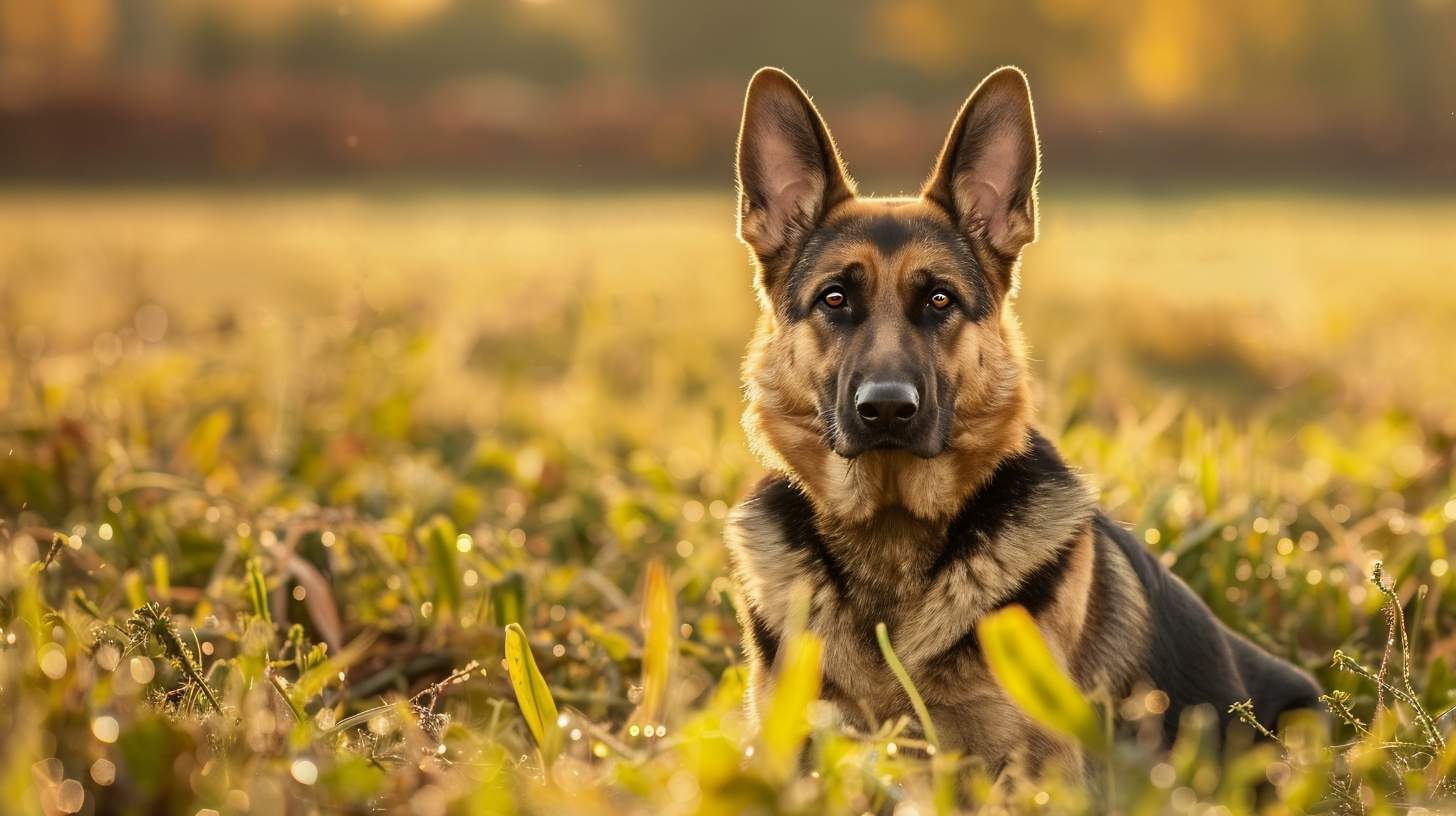
German Shepherd: Complete Breed Guide – Temperament, Care, Health & More (2026)
- 🐕 QUICK ANSWER: GERMAN SHEPHERD BREED GUIDE
- ✅ German Shepherds are one of the most intelligent, loyal, and versatile working dog breeds in the world
- ✅ Exceptional trainability – used globally for police, military, search and rescue, guide dog, and detection work
- ✅ Males: 65-90 lbs, Females: 50-70 lbs – large, athletic, and built for sustained physical and mental work
- ✅ Deeply devoted to their family – forms intense bonds and provides natural protective presence
- ✅ Two distinct types: show line and working line – with meaningful differences in health, drive, and temperament
- ⚠️ Hip and elbow dysplasia affect the breed at very high rates – OFA screening on both parents is non-negotiable
- ⚠️ Degenerative myelopathy (DM) is a serious breed-specific condition – DNA testing is available and important
- ⚠️ Bloat (GDV) is a life-threatening risk in this deep-chested breed – emergency planning is essential
- ⚠️ High exercise and mental stimulation needs – under-exercised German Shepherds develop destructive and anxious behaviors
- ❌ Do NOT acquire a German Shepherd as a first dog without professional training support – their drive and size require experienced handling
- ❌ Do NOT skip early socialization – an under-socialized German Shepherd can develop serious reactivity given the breed’s size and protective instinct
- This article is based on breed standards from the American Kennel Club (AKC) and the Verein fur Deutsche Schaferhunde (SV) – the German parent club founded by Max von Stephanitz – health research from the German Shepherd Dog Club of America Health Committee and the Royal Veterinary College VetCompass Programme, and clinical guidance from veterinary neurologists and orthopaedic specialists with expertise in working breed health.
- Last Updated: May 2026
What Kind of Dog Is a German Shepherd?
The German Shepherd is one of the most deliberately created dog breeds in existence. Its development began not through centuries of gradual selection but through the focused vision of a single man: Captain Max von Stephanitz, a German cavalry officer who in 1899 purchased a wolf-like herding dog named Horand von Grafath at a dog show and immediately used him to establish a formal breed.
Von Stephanitz founded the Verein fur Deutsche Schaferhunde – the Society for German Shepherd Dogs – the same year. He then dedicated the rest of his life to developing the breed according to a precise standard: supreme intelligence, physical capability, steadiness of nerve, and adaptability to any working role.
His vision centered on utility above all else. His famous maxim – “Utility is the true criterion of beauty” – meant that conformation was always secondary to function. When herding work declined as Germany industrialized, Von Stephanitz personally lobbied the German military and police to adopt the breed as a working dog. By the time of World War I, German Shepherds were serving as military dogs, messengers, and search animals. As a result, their performance under fire established the breed’s international reputation permanently.
Following World War I, soldiers who had encountered German Shepherds in the field brought the breed back to both the United States and the United Kingdom. Within a decade it had become one of the most registered breeds in both countries – a position driven not by fashion but by demonstrable working capability. Today, German Shepherds work as police dogs, military dogs, search and rescue dogs, guide dogs, assistance dogs, detection dogs for explosives and narcotics, and therapy dogs – arguably the broadest working portfolio of any single breed.
At a Glance: German Shepherd Quick Reference
| Category | Details |
|---|---|
| AKC group | Herding Group |
| Origin | Germany, 1899 |
| Male height | 24-26 inches |
| Female height | 22-24 inches |
| Male weight | 65-90 lbs |
| Female weight | 50-70 lbs |
| Lifespan | 9-13 years |
| Energy level | Very high |
| Exercise needed | 90-120 minutes per day |
| Grooming | Moderate – brushing 2-3 times per week |
| Shedding | Very high – year-round with two heavy coat blows |
| Trainability | Exceptional |
| Good with children | Yes – with training and socialization |
| Good with other dogs | Moderate – prey drive and territorial instinct require management |
| Good with strangers | Reserved – natural wariness requires socialization |
| Hip dysplasia risk | Very high – most important health concern |
| Bloat risk | High – deep-chested large breed |
| DM risk | Moderate – DNA test available |
| First-time owner suitable | Not recommended without professional support |

Show Line vs. Working Line: A Critical Distinction
One of the most important decisions a German Shepherd buyer faces is whether to acquire a show-line or working-line dog. These are not simply aesthetic differences – they reflect genuinely different breeding priorities with meaningful consequences for health, temperament, and management requirements.
| Feature | Show Line (West German / American) | Working Line (Czech / East German DDR) |
|---|---|---|
| Build | Heavier, more angled hindquarters | More square, athletic, less extreme angulation |
| Temperament | Calmer, more family-oriented | Higher drive, more intense, more demanding |
| Hip dysplasia risk | Higher – extreme angulation increases joint stress | Lower – more moderate structure |
| Working drive | Moderate | Very high – bred for active working roles |
| Suitable for | Active families, first-time GSD owners | Experienced handlers, working roles, sport |
| Coat | Often longer, more profuse | Typically shorter and denser |
The dramatically sloped topline of American show-line German Shepherds – where the back slopes steeply from shoulders to hindquarters – has been controversial in veterinary circles for decades. Research indicates this extreme angulation places additional stress on the hip and stifle joints. Consequently, working-line dogs with more moderate angulation consistently show lower hip dysplasia rates.
German Shepherd Temperament: What to Expect Living With One
Intelligence and the Working Drive
The German Shepherd’s intelligence is inseparable from its working drive. Unlike Golden Retrievers or Labradors whose intelligence points primarily at pleasing their handler, German Shepherds apply their intelligence with purpose and independence. They assess situations, make decisions, and act with a directness that requires an owner capable of providing clear, consistent direction.
A German Shepherd without sufficient exercise and mental engagement does not simply become bored – it becomes a problem dog. Destructive behavior, persistent barking, anxiety, and reactive responses to environmental stimuli are all documented outcomes of under-stimulation. Therefore, the intelligence that makes them extraordinary working dogs requires daily channeling.
Loyalty and the Protective Instinct
German Shepherds bond intensely with their family and show natural protectiveness that does not require training to activate – only training to control. A well-socialized, well-trained German Shepherd is a composed, confident dog that assesses situations thoughtfully and responds proportionally. In contrast, an under-socialized or inadequately trained one treats too wide a range of situations as threats.
The protective instinct in a German Shepherd is an asset when correctly developed and a significant liability when it is not. As a result, early, thorough, and ongoing socialization is the foundation of safe ownership.
Sensitivity
German Shepherds are emotionally sensitive dogs despite their working breed exterior. They respond to tone of voice, body language, and inconsistency in handling with considerable acuity. Harsh, punitive training creates anxiety and defensiveness in a breed with the physical capacity to cause serious harm. Instead, calm, consistent, positive-reinforcement-based training combined with clear structure produces the best behavioral outcomes.

Exercise Requirements: Built for All-Day Work
Daily Needs
German Shepherds need 90-120 minutes of vigorous daily exercise. This is a physiological requirement for a breed developed to work all day managing livestock over hilly terrain – not a suggestion based on preference. A 30-minute walk does not meet this need.
| Exercise Type | Suitability | Notes |
|---|---|---|
| Off-leash running in fenced area | Excellent | Full expression of athletic capacity |
| Schutzhund / IPO sport | Exceptional | Breed-appropriate structured activity |
| Agility and obedience trials | Excellent | Mental and physical combined |
| Tracking and nose work | Excellent | Engages working intelligence |
| Hiking and trail running | Excellent | Mental engagement from varied terrain |
| Swimming | Good | Low-impact – excellent for older dogs |
| Fetch and retrieve | Good | Directional exercise with handler involvement |
Mental Exercise
Physical exercise alone does not satisfy a German Shepherd. Daily structured training, problem-solving activities, and cognitive engagement through nose work or sport are equally necessary. A German Shepherd that receives 2 hours of physical exercise but no mental engagement is, therefore, not a satisfied dog.
Grooming: Managing the Double Coat
The German Shepherd’s double coat sheds year-round and produces two heavy seasonal blows in spring and autumn. Consistent grooming management prevents the matting and indoor hair accumulation that owners of poorly managed coats consistently describe as overwhelming.
| Grooming Task | Frequency | Notes |
|---|---|---|
| Brushing (regular periods) | 2-3 times per week | Slicker brush and undercoat rake |
| Brushing (coat blow periods) | Daily | Spring and autumn – volume is very significant |
| Bathing | Every 6-8 weeks | More frequently for working or outdoor dogs |
| Ear cleaning | Every 2 weeks | Upright ears still accumulate debris |
| Nail trimming | Every 3-4 weeks | Active dogs partially wear nails |
| Teeth brushing | 3-5 times per week | Large breed dental maintenance |
Health: Common Conditions in German Shepherds
Hip Dysplasia: The Primary Health Challenge
Hip dysplasia is the most significant hereditary health concern in German Shepherds and occurs at rates among the highest of any large breed. The condition produces abnormal hip joint development that causes pain, reduced mobility, and progressive arthritis. OFA hip evaluation of both parents before breeding is the minimum standard – buyers should request certificates, not simply take the breeder’s word.
Show-line dogs, particularly those with extreme hindquarter angulation, have higher rates than working-line dogs. This difference is measurable and should therefore inform type selection for owners who prioritize health over conformation.
| Health Condition | Prevalence | Signs to Watch For | Action |
|---|---|---|---|
| Hip dysplasia | Very high | Stiffness, abnormal gait, reluctance to exercise | OFA evaluation on both parents – annual vet monitoring |
| Elbow dysplasia | High | Foreleg lameness, reluctance to extend elbows | OFA elbow evaluation on both parents |
| Degenerative myelopathy (DM) | Moderate | Progressive rear limb weakness, incontinence | DNA test available – request from breeder |
| Bloat (GDV) | High | Distended abdomen, unproductive retching, collapse | Emergency vet immediately – pre-plan nearest clinic |
| Exocrine pancreatic insufficiency (EPI) | Moderate – breed-specific | Weight loss despite good appetite, fatty stools | Enzyme supplementation – manageable long-term |
| Perianal fistulas | Moderate | Painful lesions around the anus, scooting | Veterinary management – immunosuppressive treatment |
| Panosteitis | Low-moderate | Shifting leg lameness in growing puppies | Rest and pain management – self-resolving |
| Hypothyroidism | Moderate | Weight gain, lethargy, coat changes | Annual thyroid panel after age 4 |
Degenerative Myelopathy (DM)
A genetic mutation causes DM – a progressive neurological disease that produces gradual paralysis of the hindlimbs, typically beginning between age 7-14. DNA testing identifies affected dogs and carriers. Affected dogs carry two copies of the mutation, while carriers have one copy and show no symptoms themselves.
Responsible breeders test all breeding dogs and avoid producing affected offspring. Buyers should therefore request DM DNA test results for both parents before purchasing. There is currently no cure for DM, although physiotherapy and mobility aids maintain quality of life for months to years after diagnosis.
Bloat: Emergency Planning Before You Need It
German Shepherds are deep-chested dogs at significant bloat risk. Every GSD owner must know the signs and pre-plan the nearest 24-hour emergency veterinary clinic before they need it.
| Prevention Measure | Implementation |
|---|---|
| Multiple smaller meals | Two or three meals daily – never one large meal |
| No exercise within 60 minutes of eating | Enforce strictly – particularly after the evening meal |
| Slow-feeder bowl | Reduces rapid air ingestion during eating |
| Prophylactic gastropexy | Discuss with vet – tack stomach at time of spay/neuter |
Training: Working With Exceptional Capability
The Approach That Produces Results
German Shepherds respond to calm, confident, positive-reinforcement-based training delivered by a handler who provides clear structure and consistent expectations. They are sensitive to emotional tone – an anxious or inconsistent owner produces an uncertain dog, while a calm, clear owner produces a cooperative one.
| Training Element | Effectiveness | Notes |
|---|---|---|
| Positive reinforcement (food + play) | Excellent | Primary approach – most effective |
| Calm, consistent structure | Essential | Provides the clear leadership GSDs need |
| Early puppy socialization | Non-negotiable | Foundation of a safe adult dog |
| Professional trainer (working breed experience) | Strongly recommended | Particularly for protection sport or advanced work |
| Harsh corrections | Counterproductive | Creates fear-based reactivity in a powerful breed |
Priority Training Areas
| Priority | Why It Matters |
|---|---|
| Socialization from day one | Most important factor in producing a stable adult |
| Recall | Essential for off-leash safety |
| Controlled greeting | Size and drive means uncontrolled greetings are risky |
| Heel | Pulling is a default in this athletic breed |
| Place / mat | Manages behavior around visitors |

Is a German Shepherd Right for You?
Owners Who Succeed With German Shepherds
German Shepherds thrive with active owners who exercise daily, with experienced dog owners who understand working breed requirements, with anyone interested in dog sports or working activities, with households that can provide the dog with consistent training and structure, and with owners who find the breed’s protectiveness and intelligence genuinely rewarding rather than exhausting.
Households That Struggle With German Shepherds
German Shepherds are consistently challenging for first-time owners without professional support, for sedentary or low-activity households, for owners who cannot provide 90-120 minutes of daily exercise, for anyone who wants a lower-drive companion, and for households where the dog spends most of each day without companionship or stimulation.
New puppy? Find a name that fits their personality.
Browse 600+ dog names by gender and personality type — playful, calm, bold, elegant, funny or mysterious.
Try Pet Name FinderFrequently Asked Questions
Are German Shepherds aggressive?
A well-bred, properly socialized, and consistently trained German Shepherd is not an aggressive dog – it is a confident, composed dog with natural protective instincts that remain under control. The breed’s involvement in bite statistics reflects mismanagement and deliberate misuse far more than any inherent aggression. Consequently, adequate socialization and consistent positive training are the primary determinants of a safe adult German Shepherd.
What is the difference between show-line and working-line German Shepherds?
Breeders developed show-line dogs primarily for conformation competition – they typically have more dramatic angulation, a calmer temperament, and higher hip dysplasia rates. Working-line dogs, on the other hand, have more moderate structure, higher drive, and generally better orthopaedic health because breeders selected them for performance in protection sport, police work, or military roles. For most family owners, show-line or moderately-bred dogs are more manageable.
How much exercise does a German Shepherd really need?
A minimum of 90 minutes of vigorous activity daily – including both physical exercise and mental engagement. This is not optional. A German Shepherd that receives less will redirect its energy into destructive and anxious behaviors that are difficult to manage and are often incorrectly attributed to temperament rather than unmet needs.
Are German Shepherds good with children?
Yes, with proper socialization and training. Well-socialized German Shepherds are patient, protective, and genuinely good with children they know. Supervision with younger children is important because of size – not temperament. Dogs raised with children from puppyhood and exposed consistently to all ages are reliable family companions.
What is exocrine pancreatic insufficiency (EPI)?
EPI is a condition where the pancreas fails to produce sufficient digestive enzymes, causing weight loss, diarrhea, and poor condition despite normal or increased appetite. It occurs in German Shepherds at rates above most other breeds. Lifelong enzyme supplementation added to food manages the condition effectively, and affected dogs can live full, healthy lives with proper care.
What is degenerative myelopathy?
DM is a progressive neurological disease that produces gradual paralysis of the hindlimbs, typically beginning between age 7-14. A genetic mutation causes it, and DNA testing identifies affected dogs and carriers. Although there is no cure, physiotherapy and mobility aids maintain quality of life for months to years. Responsible breeders test for it and avoid producing affected offspring.
Can German Shepherds live in apartments?
Only with an extraordinary commitment to daily outdoor exercise. German Shepherds in apartments require 90-120 minutes of vigorous outdoor activity daily regardless of weather. Without this commitment, the apartment becomes a prison that produces an anxious, destructive dog. A house with outdoor access is more practical for a breed of this size and energy level.
Key Takeaways
- OFA hip and elbow evaluations on both parents are non-negotiable – hip dysplasia rates are among the highest of any large breed
- Working-line German Shepherds have significantly better hip health than extreme show-line dogs – type selection matters
- DM DNA testing should be requested for both parents – degenerative myelopathy is preventable through responsible breeding
- Bloat is a life-threatening emergency – know the signs and pre-plan the nearest emergency vet before it happens
- 90-120 minutes of daily vigorous exercise is a requirement, not a suggestion – under-exercised GSDs develop serious behavioral problems
- Socialization from puppyhood is the single most important investment in a safe adult German Shepherd
- EPI and perianal fistulas are breed-specific conditions owners should know before acquisition
- Max von Stephanitz’s founding principle – utility above all else – explains why this breed demands more than most
This article is for informational purposes only. Breed characteristics represent general tendencies and do not predict the behavior or health of any individual dog. Always consult a veterinarian for health advice. Bloat is a life-threatening emergency – seek immediate veterinary care if signs are observed.