English Bulldog: Complete Breed Guide – Temperament, Care, Health & More (2026)
- 🐕 QUICK ANSWER: ENGLISH BULLDOG BREED GUIDE
- ✅ English Bulldogs are gentle, affectionate, and calm – the temperament transformation from their bull-baiting ancestors is complete and consistent
- ✅ Excellent for apartment and city living – among the lowest exercise needs of any medium-sized breed
- ✅ Males and females: 40-55 lbs – compact, heavy-boned, and surprisingly strong despite their slow movement
- ✅ Exceptional with children – patient, tolerant, and reliably gentle with all ages
- ✅ Low grooming needs – short coat requires only weekly wiping
- ⚠️ BOAS affects the vast majority of English Bulldogs – breathing difficulties are a lifelong management reality, not an occasional complication
- ⚠️ English Bulldogs cannot swim – their front-heavy build and flat face make drowning a near-certainty in deep water
- ⚠️ Average lifespan is only 8-10 years – significantly shorter than most medium-sized breeds
- ⚠️ Breed-specific legislation restricting or banning English Bulldog breeding exists in Norway, the Netherlands, and several other countries due to welfare concerns
- ❌ Do NOT leave an English Bulldog near unsupervised water – pools, ponds, and even deep puddles present a genuine drowning risk
- ❌ Do NOT exercise an English Bulldog in warm or humid weather – heatstroke can develop within minutes and is frequently fatal in brachycephalic breeds
- This article is based on breed standards from the American Kennel Club (AKC) and The Bulldog Club, health research from the Royal Veterinary College VetCompass Programme – whose studies on English Bulldogs represent the largest clinical dataset assembled for the breed – and clinical guidance from veterinary respiratory specialists and orthopaedic surgeons with expertise in brachycephalic breed health.
- Last Updated: May 2026
What Kind of Dog Is an English Bulldog?
The English Bulldog’s history is one of the most dramatic transformation stories in the dog world. The original Old English Bulldog – the breed’s ancestor – bore almost no temperamental resemblance to the gentle companion dogs that live in millions of homes today.
For centuries, bull-baiting was a popular and legally sanctioned blood sport in England. Dogs were set against a tethered bull and awarded prizes for gripping the bull’s nose and forcing it to the ground. The dogs bred for this purpose required an extreme combination of traits: a low-slung body that presented a small target, an enormous head and jaw capable of sustained grip, a flat face that allowed the dog to breathe while gripping without releasing, absolute fearlessness, and an extraordinarily high pain tolerance. The Old English Bulldog was purpose-built for brutality.
The Cruelty to Animals Act of 1835 banned bull-baiting and other animal blood sports in England. Overnight, the breed’s purpose vanished. Rather than allowing the Old English Bulldog to disappear, a group of dedicated breeders undertook a systematic project to transform its temperament while preserving its distinctive physical characteristics. Through generations of selection against aggression and toward docility and affection, they produced the gentle, good-natured dog that The Bulldog Club of England formalized when it was established in 1878. The Bulldog Club of America followed in 1890.
The physical traits that were functional in bull-baiting – the flat face, the wide jaw, the heavy body – remained. As breeders further emphasized these characteristics over the following century for aesthetic reasons, the health consequences of extreme brachycephalic conformation became increasingly pronounced. The modern English Bulldog is, in some respects, a victim of its own iconic appearance.
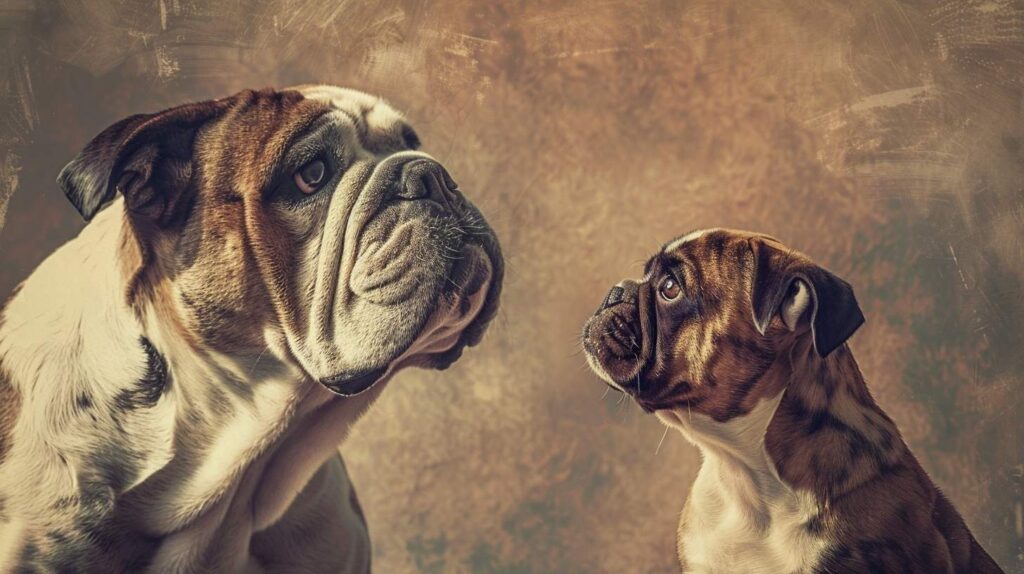
At a Glance: English Bulldog Quick Reference
| Category | Details |
|---|---|
| AKC group | Non-Sporting Group |
| Origin | England, 13th century – modern breed from 1835 |
| Height | 14-15 inches |
| Weight | 40-55 lbs |
| Lifespan | 8-10 years |
| Energy level | Low |
| Exercise needed | 20-30 minutes per day – temperature dependent |
| Grooming | Very low – weekly wipe, fold cleaning daily |
| Shedding | Moderate – year-round |
| Trainability | Moderate – stubborn but food-motivated |
| Good with children | Exceptional |
| Good with other dogs | Generally yes with socialization |
| Good with strangers | Friendly and welcoming |
| BOAS risk | Very high – most individuals affected |
| Swimming ability | None – cannot swim safely |
| Heat tolerance | Very poor |
| Lifespan | Short – 8-10 years average |
| First-time owner suitable | Yes – with realistic health expectations |
English Bulldog Temperament: What to Expect Living With One
The Gentle Giant in Miniature
The modern English Bulldog’s temperament stands in complete contrast to its fighting ancestry. Generations of deliberate selection for docility, affection, and tolerance have produced one of the most consistently gentle dogs in the breed world. A well-bred English Bulldog is calm, friendly, affectionate, and patient – qualities that make it one of the most reliable breeds for family life.
Bulldogs do not startle easily, do not react impulsively, and manage the unpredictable behavior of children with a patience that few other breeds match. Their dignified, unhurried approach to life creates a calming presence in any household.
Affection and Physical Contact
English Bulldogs are physically demonstrative dogs. They lean against their owners with their full body weight, seek out laps regardless of size mismatch, and position themselves as close to their people as possible throughout the day. This desire for contact is genuine and consistent – Bulldogs are not independent dogs that prefer their own space.
This affectionate nature makes separation anxiety a real consideration. English Bulldogs do not thrive when left alone for extended daily periods and benefit significantly from companionship during the day.
Stubbornness and the Training Reality
The stubborn streak in English Bulldogs is legendary – and genuine. They are intelligent enough to understand what is being asked and independently minded enough to decline if motivation is insufficient. Repetitive drills produce boredom and disengagement. Short sessions using high-value food rewards, variety, and genuine positive engagement produce a dog that is reliably responsive to basic obedience.
Bulldogs are not competitive obedience candidates. They are excellent family companions that learn the commands necessary for a comfortable domestic life without ever winning a rally trial. This is entirely consistent with the breed’s purpose.
Compatibility
English Bulldogs are broadly socially compatible – with children, other dogs, cats, and strangers. Their low prey drive, even temperament, and friendly orientation toward people make them one of the most reliable breeds for complex multi-pet and multi-person households.
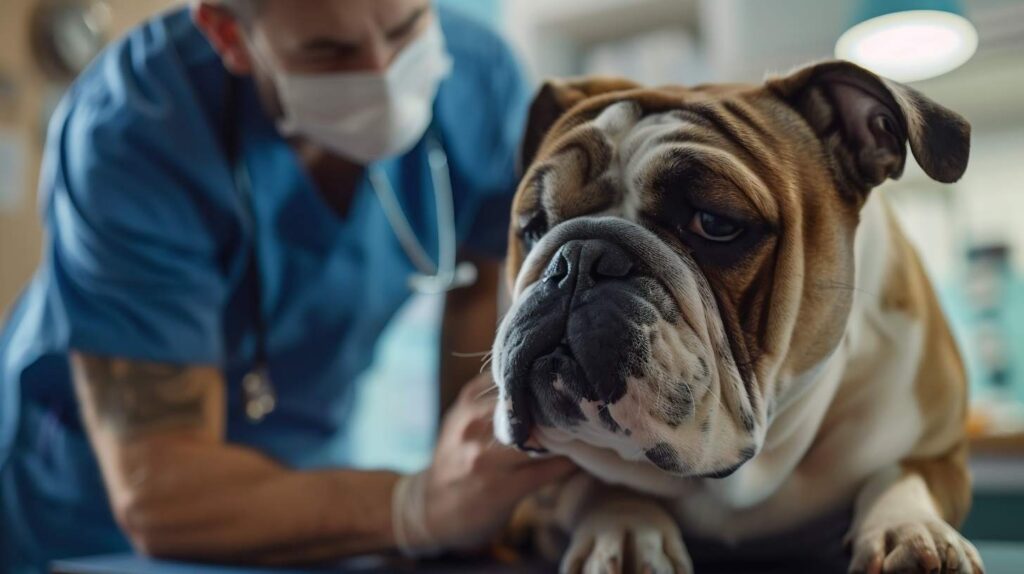
The Brachycephalic Reality: Managing What Cannot Be Changed
BOAS in English Bulldogs
Brachycephalic Obstructive Airway Syndrome in English Bulldogs is more severe on average than in French Bulldogs or Boxers because the degree of skull compression in the breed is greater. The combination of anatomical features creates respiratory compromise that affects virtually every English Bulldog to some degree.
| Anatomical Feature | Effect on the Dog |
|---|---|
| Severely stenotic nares | Extremely restricted airflow through the nostrils |
| Greatly elongated soft palate | Significant partial obstruction of the throat airway |
| Hypoplastic trachea | Narrowed windpipe – entire airway capacity reduced |
| Everted laryngeal saccules | Secondary obstruction developing from chronic breathing effort |
| Compressed nasal passages | Further restriction within the skull structure |
A severely affected English Bulldog is working hard to breathe at rest. Exercise, heat, excitement, and stress all dramatically increase the oxygen demand that an already compromised airway cannot meet.
Surgical Management
BOAS correction surgery – widening the nostrils and shortening the soft palate – is the most effective intervention available for affected dogs. Performed early, before secondary changes like everted saccules develop, it significantly improves quality of life and exercise tolerance.
Every English Bulldog should be assessed for BOAS severity by a veterinarian familiar with brachycephalic breeds within the first year of life. Owners should not wait for visible distress before seeking assessment – many severely affected dogs have learned to manage without showing obvious signs.
Temperature Management
| Temperature | Guidance |
|---|---|
| Under 15°C (59°F) | Short gentle walks appropriate |
| 15-20°C (59-68°F) | Brief walks only – 10-15 minutes maximum |
| Above 20°C (68°F) | Indoor activity only – no outdoor exercise |
| Any temperature with high humidity | Apply restrictions as if temperature is one tier higher |
These are not conservative guidelines – they reflect the physiological reality of a dog with severely compromised heat dissipation capacity.
Skin Fold Management: The Daily Non-Negotiable
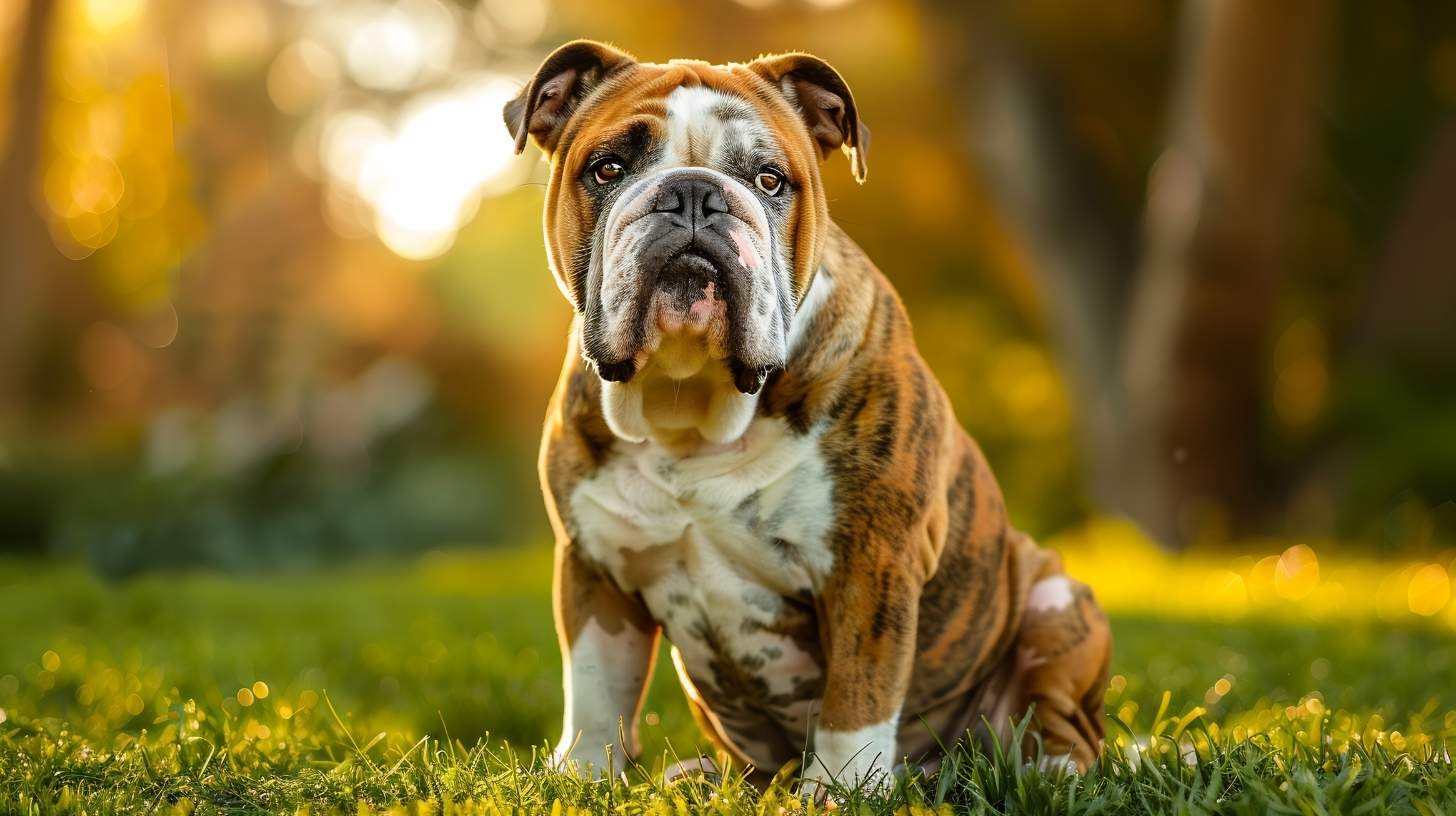
The English Bulldog’s wrinkles and skin folds – across the face, around the nose rope, in the body folds, and around the corkscrew tail – are one of its most recognizable features and its most common source of health problems. Skin fold dermatitis develops rapidly when moisture, food debris, and bacteria accumulate in warm, airless skin creases.
| Fold Location | Cleaning Frequency | Method |
|---|---|---|
| Facial wrinkles | Daily | Soft cloth or pet wipe – ensure completely dry |
| Nose rope | Daily | Clean and dry – most prone to infection |
| Body folds | Every 2-3 days | Check for redness and odor |
| Tail fold | Daily | Corkscrew tail creates a deep pocket – debris accumulates rapidly |
Signs of skin fold infection – persistent redness, odor, discharge, or the dog rubbing the area – require veterinary attention. Untreated skin fold infections are painful and can spread rapidly.
Health: Common Conditions in English Bulldogs
| Health Condition | Prevalence | Signs to Watch For | Action |
|---|---|---|---|
| BOAS | Very high | Noisy breathing, exercise intolerance, blue gums | Respiratory assessment – surgery if grade 2-3 |
| Skin fold dermatitis | Very high | Redness, odor, discharge in folds | Daily cleaning – vet if infected |
| Hip dysplasia | High | Stiffness, reluctance to move, abnormal gait | OFA evaluation on both parents |
| Shoulder and elbow OCD | Moderate | Foreleg lameness in young dogs | Orthopaedic evaluation |
| Cherry eye | High | Red mass visible in corner of eye | Surgical correction – do not ignore |
| Entropion | Moderate | Eye squinting, discharge, chronic eye irritation | Surgical correction – ophthalmology referral |
| Patellar luxation | Moderate | Skipping, holding leg up | Orthopaedic evaluation |
| Interdigital cysts | Common | Swollen, painful lumps between toes | Veterinary management |
| Hypothyroidism | Moderate | Weight gain, lethargy, coat changes | Annual thyroid panel |
| Tracheal hypoplasia | Moderate | Chronic respiratory noise from birth | Veterinary imaging – management not correction |
Cherry Eye
Cherry eye – prolapse of the third eyelid gland – appears as a red, rounded mass in the inner corner of the eye. It is one of the most common conditions in English Bulldogs and requires surgical correction to replace the gland rather than remove it. Removal of the gland leads to dry eye (KCS) later in life – ensure your vet performs replacement, not removal.
The Breeding Welfare Debate
English Bulldogs are at the center of an ongoing veterinary and ethical debate about brachycephalic dog breeding. Norway banned the breeding of English Bulldogs in 2022 following a court ruling that their conformation breaches animal welfare legislation. The Netherlands introduced similar restrictions. Veterinary associations in several countries have called for significant breed standard reform.
This context is relevant for prospective owners: the breed’s health challenges are structural, not incidental. Improvement requires systemic change in breeding standards that is not yet reflected in mainstream breed availability.
Grooming: Low Maintenance Coat, High Maintenance Folds
The short smooth coat is genuinely easy to manage. The skin folds are not – daily attention to folds is the most time-intensive aspect of Bulldog ownership.
| Grooming Task | Frequency | Notes |
|---|---|---|
| Coat wiping with rubber mitt | Weekly | Removes loose hair and maintains shine |
| Bathing | Every 4-6 weeks | Dry all folds thoroughly immediately after bathing |
| Facial fold and nose rope cleaning | Daily | Most critical health maintenance task |
| Tail fold cleaning | Daily | Corkscrew tail fold traps debris reliably |
| Ear cleaning | Every 2 weeks | Check for odor and redness |
| Nail trimming | Every 3-4 weeks | Low activity means slower natural wear |
| Teeth brushing | 3-5 times per week | Dental disease prevention |
Exercise: Minimal and Temperature-Governed
English Bulldogs need only 20-30 minutes of daily exercise – but the temperature restrictions make even this modest amount genuinely challenging during warm weather.
| Exercise Type | Suitability | Notes |
|---|---|---|
| Short leash walks | Good – temperature governed | Primary daily activity – early morning or evening only |
| Indoor play and enrichment | Excellent | No temperature risk – mental engagement |
| Puzzle feeders | Excellent | Mental stimulation at low exertion |
| Swimming | Never | Front-heavy build – cannot float |
| Running or sustained exercise | Never | Airway cannot support this demand |
| Dog parks in warm weather | Avoid | Heat and excitement combine dangerously |

Is an English Bulldog Right for You?
Owners Who Succeed With English Bulldogs
English Bulldogs thrive with apartment and city residents who want a calm, affectionate companion, with owners who are home frequently and can provide consistent company, with families that include children of all ages, with anyone who approaches health management proactively and has budgeted for above-average veterinary costs, and with owners who find the breed’s characteristic personality – dignified, affectionate, unhurried – genuinely appealing.
Households That Struggle With English Bulldogs
English Bulldogs are consistently challenging for owners who live in hot climates without reliable air conditioning, for anyone not prepared for the potential cost of BOAS surgery, cherry eye correction, and ongoing health management, for owners who want an active outdoor companion, and for households that cannot maintain the daily skin fold cleaning the breed requires.
New puppy? Find a name that fits their personality.
Browse 600+ dog names by gender and personality type — playful, calm, bold, elegant, funny or mysterious.
Try Pet Name FinderFrequently Asked Questions
Why do English Bulldogs have such short lifespans?
The combination of severe brachycephalic conformation, high rates of cardiovascular and respiratory disease, orthopedic problems from their structural extremes, and the metabolic demands of sustaining a heavy body in a compromised respiratory system all contribute to shortened lifespan. The average English Bulldog lifespan of 8-10 years is among the shortest for medium-sized breeds and reflects the cumulative health burden of their extreme physical type.
Can English Bulldogs give birth naturally?
Rarely without assistance. The combination of puppies with large heads and narrow maternal birth canals makes natural delivery dangerous or impossible for most English Bulldogs. Caesarean sections are performed in the majority of Bulldog litters – an extraordinary situation that reflects how far the breed’s conformation has diverged from natural reproductive function.
Why are English Bulldogs banned in some countries?
Norway banned English Bulldog breeding in 2022 following a court ruling that the breed’s conformation causes chronic suffering that breaches animal welfare law. The Netherlands introduced similar restrictions. The legal argument centers on the fact that structural health problems in the breed are caused by the breed standard itself – that selecting for the physical traits that define the breed necessarily produces dogs in compromised health.
Do English Bulldogs snore?
Almost universally. The snoring, snorting, grunting, and wheezing produced by brachycephalic anatomy is characteristic of the breed and constant. Experienced owners consider it endearing. Prospective owners should make an honest assessment of whether this is a sound they can live with comfortably – particularly at night, as Bulldogs typically sleep near or with their owners.
Are English Bulldogs good with cats?
Generally yes. Their low prey drive, gentle temperament, and slow movement make them one of the better large-breed options for cat cohabitation. Standard introduction protocols – gradual, supervised, with escape routes available to the cat – produce peaceful coexistence in most households.
How do I know if my Bulldog is overheating?
Signs include excessive or very noisy panting, heavy drooling, bright red gums, weakness, disorientation, and stumbling. These signs in an English Bulldog are a medical emergency. Move the dog immediately to a cool area, apply cool (not cold) water to the body, and transport to an emergency vet. Do not wait to see if it improves – heatstroke in brachycephalic breeds progresses rapidly.
Are English Bulldogs expensive to own?
Yes – significantly above average. BOAS surgery costs $1,500-5,000. Cherry eye correction costs $300-1,000 per eye. Caesarean sections for breeding dogs cost $1,000-3,000 per litter. Ongoing management of skin fold conditions, orthopaedic issues, and chronic respiratory disease adds to lifetime costs. Pet insurance obtained before any conditions develop is strongly recommended.
Key Takeaways
- BOAS affects the majority of English Bulldogs – a respiratory assessment before age 1 and early surgery if indicated significantly improves quality of life
- English Bulldogs cannot swim – water supervision is a permanent and absolute safety requirement
- Daily skin fold cleaning is the most important daily health habit – neglected folds develop painful infections rapidly
- The 8-10 year lifespan is a genuine reality – emotional and financial preparation for early health challenges is part of responsible ownership
- Cherry eye requires surgical correction that replaces rather than removes the gland – confirm this with your vet
- The breeding welfare debate is substantive – buying from health-focused breeders who screen for BOAS severity helps advance breed improvement
- Temperature management is non-negotiable – outdoor activity above 20°C creates genuine life-threatening risk
- The transformation from bull-baiting dog to gentle companion is one of breeding history’s most remarkable achievements – the modern Bulldog’s temperament is genuinely exceptional
This article is for informational purposes only. Breed characteristics represent general tendencies and do not predict the behavior or health of any individual dog. Always consult a veterinarian for health advice. Heatstroke is a medical emergency – seek immediate veterinary care if signs are observed.