Great Dane: Complete Breed Guide – Temperament, Care, Health & More (2026)
- 🐕 QUICK ANSWER: GREAT DANE BREED GUIDE
- ✅ Great Danes are gentle, affectionate, and patient – the “gentle giant” nickname is genuinely accurate
- ✅ Despite their imposing size, Great Danes are calm indoors and adapt well to apartment or house living
- ✅ Males: 140-175 lbs, Females: 110-140 lbs – one of the tallest dog breeds in the world
- ✅ Excellent with children – their patient, easygoing nature makes them reliable family companions
- ✅ Moderate exercise needs – 60-90 minutes daily is sufficient for most adults
- ⚠️ Bloat (GDV) is the leading cause of sudden death in Great Danes – knowing the signs and having an emergency plan is essential
- ⚠️ Lifespan is only 7-10 years – significantly shorter than smaller breeds, a reality every prospective owner must accept
- ⚠️ Dilated cardiomyopathy (DCM) and other cardiac conditions affect Great Danes at elevated rates – annual cardiac screening is important
- ⚠️ Growth-related orthopedic problems are common in puppies – controlled low-impact exercise during the first 18-24 months is essential
- ❌ Do NOT feed a Great Dane one large meal per day – multiple smaller meals significantly reduce bloat risk
- ❌ Do NOT allow vigorous exercise immediately before or after meals – this is a documented bloat risk factor in deep-chested breeds
- This article is based on breed standards from the Great Dane Club of America (GDCA) and the Great Dane Club of Great Britain, health research from the GDCA Health and Research Committee, and clinical guidance from veterinary cardiologists and emergency specialists with expertise in giant breed health.
- Last Updated: May 2026
What Kind of Dog Is a Great Dane?
Despite its name, the Great Dane is not Danish – it is a German breed with a history that stretches back at least 400 years. Its ancestors were large boarhounds that German nobility used to hunt wild boar, one of the most dangerous game animals in European forests. The power, courage, and size required to bring down a wild boar produced a dog of extraordinary physical presence. When boar hunting declined and the breed transitioned to companion and estate guardian, German breeders refined its temperament significantly. Consequently, they reduced the sharpness required in a hunting dog and emphasized the calm, dignified, and gentle characteristics that define the modern Great Dane.
The breed was known in Germany as the Deutsche Dogge (German Mastiff), but a French natural history publication in the 18th century promoted it internationally under the name Great Dane. The name stuck despite having no genuine connection to Denmark, and the breed became iconic under the English designation.
Today, the Great Dane is celebrated as the Apollo of dogs – a phrase that describes its combination of noble bearing, elegant proportions, and serene temperament. It holds the world record for tallest individual dog through Zeus, a Great Dane who measured 44 inches at the shoulder. Furthermore, its silhouette is one of the most recognizable in the canine world. Yet the dog that lives in most Great Dane households is less concerned with its own majesty than with finding the warmest lap in the room, regardless of whether it fits.
At a Glance: Great Dane Quick Reference
| Category | Details |
|---|---|
| AKC group | Working Group |
| Origin | Germany |
| Male height | 30-32 inches minimum (often taller) |
| Female height | 28-30 inches minimum (often taller) |
| Male weight | 140-175 lbs |
| Female weight | 110-140 lbs |
| Lifespan | 7-10 years |
| Energy level | Moderate |
| Exercise needed | 60-90 minutes per day |
| Grooming | Very low – short coat, weekly wipe |
| Shedding | Moderate |
| Trainability | Good – willing but can be slow to mature |
| Good with children | Excellent – patient and gentle |
| Good with other dogs | Generally yes with socialization |
| Bloat (GDV) risk | Very high – leading cause of sudden death |
| Cardiac disease risk | High – annual screening important |
| Lifespan | Short – 7-10 years average |
| First-time owner suitable | Possible with realistic expectations |

Great Dane Temperament: What to Expect Living With One
The Gentle Giant Reality
The Great Dane’s temperament is one of the most consistent in the dog world – and consistently gentle. A properly bred and socialized Great Dane is a calm, patient, and affectionate dog that is almost remarkably unaware of its own size. It attempts to sit on laps that cannot accommodate it, leans against people with the full weight of 150 pounds, and positions itself in the center of every social gathering with the contentment of a dog that considers itself the ideal size for a house pet.
This temperament is not simply fortunate – generations of selection for calm, stable character produced it deliberately. Without this careful breeding, a dog of this size with sharp, reactive instincts would be entirely unmanageable in domestic life.
Affection and the Lean
Great Danes are physically affectionate in a way that is impossible to ignore. The breed’s characteristic leaning – pressing its full body weight against a person’s legs, side, or lap – is a primary expression of affection and contentment. New owners are sometimes alarmed by the first full-weight lean from a 150-pound dog. However, experienced Great Dane owners consider it one of the breed’s most endearing qualities.
Patience With Children
Great Danes are exceptionally patient with children. Their calm, steady nature means they tolerate the unpredictable behavior of young children well. Furthermore, their size means they are not easily knocked over or injured by rough handling. An important practical note applies, though: a Great Dane can unintentionally knock over a small child simply by moving through a room or wagging its tail. Therefore, supervision with toddlers is essential for physical safety reasons rather than temperamental ones.
Reserved With Strangers
Great Danes are moderately reserved with strangers – watchful and assessing rather than immediately enthusiastic. This natural caution, without aggression, functions as an effective deterrent. A stranger considering uninvited entry to a property containing a 165-pound dog typically reconsiders. As a result, the Great Dane’s alert posture and deep bark serve as powerful deterrents without the sharp guarding instinct that would make them socially difficult to manage.
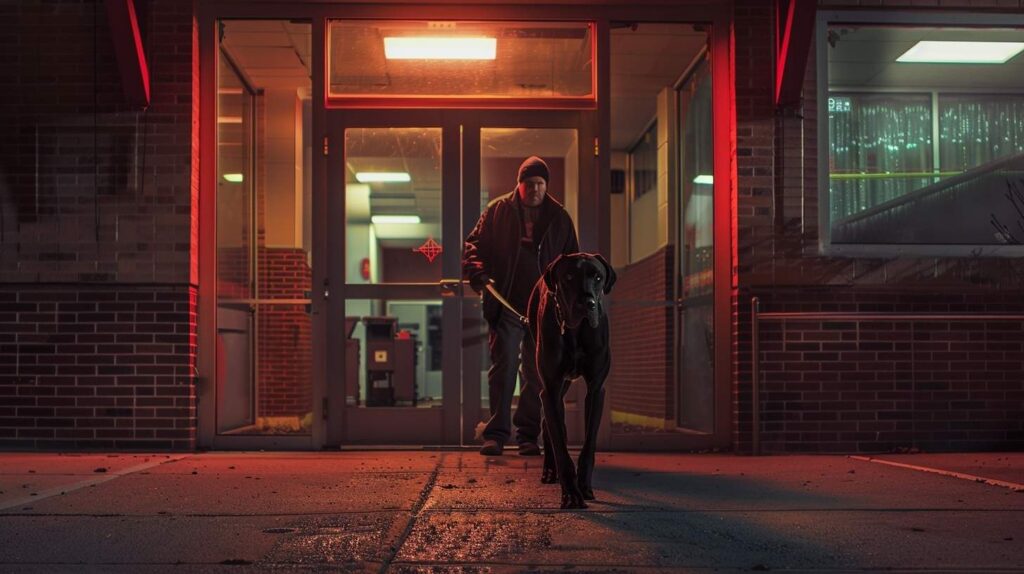
Bloat (GDV): The Great Dane Owner’s Most Critical Knowledge
What Bloat Is
Gastric dilatation-volvulus – bloat – is a condition in which the stomach fills with gas and, in its most dangerous form, rotates on its axis. This rotation cuts off blood supply to the stomach wall and other organs, causes shock, and is fatal within hours without emergency surgery. Great Danes have the highest bloat rate of any breed, and studies estimate that approximately 42% of Great Danes will experience bloat at some point in their lifetime.
Bloat can occur without obvious preceding cause in predisposed dogs. However, certain factors are associated with increased risk:
| Risk Factor | Notes |
|---|---|
| Single large daily meal | Multiple smaller meals significantly reduce risk |
| Exercise within 1-2 hours of eating | Documented risk factor – enforce strict exercise-meal separation |
| Eating too rapidly | Slow-feeder bowls reduce air ingestion |
| Stress and anxiety | Particularly in high-strung individual dogs |
| Family history of bloat | Genetic predisposition has been documented |
| Deep chest conformation | Structural factor – Great Danes are maximally predisposed |
Recognizing Bloat
Bloat is a time-critical emergency. Without surgical intervention, death can occur within 1-2 hours of symptoms beginning.
| Sign | Urgency |
|---|---|
| Distended, hard abdomen | Emergency – call vet immediately |
| Unproductive retching without producing anything | Emergency – call vet immediately |
| Excessive drooling | Emergency – call vet immediately |
| Restlessness, inability to settle | Emergency – call vet immediately |
| Pale or white gums | Emergency – immediate transport |
| Collapse | Emergency – immediate transport |
Every Great Dane owner must know the nearest 24-hour emergency veterinary clinic before they need it. Minutes matter in bloat cases.
Prophylactic Gastropexy
A gastropexy is a surgical procedure that tacks the stomach to the abdominal wall, thereby preventing it from rotating. It does not prevent the stomach from filling with gas, but it eliminates the volvulus (rotation) that makes bloat fatal. Many Great Dane veterinarians recommend prophylactic gastropexy at the time of spay or neuter surgery – when the dog is already under anaesthetic – rather than waiting for a bloat episode to occur. Owners should discuss this option with their veterinarian before the dog reaches 18 months.

Growth and Orthopedic Health: The Puppy Phase
Why Giant Breed Puppies Need Special Management
Great Danes grow at one of the fastest rates of any animal. A puppy can gain 100+ pounds in its first year of life. This rapid growth creates vulnerability in the developing bones, joints, and growth plates that requires specific management during the first 18-24 months.
| Growth Concern | Management |
|---|---|
| Panosteitis (growing pains) | Episodic lameness in growing puppies – rest and pain management |
| Hypertrophic osteodystrophy (HOD) | Painful bone inflammation – large breed puppy food prevents nutritional triggers |
| Osteochondrosis (OCD) | Joint cartilage abnormalities – limit high-impact exercise during growth |
| Growth plate injuries | Avoid repetitive jumping and rough play until plates close at 18-24 months |
Giant Breed Puppy Nutrition
Standard puppy food is inappropriate for Great Danes. High-protein, high-calcium standard puppy formulas promote excessively rapid growth that outpaces bone development, consequently increasing the risk of skeletal disorders.
| Nutritional Requirement | Specification |
|---|---|
| Food type | Large or giant breed puppy formula specifically |
| Calcium content | 0.7-1.2% as-fed – critical to stay within range |
| Protein content | Moderate – not maximum |
| Feeding frequency | 3 times daily as puppy – reduce to 2 as adult |
| Portion control | Measured portions – never free-feed |
Exercise: Moderate Needs With Giant Breed Caution
Adult Exercise Requirements
Adult Great Danes need 60-90 minutes of moderate-to-vigorous exercise daily. Despite their size, they are not as high-energy as many smaller working breeds – their pace is deliberate, and their endurance is solid rather than explosive.
| Exercise Type | Suitability | Notes |
|---|---|---|
| Brisk walking | Excellent | Primary daily activity |
| Swimming | Excellent | Low-impact – ideal for joint health |
| Hiking | Good | Moderate terrain – avoid extreme terrain |
| Fetch | Good with moderation | Avoid repetitive jumping retrieves |
| Running/jogging | After 18 months only | No high-impact exercise during growth phase |
| Dog sports (obedience, rally) | Good | Mental engagement valuable |
| Rough play and jumping | Limit | Joint stress – particularly in young dogs |
Exercise and Bloat
Enforce a strict 60-minute minimum rest period before and after meals. Exercise immediately after eating is a documented bloat risk factor. Consequently, many Great Dane owners feed the dog after the day’s exercise is complete and the dog has rested.
Grooming: Minimal Requirements
The Great Dane’s short, close-lying coat is one of the breed’s most practical characteristics. Grooming takes minimal time despite the dog’s size.
| Grooming Task | Frequency | Notes |
|---|---|---|
| Coat wipe with rubber mitt | Weekly | Removes loose hair and maintains shine |
| Bathing | Every 6-8 weeks | Requires a large tub or outdoor space |
| Ear cleaning | Every 2 weeks | Floppy ears reduce airflow – check for odor |
| Nail trimming | Every 3-4 weeks | Large nails require sturdy clippers or a grinder |
| Teeth brushing | 3-5 times per week | Giant breed dental health |
| Drool management | Daily | Great Danes drool – keep a towel accessible |
Health: Common Conditions in Great Danes
| Health Condition | Prevalence | Signs to Watch For | Action |
|---|---|---|---|
| Bloat (GDV) | Very high – 42% lifetime risk | Distended abdomen, retching, restlessness | Emergency vet – minutes matter |
| Dilated cardiomyopathy (DCM) | High | Exercise intolerance, coughing, weakness | Annual cardiac exam |
| Hip dysplasia | High | Stiffness, reluctance to exercise, abnormal gait | OFA evaluation on both parents |
| Wobbler syndrome | High | Wobbly gait, neck pain, coordination issues | Neurological evaluation – MRI |
| Osteosarcoma (bone cancer) | High in giant breeds | Limb swelling, pain, lameness | Immediate veterinary evaluation |
| Hypertrophic osteodystrophy | Moderate – puppies | Pain, swelling at growth plates, fever | Veterinary evaluation in young dogs |
| Hypothyroidism | Moderate | Weight gain, lethargy, coat changes | Annual thyroid panel |
| Von Willebrand disease | Low-moderate | Excessive bleeding after injury | DNA testing |
Lifespan: The Reality Every Owner Must Accept
The Great Dane’s average lifespan of 7-10 years is one of the shortest of any recognized breed. This directly results from their size – the metabolic demands of sustaining a 150-pound body accelerate aging processes. Some Great Danes reach 10-12 years with excellent care. Nevertheless, owners should approach acquisition with the understanding that this relationship measures in fewer years than most dogs provide.
This reality is not a reason to avoid the breed. Great Dane owners frequently describe their dogs as among the most deeply rewarding companions they have known. However, it is an honest fact that should inform the decision.
Is a Great Dane Right for You?
Owners Who Succeed With Great Danes
Great Danes thrive with owners who have adequate indoor space for a very large dog to move comfortably, who can afford the food, veterinary, and emergency care costs of a giant breed, who want a calm, affectionate, and deeply loyal companion, who have researched bloat and will act immediately if it occurs, and who accept the shorter lifespan with open eyes.
Households That Struggle With Great Danes
Great Danes are consistently challenging for owners in very small spaces where the dog’s size creates constant physical awkwardness, for owners who cannot manage the food and veterinary costs of a giant breed, for anyone unprepared for the emotional reality of a significantly shorter lifespan, and for households that cannot provide supervision around very young toddlers.
New puppy? Find a name that fits their personality.
Browse 600+ dog names by gender and personality type — playful, calm, bold, elegant, funny or mysterious.
Try Pet Name FinderFrequently Asked Questions
How big do Great Danes actually get?
Males typically reach 30-32 inches at the shoulder and weigh 140-175 lbs, with many exceeding these measurements. The tallest Great Dane on record – Zeus – measured 44 inches at the shoulder. Females are somewhat smaller at 28-30 inches and 110-140 lbs. Both sexes continue filling out in muscle and mass until approximately 3 years of age.
Can Great Danes live in apartments?
Yes, with realistic management. Great Danes are calm indoors and do not require yard space in the way that high-energy working breeds do. The practical requirements for apartment living include adequate indoor space for the dog to move without constant furniture collisions, daily outdoor exercise access, and neighbor tolerance for a dog that produces audible movement on shared floors.
How much does it cost to own a Great Dane?
Significantly more than smaller breeds. Food costs for a 150-pound dog are 2-4 times those of a medium breed. Veterinary costs – including medications dosed by weight, anaesthesia requirements, and the cardiac and orthopaedic screening the breed requires – are proportionally higher. Emergency bloat surgery costs $3,000-8,000. Giant breed-appropriate crates, beds, and equipment add further to initial setup costs.
Is prophylactic gastropexy worth it?
The veterinary consensus is yes for Great Danes, given the 42% lifetime bloat risk. The procedure is most cost-effective when a vet performs it at the time of spay or neuter surgery – when the dog is already under general anaesthesia – rather than as a standalone procedure. Discuss timing with your veterinarian before the dog reaches 18 months.
Why do Great Danes have such short lifespans?
The physiological demands of sustaining a very large body mass accelerate cellular aging processes in ways that are not yet fully understood but are consistently observed across giant breeds. Cardiac disease, cancer, and the accumulated wear on joints and organs from supporting 150+ pounds throughout life all contribute to the shorter lifespan. Responsible breeding, appropriate nutrition from puppyhood, and proactive health screening extend lifespan toward the higher end of the breed’s range.
Do Great Danes drool a lot?
Yes, particularly after drinking, eating, and during excitement or heat. The breed’s loose lips and jowls produce saliva that does not stay in the mouth efficiently. As a result, most Great Dane owners keep microfiber towels in every room and accept drool as a permanent feature of life with the breed. Some coat colors and individual dogs drool more than others.
Are Great Danes good guard dogs?
Their size and deep bark function as effective deterrents, and most Great Danes position themselves between their family and an unfamiliar person with calm alertness. However, they are not sharp-tempered guarding dogs – their natural response to a stranger is watchful assessment rather than aggression. Anyone wanting a dog primarily for protection should therefore look at breeds with more pronounced guarding instinct.
Key Takeaways
- Bloat kills Great Danes within hours – every owner must know the signs and have an emergency vet number ready before they need it
- Prophylactic gastropexy at the time of spay/neuter dramatically reduces fatal bloat risk – discuss with your vet
- The 7-10 year lifespan is a genuine reality – approach Great Dane ownership with this knowledge accepted
- Giant breed puppy food only during growth – standard puppy food promotes too-rapid bone development and increases skeletal disease risk
- Annual cardiac screening is important – DCM affects the breed at elevated rates
- Multiple smaller meals and no exercise within 60 minutes of eating are the two most important daily bloat prevention habits
- Great Danes are genuinely gentle – their temperament is as consistent and reliable as any breed’s
- The size is real – budget, space, and emergency care planning must reflect a 160-pound dog before acquisition
This article is for informational purposes only. Breed characteristics represent general tendencies and do not predict the behavior or health of any individual dog. Bloat is a life-threatening emergency – seek veterinary care immediately if signs are observed. Always consult a veterinarian for health advice.