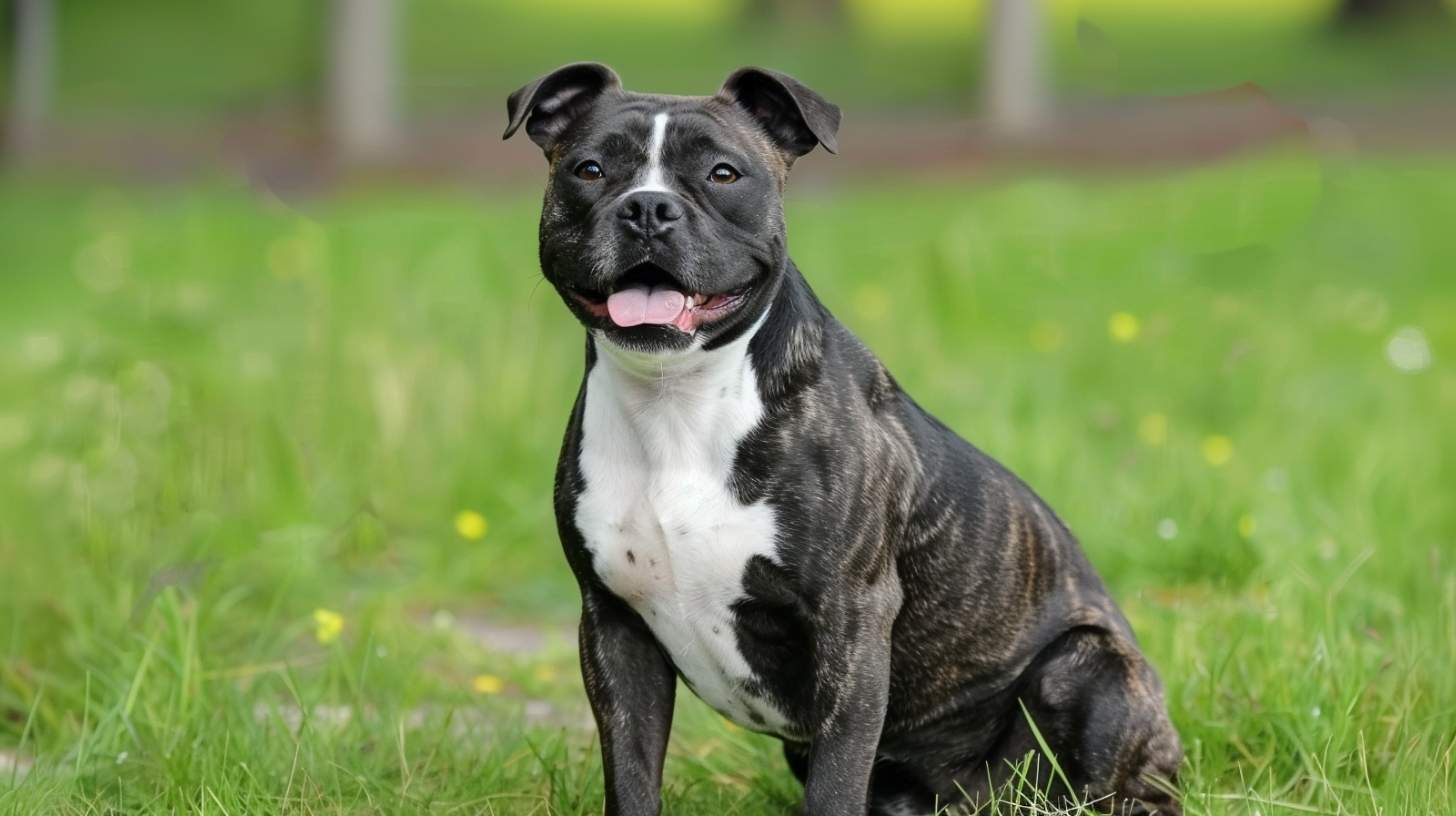
Staffordshire Bull Terrier: Complete Breed Guide – Temperament, Care, Health & More (2026)
- 🐕 QUICK ANSWER: STAFFORDSHIRE BULL TERRIER BREED GUIDE
- ✅ The Staffordshire Bull Terrier is the compact English cousin of the American Pitbull-type breeds – smaller, calmer, and specifically renowned for its extraordinary affinity with children
- ✅ 24-38 lbs and 14-16 inches – the most compact of the Pitbull-type family, well-suited to apartment and city living
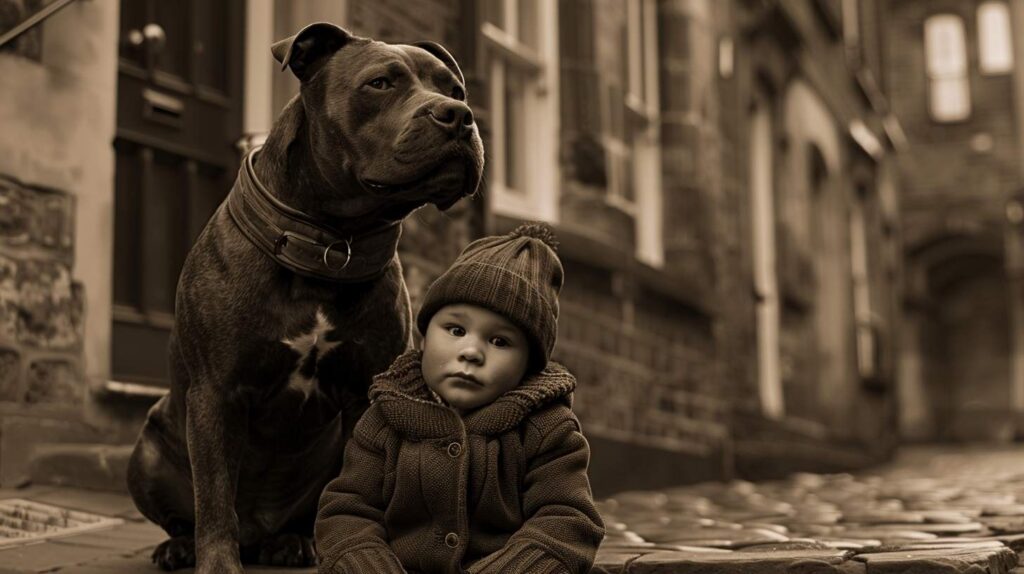
- ✅ Known as “The Nanny Dog” in Britain – their patience and gentleness with children is one of the most consistently documented traits in any breed
- ✅ AKC-recognized since 1975 and UK Kennel Club-recognized since 1935 – a fully established breed with strong health testing infrastructure
- ✅ Generally lower prey drive and calmer temperament than the APBT – often the most manageable of the Pitbull-type group
- ⚠️ L-2 Hydroxyglutaric Aciduria (L-2 HGA) is a Staffordshire Bull Terrier-specific metabolic disorder – DNA testing of both parents is essential
- ⚠️ Hereditary cataracts (HC) affect Staffies at elevated rates – a breed-specific DNA test is available and should always be requested
- ⚠️ Dog-to-dog aggression occurs in some individuals – socialization and management are required throughout the dog’s life
- ⚠️ The Staffie is one of the most over-represented breeds in UK and Australian rescue shelters – irresponsible ownership, not breed temperament, drives this
- ❌ Do NOT skip L-2 HGA and HC DNA testing on both parents – both conditions are preventable through responsible breeding
- ❌ Do NOT rely on the “nanny dog” reputation as a substitute for supervision – no breed, however child-friendly, eliminates the need for adult oversight
- This article draws on breed standards from the American Kennel Club (AKC) and the Kennel Club (UK), health research from the Staffordshire Bull Terrier Club Health Committee and the Staffie Health Initiative, and clinical guidance from veterinary neurologists and ophthalmologists with expertise in terrier breed health.
- This article covers the Staffordshire Bull Terrier specifically. For a general overview of all Pitbull-type breeds, terminology, and legislation, read our Pitbull Breed Guide.
- Last Updated: May 2026
What Kind of Dog Is a Staffordshire Bull Terrier?
An English Breed With Bull and Terrier Roots
The Staffordshire Bull Terrier developed in the Staffordshire region of England in the 19th century from Bull and Terrier crosses – the same foundational stock that produced the American Pit Bull Terrier and the American Staffordshire Terrier. However, the Staffie’s development occurred entirely in England and followed a distinct path from its American counterparts.
Early breeders in Staffordshire crossed the Old English Bulldog with local terrier breeds to create a smaller, more agile fighting dog than the pure Bulldog. The resulting dogs were compact, muscular, and tenacious. When England banned blood sports with the Humane Act of 1835, the breed transitioned from the fighting pit to the family hearth – a transition that accelerated the selective pressure toward the gentle, child-tolerant temperament the modern Staffie is known for.
Recognition and the Nanny Dog Reputation
Notably, the Kennel Club in the UK recognized the Staffordshire Bull Terrier in 1935, and the AKC followed with recognition in 1975. The breed became enormously popular in Britain and Australia, where it developed its “Nanny Dog” reputation – a reflection of genuine, documented breed behavior rather than marketing. British families valued the Staffie specifically for its patience with children, and breeders consistently selected for this trait over generations.
Consequently, the modern Staffordshire Bull Terrier carries one of the strongest child-affinity reputations of any breed in the world. The Kennel Club in the UK actively promotes this characteristic, and it appears consistently in breed descriptions across veterinary and kennel club literature.
At a Glance: Staffordshire Bull Terrier Quick Reference
| Category | Details |
|---|---|
| AKC group | Terrier Group |
| Origin | Staffordshire, England – 19th century |
| Height | 14-16 inches |
| Male weight | 28-38 lbs |
| Female weight | 24-34 lbs |
| Lifespan | 12-14 years |
| Energy level | High |
| Exercise needed | 60-80 minutes per day |
| Grooming | Very low – weekly wipe |
| Shedding | Low to moderate |
| Trainability | Good to excellent |
| Good with children | Outstanding – highest of any Pitbull-type breed |
| Good with other dogs | Variable – socialization critical |
| Good with cats | Variable – prey drive present |
| Good with strangers | Friendly and welcoming |
| L-2 HGA risk | Moderate – breed-specific, DNA test available |
| HC (hereditary cataracts) risk | Moderate – breed-specific, DNA test available |
| Skin allergy risk | High |
| BSL risk | Lower than APBT and AmStaff in most jurisdictions |
| Apartment suitable | Yes – compact size suits urban living |
| First-time owner suitable | Yes – most manageable of the Pitbull-type group |
Staffie vs AmStaff vs APBT: Where the Staffie Fits
The Staffordshire Bull Terrier is the smallest and generally the most manageable of the three historically linked breeds.
| Feature | Staffie | AmStaff | APBT |
|---|---|---|---|
| Origin | England | USA | USA |
| Size | 24-38 lbs | 40-70 lbs | 30-60 lbs |
| Child affinity | Outstanding | Excellent | Excellent |
| Drive level | Moderate-high | High | High |
| Dog aggression potential | Lower than AmStaff/APBT | Moderate | Moderate |
| BSL exposure | Lower | Moderate-high | High |
| Apartment suitability | Good | Challenging | Challenging |
| AKC recognition | Yes (1975) | Yes (1936) | No |
| KC (UK) recognition | Yes (1935) | No | No |
Staffordshire Bull Terrier Temperament
The Child Affinity – Real and Documented
No characteristic of the Staffordshire Bull Terrier is more consistently documented than its relationship with children. The breed’s patience, tolerance, and playfulness with children appear across centuries of owner reports, kennel club literature, and behavioral research. Unlike the “nanny dog” label that some apply loosely to all Pitbull-type breeds, the Staffie’s specific reputation with children is particularly well-established and particularly consistent across the breed’s history.
In practical terms, well-bred Staffies are genuinely tolerant of the noise, unpredictability, and rough handling that young children produce. Indeed, they initiate play enthusiastically, settle calmly when children are calm, and rarely show reactive behavior toward child-typical stimuli. This is temperament bred over generations, not coincidence.
However, the nanny dog label should never substitute for adult supervision. Even the most patient dog has limits, and children must learn appropriate interaction with any dog regardless of breed reputation.
People-Oriented Warmth
Beyond their specific child affinity, Staffies are broadly affectionate with people. Moreover, they greet strangers with the same enthusiasm they show family members, express affection physically through leaning and proximity, and maintain a cheerful, engaged quality in almost all social situations. This social warmth is genuine and stable – not dependent on extensive socialization to emerge, though socialization refines and broadens it.
Dog Aggression: More Moderate Than Their American Cousins
In general, the Staffie carries less elevated dog-to-dog aggression risk than the APBT or AmStaff – a result of the English breeding program that emphasized family and social compatibility over working drive. Nevertheless, the Bull and Terrier ancestry means the potential is present in some lines. Thorough puppy socialization, consistent management of dog-to-dog interactions, and realistic assessment of individual dogs remain essential.
Energy and Play Drive
Staffies are energetic, playful dogs with strong play drive that persists well into adulthood. They engage enthusiastically with toys, games, and any form of interactive activity. Furthermore, their compact size makes this energy more manageable in urban environments than the higher-drive American breeds – a meaningful practical difference for apartment and city owners.
Exercise: Active Needs in a Compact Package
Staffies need 60-80 minutes of daily exercise. Their energy and muscle mass both require genuine physical outlets, though their compact size makes meeting this requirement more practical than with the larger American breeds.
| Exercise Type | Suitability | Notes |
|---|---|---|
| Leash walks and jogs | Excellent | Primary daily activity |
| Fetch and tug games | Excellent | High drive engagement |
| Agility training | Excellent | Mental and physical combined |
| Off-leash in fenced area | Excellent | Compact size makes fencing more practical |
| Flirt pole | Excellent | High-intensity, minimal space |
| Swimming | Good | Many Staffies enjoy water |
| Dog parks | Use with caution | Individual assessment required |
| Running with owner | Good | After physical maturity – 18 months |
Health: The Two Essential DNA Tests
L-2 Hydroxyglutaric Aciduria (L-2 HGA)
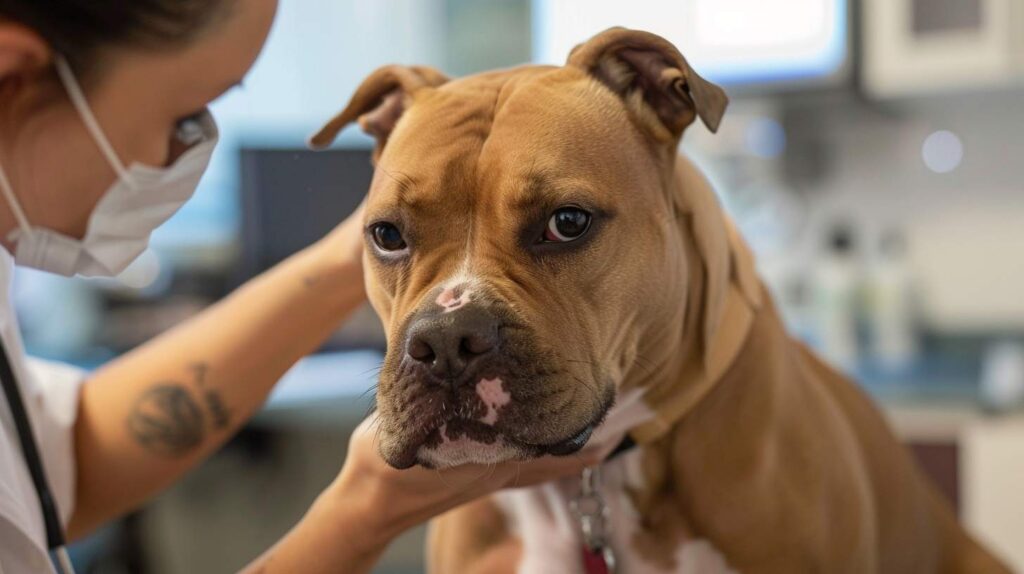
L-2 HGA is a metabolic disorder specific to Staffordshire Bull Terriers. It causes accumulation of L-2-hydroxyglutaric acid in the brain and cerebrospinal fluid, leading to progressive neurological damage. Signs typically appear between 6 months and 3 years of age and include epileptic seizures, wobbliness, muscle stiffness, and behavioral changes.
The condition follows a simple recessive inheritance pattern, meaning a puppy must inherit two copies of the faulty gene – one from each parent – to develop the disease. Carriers of one copy show no symptoms but can pass the gene to offspring. Therefore, DNA testing of both parents before breeding eliminates the risk of producing affected puppies entirely. The Kennel Club in the UK requires L-2 HGA testing for Staffie health schemes. Buyers must request test results for both parents.
Hereditary Cataracts (HC)
Additionally, hereditary cataracts affect Staffordshire Bull Terriers at rates substantially above the general dog population. Unlike age-related cataracts, hereditary cataracts develop in young dogs and progress to significant vision impairment. A DNA test identifies carriers before they develop symptoms. As with L-2 HGA, the condition is preventable through responsible breeding, and buyers should always request HC test results for both parents.
| Health Condition | Prevalence | Signs to Watch For | Action |
|---|---|---|---|
| Skin allergies (atopic dermatitis) | High | Itching, paw licking, recurrent skin infections | Dermatology referral – dietary and environmental management |
| L-2 HGA | Moderate – breed-specific | Seizures, coordination loss, behavioral changes | DNA test both parents – no cure, management only |
| Hereditary cataracts (HC) | Moderate – breed-specific | Cloudiness in lens, vision impairment | DNA test both parents – surgical treatment if severe |
| Hip dysplasia | Moderate | Stiffness, abnormal gait | OFA/BVA evaluation on both parents |
| Patellar luxation | Moderate | Skipping, holding leg up | Orthopaedic evaluation |
| Hypothyroidism | Moderate | Weight gain, lethargy, coat changes | Annual thyroid panel |
| CCL rupture | Moderate | Sudden hindleg lameness | Orthopaedic evaluation – surgical repair |
| Demodex mange | Low-moderate | Patchy hair loss, skin thickening | Veterinary diagnosis and treatment |
Grooming: Minimal Requirements
In fact, the Staffie’s short, smooth coat is one of the breed’s most practical characteristics.
| Grooming Task | Frequency | Notes |
|---|---|---|
| Coat wipe with rubber mitt | Weekly | Removes loose hair, maintains sheen |
| Bathing | Every 4-6 weeks | More frequently for allergy-prone dogs |
| Ear cleaning | Every 2 weeks | Check for discharge and odor |
| Nail trimming | Every 3-4 weeks | Active dogs partially wear nails |
| Teeth brushing | 3-5 times per week | Dental disease prevention |
Training: A Willing, Food-Motivated Learner
Overall, Staffies respond well to positive reinforcement training. Their food motivation, intelligence, and people-orientation make them quick learners. Although they are generally more trainable and less independently minded than the APBT, they retain enough terrier stubbornness to require consistency.
| Training Priority | Why It Matters |
|---|---|
| Socialization from puppyhood | Foundation of dog tolerance and stable behavior |
| Loose leash walking | Drive and muscle make pulling a management issue despite smaller size |
| Recall | Important safety skill for off-leash situations |
| Appropriate play with children | Channel enthusiasm productively |
| Alone-time tolerance | Social breed – moderate separation anxiety tendency |
Is a Staffordshire Bull Terrier Right for You?
Owners Who Succeed With Staffies
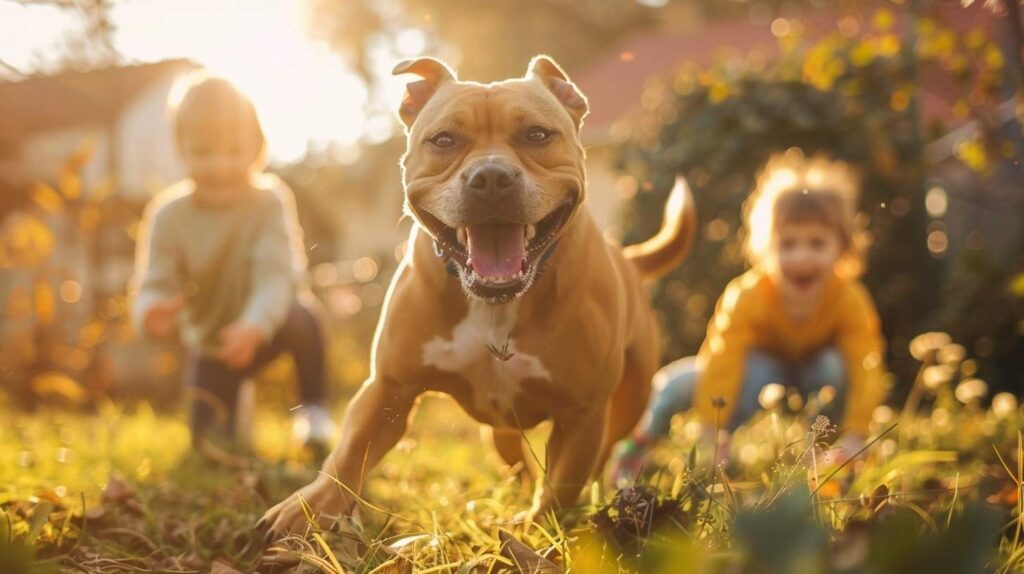
Staffordshire Bull Terriers thrive with families that include children of all ages. They also suit active individuals in apartments or cities who can meet the daily exercise requirement, and first-time dog owners prepared to research health testing requirements. Additionally, anyone looking for the most manageable entry point into the Pitbull-type group will find the Staffie the most practical choice. Above all, owners who want a genuinely affectionate, playful companion that adapts well to family life will find the breed deeply rewarding.
Households That Struggle With Staffies
Staffordshire Bull Terriers are consistently challenging for owners who cannot provide daily vigorous exercise, for multi-dog households without careful management of individual dog compatibility, and for anyone not prepared to request and verify L-2 HGA and HC DNA test results before purchase.
New puppy? Find a name that fits their personality.
Browse 600+ dog names by gender and personality type — playful, calm, bold, elegant, funny or mysterious.
Try Pet Name FinderFrequently Asked Questions
Staffie Identity and Reputation
Are Staffordshire Bull Terriers really good with children? Yes – this reputation is genuine and well-documented. The Kennel Club in the UK has historically described the breed as “reliable with children,” and breed behavior research consistently identifies the Staffie as one of the most child-tolerant breeds available. However, adult supervision remains essential – the nanny dog label reflects temperament, not elimination of the need for responsible ownership.
Is the Staffordshire Bull Terrier the same as a Pitbull? The Staffie shares Bull and Terrier ancestry with the APBT and AmStaff but developed entirely in England as a separate breed. It is smaller, generally calmer, and recognized separately by the AKC and UK Kennel Club. In the UK, the Staffie is not banned under the Dangerous Dogs Act 1991, which targets “Pit Bull Terrier type” dogs. In the US, some BSL laws include Staffies, though less commonly than APBT.
Why are so many Staffies in rescue shelters? The Staffordshire Bull Terrier is one of the most over-represented breeds in UK and Australian rescue shelters – not because of behavior problems but because of irresponsible acquisition. The breed’s popularity and approachable price point historically attracted owners who underestimated its exercise and training needs. The rescue population reflects irresponsible ownership patterns, not breed temperament.
Staffie Health Questions
What is L-2 HGA in Staffordshire Bull Terriers? L-2 Hydroxyglutaric Aciduria is a metabolic disorder specific to Staffies that causes progressive neurological damage from birth. Signs appear between 6 months and 3 years of age. There is no cure, though management can slow progression. A DNA test identifies affected dogs and carriers before symptoms appear, making it entirely preventable through responsible breeding.
What is hereditary cataract testing for Staffies? Hereditary cataracts develop in young Staffies due to a genetic mutation specific to the breed. Unlike age-related cataracts, they progress in young dogs and can lead to significant vision loss. The Kennel Club requires HC testing for health scheme participation. Buyers should always request HC DNA test results for both parents before purchasing a puppy.
How long do Staffordshire Bull Terriers live? Typically 12-14 years. Dogs from health-tested breeding lines that receive adequate exercise, appropriate weight management, and proactive management of skin allergies and eye health consistently live toward the higher end of this range.
Key Takeaways
- L-2 HGA and HC DNA testing on both parents is non-negotiable – both conditions are breed-specific, preventable, and serious
- The Staffie’s child affinity is genuine and well-documented – it is the most consistently child-oriented of all Pitbull-type breeds
- Compact size (24-38 lbs) makes the Staffie the most practical Pitbull-type breed for apartment and city living
- Dog-to-dog aggression is present but lower risk than in AmStaff or APBT – socialization and management still matter
- BSL exposure is lower than for APBT and AmStaff in most jurisdictions – though local laws vary
- High rescue population in UK and Australia reflects irresponsible ownership, not temperament problems
- The Staffie developed entirely in England – it shares ancestry but not identity with the American breeds
- Of all Pitbull-type breeds, the Staffie is the most accessible entry point for first-time owners
This article is for informational purposes only. Breed characteristics represent general tendencies and do not predict the behavior or health of any individual dog. Always consult a veterinarian for health advice and verify local breed-specific legislation before acquiring.