Maltese: Complete Breed Guide – Temperament, Care, Health & More (2026)
- 🐕 QUICK ANSWER: MALTESE BREED GUIDE
- ✅ Maltese are gentle, playful, and deeply affectionate – one of the oldest and most devoted companion breeds in the world
- ✅ Weight: 4-7 lbs – tiny, elegant, and surprisingly resilient for their size
- ✅ Low-shedding white coat makes them among the best choices for owners with mild dog allergies
- ✅ Adaptable to apartment living – low exercise needs and quiet indoor temperament
- ✅ Lively, curious, and fearless – a spirited personality that belies their delicate appearance
- ⚠️ Hypoglycemia is a genuine risk in very small adults and puppies – feeding management is essential
- ⚠️ Tracheal collapse is a significant breed concern – harnesses are mandatory, collars are dangerous
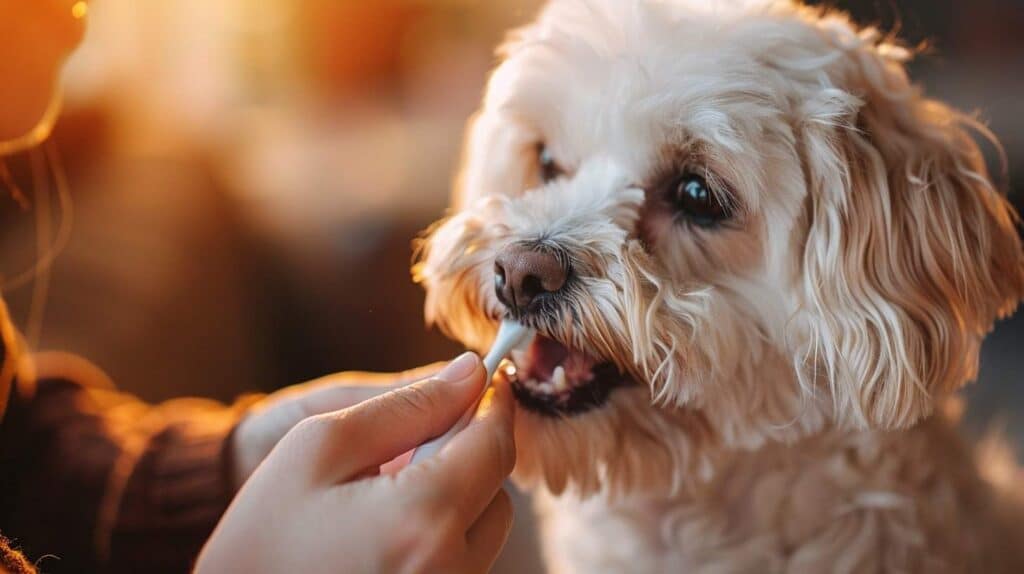
- ⚠️ Dental disease affects virtually all Maltese – daily brushing is the single most important health habit in the breed
- ⚠️ Tear staining is near-universal – daily eye area cleaning significantly reduces but cannot always eliminate staining
- ❌ Do NOT use a collar and leash on a Maltese – tracheal collapse risk makes harnesses the only safe option
- ❌ Do NOT allow a Maltese unsupervised with larger dogs – even friendly larger dogs can fatally injure a 5-pound dog accidentally
- This article draws on breed standards from the American Maltese Association (AMA) and The Kennel Club, health research from the AMA Health Committee, and clinical guidance from veterinary dentists and internists who specialize in toy breed metabolic and respiratory health.
- Last Updated: May 2026

What Kind of Dog Is a Maltese?
The Maltese is one of the oldest dog breeds in recorded history. Evidence of small white dogs matching the Maltese description appears in ancient Greek, Roman, and Egyptian art, literature, and artifacts dating back more than 2,000 years. Aristocrats and royalty across the ancient Mediterranean world treasured the breed – Aristotle described it, Roman noblewomen kept them as lap warmers and status symbols, and ancient Egyptians may have worshipped them. The breed takes its name from the island of Malta, though its precise geographic origin remains a subject of scholarly debate.
For over two millennia, the Maltese has served a single purpose: to be the ideal companion dog. It has no herding history, no guarding heritage, no retrieving instinct, and no working function beyond the profound one of providing warmth, affection, and the pleasure of its company. Breeders maintained this singular purpose across thousands of years of selective breeding, producing a dog of extraordinary consistency in temperament – gentle, responsive, and deeply attached to its people in ways that owners across continents and centuries describe in remarkably similar terms.
The modern Maltese is identical in function and very similar in form to the dogs that graced the laps of Roman empresses and sailed with Phoenician traders. It is, in the truest sense, a breed that has stood the test of time.
At a Glance: Maltese Quick Reference
| Category | Details |
|---|---|
| AKC group | Toy Group |
| Origin | Mediterranean region (associated with Malta) |
| Height | 7-9 inches |
| Weight | Under 7 lbs (breed standard) |
| Lifespan | 12-15 years |
| Energy level | Moderate |
| Exercise needed | 20-30 minutes per day |
| Grooming | High – long white coat if kept full length |
| Shedding | Very low – hair rather than fur |
| Trainability | Good – intelligent but independent |
| Good with children | Moderate – better with older children |
| Good with other dogs | Good with similar-sized dogs |
| Good with cats | Generally yes with socialization |
| Tracheal collapse risk | High – harness mandatory |
| Dental disease risk | Very high – daily brushing essential |
| Hypoglycemia risk | High in puppies and very small adults |
| Tear staining | Near-universal – daily management required |
| Apartment suitable | Excellent |
| First-time owner suitable | Yes |
Maltese Temperament: What to Expect Living With One
Two Thousand Years of Companion Breeding
The Maltese temperament is the product of more than two millennia of selection for a single trait: the ability to be an exceptional companion. Every behavioral characteristic that defines the modern Maltese – its attentiveness to its owner, its physical affection, its adaptability to different environments, its tolerance of close human contact – reflects this unbroken breeding lineage.
A Maltese does not herd, guard, retrieve, or hunt. What it does, with remarkable consistency and depth, is attach itself to its people and remain attentive, affectionate, and present throughout the day. Owners frequently describe their Maltese as following them from room to room, positioning itself wherever its person is, and monitoring their emotional state with accuracy that seems disproportionate to such a small animal.
Fearlessness and the Size Disconnect
Despite their tiny size, Maltese are bold dogs. They investigate unfamiliar situations with confidence, approach larger dogs without hesitation, and respond to perceived challenges with a bark and posture that suggest they have not checked their dimensions recently. This fearlessness is endearing in safe contexts and requires management in others. Specifically, a Maltese that approaches an unknown large dog with bravado is at genuine physical risk, regardless of its confidence.
This boldness is not aggression – it is the temperamental self-assurance of a breed that spent two thousand years living as something precious and important. The Maltese has not received the message that it is small.
Playfulness and Liveliness
Maltese are livelier than their delicate appearance suggests. They enjoy play sessions, chase games, learning tricks, and interactive engagement with their owners. Furthermore, this playfulness persists well into old age – a 10-year-old Maltese often maintains the enthusiasm of a much younger dog. Their play style is gentle enough to suit elderly owners and children who understand how to handle a small dog carefully.
Sensitivity and the Social Environment
Maltese are emotionally sensitive dogs that reflect the emotional tone of their household. They are uncomfortable in high-conflict or frequently tense environments and show this discomfort through clinginess, reduced appetite, and restlessness. Conversely, in calm, affectionate households, they are settled, content, and extraordinarily good company.
Separation anxiety is common in the breed – a natural consequence of selecting for intense human attachment over many generations. Long daily absences without a care plan cause genuine distress. Gradual alone-time training from puppyhood significantly reduces this tendency, however.
Tracheal Collapse: The Harness Imperative
What Tracheal Collapse Is and Why Maltese Are Vulnerable
The trachea in toy breeds has cartilage rings that can weaken and collapse inward under pressure from a collar during walking or pulling. In Maltese, the small tracheal diameter and generally fine bone structure make this risk significant. Tracheal collapse causes a characteristic honking cough – particularly during excitement, exercise, or neck pressure – and can progress to significant breathing distress in severe cases.
A collar during leash activities is the most common preventable cause of tracheal damage in Maltese. Therefore, every Maltese should walk exclusively on a harness. A flat collar for identification only – with no leash attachment – is acceptable.
| Collar Use | Risk | Safe Alternative |
|---|---|---|
| Standard collar with leash | High tracheal collapse risk | Harness with back clip |
| Martingale collar with leash | High risk | Harness with back clip |
| ID collar only (no leash) | Acceptable for identification | Keep flat and well-fitted |
| Front-clip harness | Safe | Good for gentle directional guidance |
| Retractable leash with harness | Use with caution | Sudden jerks still create risk |

Grooming: White Coat, High Commitment
The Coat Choice That Determines Daily Life
The Maltese’s long, silky, pure white coat is one of the most beautiful in the dog world – and one of the most demanding to maintain in show condition. Most pet owners face the same fundamental choice as Shih Tzu owners: maintain a floor-length show coat or keep the dog in a practical puppy cut.
| Coat Style | Maintenance Level | Professional Grooming | Brushing Frequency |
|---|---|---|---|
| Full show coat (floor length) | Very high | Every 4-6 weeks | Daily – essential |
| Puppy cut (2-3 inches) | Low-moderate | Every 6-8 weeks | 2-3 times per week |
| Teddy bear cut | Moderate | Every 6-8 weeks | 3-4 times per week |
The overwhelming majority of pet Maltese owners choose a puppy cut. The full show coat requires daily brushing, oil treatments to prevent static and breakage, and a level of grooming dedication that is genuinely impractical outside the show world.
Grooming Schedule
| Task | Frequency | Notes |
|---|---|---|
| Brushing (long coat) | Daily | Tangles form rapidly – particularly behind ears and around collar area |
| Brushing (short coat) | 2-3 times per week | Less prone to matting but still requires regularity |
| Professional grooming | Every 6-8 weeks | Trim, bath, ear cleaning, nail grind |
| Teeth brushing | Daily – minimum 5 times per week | Non-negotiable – dental disease is the breed’s most common health problem |
| Eye area cleaning | Daily | Discharge and tear staining accumulate quickly |
| Beard and chin cleaning | After every meal | White coat shows food residue immediately |
| Ear cleaning | Every 2 weeks | Hair grows in canal – may require plucking |
| Nail trimming | Every 3-4 weeks | Small nails grow quickly |
Tear Staining: Management and Expectations
The reddish-brown staining beneath the eyes of many Maltese results from porphyrin – a compound in tears that oxidizes in air and stains the white coat. It appears more visibly in Maltese than in any other breed because the white coat provides no camouflage.
Daily cleaning of the eye area with a soft damp cloth reduces accumulation effectively. Specialized tear stain removers provide additional benefit. However, owners should set realistic expectations: tear staining in Maltese is a management challenge, not a problem that owners can fully solve. Dogs with blocked tear ducts, certain dietary sensitivities, or high water mineral content in their area may stain more heavily regardless of cleaning frequency.
Hypoglycemia: The Puppy and Small Adult Emergency
Hypoglycemia – dangerously low blood sugar – affects Maltese puppies and very small adults because their minimal body mass provides extremely limited glucose reserves. A Maltese puppy that misses a meal, plays too hard, or experiences stress can develop life-threatening low blood sugar rapidly.
| Hypoglycemia Sign | Urgency |
|---|---|
| Weakness, shaking, wobbly movement | Feed immediately – small amount of honey on gums |
| Glassy eyes, disorientation | Feed and call vet |
| Seizures | Emergency – vet immediately |
| Collapse, unconsciousness | Emergency – honey on gums during transport |
Prevention: feed puppies under 12 weeks every 3-4 hours without exception, ensure small adults have food available throughout the day, and keep a glucose supplement accessible at all times – honey, Karo syrup, or commercial glucose gel.
Health: Common Conditions in Maltese
| Health Condition | Prevalence | Signs to Watch For | Action |
|---|---|---|---|
| Dental disease | Very high | Bad breath, reluctance to eat, tooth loss | Daily brushing + annual professional cleanings |
| Tracheal collapse | High | Honking cough, breathing distress on excitement | Harness mandatory – vet evaluation if coughing begins |
| Hypoglycemia | High in puppies and very small adults | Weakness, trembling, seizures | Feed every 3-4 hours as puppy – glucose on hand always |
| Patellar luxation | High | Skipping, holding leg up | Orthopaedic evaluation – surgical correction if severe |
| Progressive retinal atrophy (PRA) | Moderate | Night blindness progressing | Annual eye exam, DNA testing |
| Heart disease (MVD) | Moderate | Exercise intolerance, cough | Annual cardiac exam after age 5 |
| Portosystemic shunt | Low-moderate | Stunted growth, neurological signs | Veterinary workup – surgical or medical management |
| Legg-Calve-Perthes disease | Moderate | Hindleg lameness, pain | Orthopaedic evaluation – surgery often required |
| White dog shaker syndrome | Moderate – breed-specific | Full-body tremors, particularly in young dogs | Steroid treatment – veterinary diagnosis |
White Dog Shaker Syndrome
White dog shaker syndrome – also called idiopathic cerebellitis – causes full-body tremors in young white small dogs, including Maltese. It typically appears between 6 months and 3 years of age and responds well to corticosteroid treatment. The tremors are not painful and do not affect consciousness or mentation. Furthermore, any young Maltese showing generalized tremors should receive a veterinary evaluation promptly, as veterinarians make the diagnosis by ruling out other causes.
Exercise: Gentle Needs in a Tiny Body
Maltese need only 20-30 minutes of gentle daily exercise. Two short walks of 10-15 minutes combined with brief indoor play satisfies most dogs fully. Their modest exercise requirement is one of the breed’s greatest practical advantages for apartment and urban living.
| Exercise Type | Suitability | Notes |
|---|---|---|
| Short leash walks (harness) | Excellent | Primary daily activity |
| Indoor fetch and chase games | Excellent | Low-impact, mentally engaging |
| Sniff walks in varied environments | Excellent | Mental engagement alongside gentle exercise |
| Dog parks | Caution | Size difference with other dogs creates injury risk |
| Running or sustained activity | Avoid | Not appropriate for tracheal health |
| Exercise in heat above 72°F | Avoid | Small body mass – overheating risk |
For guidance on safe walking and handling of toy breeds, read our guide on dog separation anxiety.
Training: Patience With the Palace Dog
Maltese learn quickly but apply independent judgment about whether commands merit immediate compliance – a trait common to breeds that spent centuries as sacred objects rather than working animals. Training works well with consistent positive reinforcement, high-value food rewards, and short, engaging sessions.
| Training Priority | Why It Matters |
|---|---|
| Housetraining (extended patience) | More challenging than most breeds – 4-6 months realistic |
| Quiet command | Alert barking is moderate – manageable with training |
| Recall | Should not be trusted off-leash without reliable recall training |
| Crate training | Helps with housetraining and safe alone time |
| Polite greetings | Jumping is minimal at this size but worth addressing |
Is a Maltese Right for You?
Owners Who Succeed With Maltese
Maltese thrive with owners who seek a calm, gentle, deeply affectionate companion dog. They suit apartment and urban residents particularly well. Additionally, elderly owners and those with limited mobility find the breed an ideal match. The Maltese also suits households that commit to daily dental care and regular professional grooming, and anyone who wants a dog consistently oriented toward human companionship above all else.
Households That Struggle With Maltese
Maltese are consistently challenging for owners who want a low-grooming-maintenance dog. They also struggle in families with toddlers who cannot handle a very small dog safely. Households with large dogs that owners cannot reliably manage around a 5-pound animal present risk. Furthermore, owners who want a more robust, outdoor-oriented companion will find a different breed suits them better.
New puppy? Find a name that fits their personality.
Browse 600+ dog names by gender and personality type — playful, calm, bold, elegant, funny or mysterious.
Try Pet Name FinderFrequently Asked Questions
Maltese Temperament and Daily Life
Are Maltese hypoallergenic? No dog is truly hypoallergenic. However, Maltese shed very little – their coat grows continuously like human hair rather than through seasonal shedding. This significantly reduces airborne dander in the home, making Maltese among the better options for owners with mild dog allergies. Individual tolerance varies, and owners can only reliably assess it through direct exposure to the specific dog.
Can Maltese be left alone? For moderate periods – 4-6 hours – with appropriate preparation. Their intense human attachment creates separation anxiety that requires gradual alone-time training from puppyhood to manage effectively. Providing mental enrichment, a safe comfortable space, and consistent departure and arrival routines reduces distress. Very long daily absences consistently produce anxiety-driven behaviors.
Do Maltese bark a lot? Moderately. They are alert dogs that notice and announce sounds, movement, and visitors. However, they are not the persistently vocal dogs that some terrier breeds are. Training a reliable quiet command and ensuring adequate mental stimulation reduces unnecessary barking significantly.
What is the difference between a Maltese and a Bichon Frise? Both are white Mediterranean companion breeds with low-shedding coats, but breeders recognize them as distinct breeds. The Maltese has a straight, silky coat and a slightly more refined, delicate build. The Bichon Frise has a curly, powder-puff coat and a sturdier, more rounded appearance. Temperamentally, both are gentle and affectionate. However, the Bichon tends to be slightly more robust and less prone to tracheal issues. Health profiles overlap significantly, including dental disease and patellar luxation.
Maltese Health Questions
How long do Maltese live? Typically 12-15 years, making them one of the longer-lived toy breeds. Dogs that receive daily dental care, weight management, regular veterinary attention, and protection from heat and tracheal stress consistently live toward the higher end of this range. Dental disease and tracheal collapse are the conditions most directly under the owner’s control.
Why do Maltese shake? Occasional shaking in a Maltese can reflect several different conditions. Shaking from cold is common – their small body mass loses heat rapidly, and a dog coat is appropriate in cool weather. Shaking from excitement is normal. Persistent full-body tremors in a young dog suggest white dog shaker syndrome and warrant veterinary evaluation. Trembling combined with weakness and lethargy suggests hypoglycemia – feed immediately and contact a vet.
Are Maltese good with children? Better with older children who understand how to handle a very small dog carefully. Young children who handle Maltese roughly risk injuring the dog, and a Maltese in pain or fear responds with snapping – which owners often misread as unpredictable aggression when it is simply pain communication. Households with children over 8 who learn appropriate small dog handling are generally well-matched with the breed.
Key Takeaways
- A harness is mandatory for all leash activities – a collar on a Maltese risks tracheal collapse and owners must avoid it
- Daily teeth brushing is non-negotiable – dental disease is the most common and most preventable health problem in the breed
- Daily eye area and beard cleaning takes under 3 minutes and prevents the most common Maltese grooming problems
- Hypoglycemia is an emergency in puppies – feed every 3-4 hours and keep glucose readily accessible
- White dog shaker syndrome responds well to treatment – any full-body tremors in a young Maltese warrant veterinary evaluation
- The coat style choice is a lifelong commitment – decide between show coat and puppy cut before acquisition
- One of the world’s oldest companion breeds – the Maltese temperament is the product of more than 2,000 years of selection
- Separation anxiety is a genuine breed tendency – alone-time training from puppyhood produces the best long-term outcomes
This article is for informational purposes only. Breed characteristics represent general tendencies and do not predict the behavior or health of any individual dog. Always consult a veterinarian for health advice. Seek emergency veterinary care immediately for any signs of hypoglycemia or tracheal distress.