How to Bathe a Dog? Step-By-Step Guide For a Stress-Free Bath Time
Bath time. Two words that can send some dogs scrambling under the bed—and some owners dreading the wet, sudsy chaos that follows.
But it doesn’t have to be that way.
With the right preparation, the right products, and the right technique, bathing your dog can become a calm, even enjoyable routine for both of you.
This complete guide covers everything: how often to bathe your dog, what you need, how to do it step by step, and how to handle the dogs who really, really don’t want to cooperate.
New puppy? Find a name that fits their personality.
Browse 600+ dog names by gender and personality type — playful, calm, bold, elegant, funny or mysterious.
Try Pet Name FinderHow Often Should You Bathe Your Dog?
There’s no one-size-fits-all answer.
The right frequency depends on several factors.
Coat type:
- Short-coated dogs (Beagles, Boxers): Every 4-6 weeks
- Long-coated dogs (Golden Retrievers, Collies): Every 4-6 weeks
- Double-coated dogs (Huskies, Labs): Every 6-8 weeks
- Curly or wavy coats (Poodles, Doodles): Every 3-4 weeks
- Hairless breeds (Chinese Crested): Every 1-2 weeks
Lifestyle:
- Outdoor dogs who love mud: More frequently
- Indoor dogs with minimal outdoor activity: Less frequently
Skin conditions:
- Dogs with allergies: Weekly bathing often recommended
- Dogs with skin infections: As directed by vet
The golden rule: Bathe when your dog is dirty or smelly—but avoid over-bathing. Too many baths strip natural oils from the skin and coat, causing dryness and irritation.
What You Need Before You Start
Gather everything before bringing your dog to the bath.
Essential supplies:
Dog shampoo:
- Always use dog-specific shampoo
- Human shampoo has wrong pH for dogs—damages skin
- Choose based on coat type and skin needs:
- Sensitive skin: oatmeal or aloe-based
- Itchy/allergic skin: medicated or antifungal (vet recommendation)
- Puppy: gentle, tear-free formula
- White coats: brightening shampoo
- General use: any quality dog shampoo
Conditioner (optional but recommended):
- Especially helpful for long or curly coats
- Reduces tangles and matting
- Leaves coat soft and shiny
Other supplies:
- Non-slip mat for tub or shower floor
- Handheld sprayer or large cup for rinsing
- 2-3 large towels
- Brush and comb
- Cotton balls (to keep water out of ears)
- Treats for positive reinforcement
- Hair dryer (dog-safe settings)
Where to Bathe Your Dog
Choose based on your dog’s size.
Small dogs:
- Kitchen sink (easier on your back)
- Bathroom sink
- Bathtub
Medium dogs:
- Bathtub
- Walk-in shower
Large dogs:
- Bathtub (can be awkward)
- Walk-in shower (easiest)
- Outdoor hose in warm weather (only if water is warm enough)
- Self-service dog wash stations at pet stores
Important: Never use cold water. Always use lukewarm water—comfortable on your wrist, like a baby’s bath.
Step-by-Step: How to Bathe Your Dog
Step 1: Brush First
Always brush before bathing.
Why:
- Removes loose fur and mats
- Wet mats become much tighter and harder to remove
- Reduces shedding in the drain
Use a slicker brush or comb appropriate for your dog’s coat type.
Don’t skip this step—it makes the whole bath easier.
Step 2: Prepare the Bathroom
Set everything up before your dog enters.
- Place non-slip mat in tub
- Fill tub with 3-4 inches of lukewarm water (for small dogs)
- Have shampoo, conditioner, and towels within reach
- Place a treat nearby for rewards
Pro tip: Put a small amount of peanut butter (xylitol-free) on the tub wall at your dog’s nose level. This keeps them happily distracted while you wash.
Step 3: Place Cotton Balls in Ears
Gently place one cotton ball in each ear canal opening.
Why:
- Prevents water from entering ear canal
- Water in ears causes infections
- Especially important for floppy-eared breeds
Don’t push them deep—just enough to block the opening.
Step 4: Wet the Coat Thoroughly
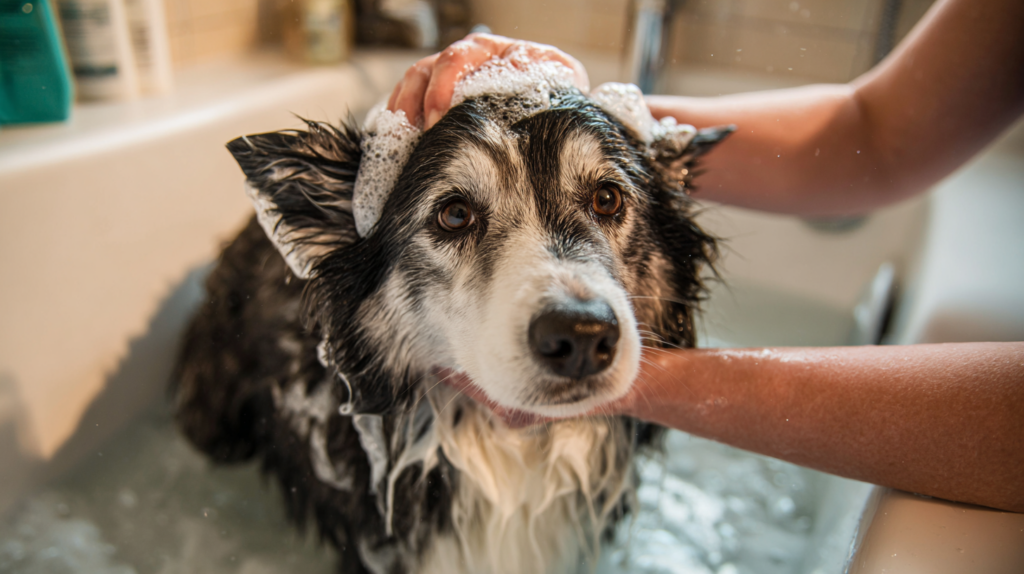
Use lukewarm water.
- Start at the neck and work toward the tail
- Work water down to the skin—don’t just wet the surface
- Avoid the face for now
- Use handheld sprayer or cup to control water flow
- Make sure the coat is completely saturated before adding shampoo
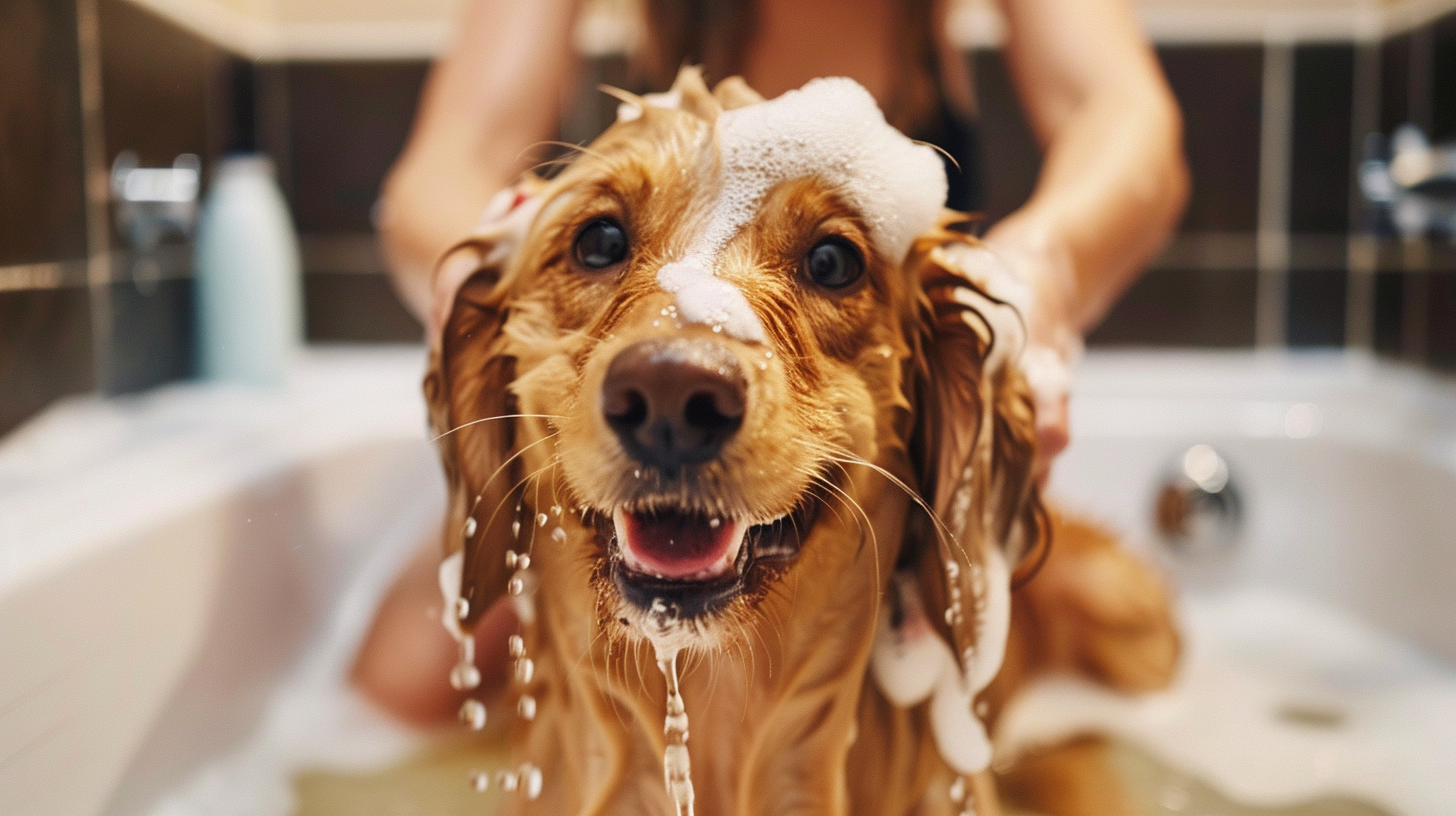
Step 5: Apply Shampoo
Start at the neck, work toward the tail.
- Apply shampoo in a line down the back
- Lather thoroughly with your fingers
- Work into all areas:
- Back and sides
- Belly and chest
- Legs and paws (between toes too)
- Under the tail and around the rear
- Armpits (dogs get dirty here)
- Collar area
For the face:
- Use a damp washcloth only
- No shampoo near eyes
- Wipe gently around muzzle, under eyes, around ears
Leave shampoo on for 3-5 minutes if medicated. Regular shampoo can be rinsed immediately.
Step 6: Rinse Thoroughly
This is the most important step.
Leftover shampoo causes:
- Skin irritation
- Itching
- Dryness and flaking
How to rinse properly:
- Rinse until water runs completely clear
- Pay special attention to:
- Armpits
- Between legs
- Under belly
- Around collar area
- When you think you’re done—rinse once more
Step 7: Apply Conditioner (If Using)
For long, curly, or thick-coated dogs.
- Apply from neck to tail
- Work through coat with fingers
- Leave on for 2-3 minutes
- Rinse thoroughly
Step 8: Remove Ear Cotton Balls
Remove before drying.
Gently pull out the cotton balls.
Check ears for any moisture—gently dry the outer ear flap with a towel.
Step 9: Towel Dry
The shake is coming—be ready.
- Let your dog shake as much as they want (step back!)
- Then wrap in a large towel
- Rub firmly but gently
- Pay attention to:
- Under belly
- Between legs
- Paws and between toes
- Ears (outer only)
For thick or double-coated dogs: use two towels.
Step 10: Blow Dry (Recommended)
Especially important for long or thick coats.
Leaving a dog damp can cause:
- Hot spots (moist dermatitis)
- Skin fungal infections
- That “wet dog smell” that lingers
How to blow dry safely:
- Use lowest heat setting
- Keep dryer moving—never hold in one spot
- Keep at least 6 inches from the coat
- Stop immediately if skin feels hot
- Brush while drying to prevent tangles
Many dogs are scared of dryers at first. Introduce slowly—let them sniff it while off, then turn on briefly from a distance, gradually moving closer over sessions.
Step 11: Final Brush
Once fully dry, give a thorough brush.
- Removes any remaining loose fur
- Prevents post-bath tangles and mats
- Leaves the coat looking its best
Step 12: Reward!
Always end with praise and treats.
This is critical for making bath time positive.
Your dog worked hard and cooperated (hopefully). A treat and enthusiastic praise teach them that bath time = good things.
Over time, most dogs become more relaxed about baths when they consistently predict a reward.
Bathing a Dog Who Hates Baths
Some dogs need extra help.
Start slowly:
- Never force a terrified dog into water
- Begin with just standing near the empty tub with treats
- Progress to standing in dry tub, then adding a little water
- Build up very gradually over multiple sessions
Make it positive every time:
- Treats throughout the entire bath
- Calm, cheerful voice
- Never punish or get frustrated
Use the peanut butter trick:
- Smear xylitol-free peanut butter on tub wall
- Dog focuses on licking while you wash
Consider a professional groomer:
- For extremely resistant dogs, a groomer may handle it better
- They have specialized equipment and experience
Ask your vet:
- For severely anxious dogs, vet may recommend anti-anxiety medication before baths
Common Bathing Mistakes to Avoid
Getting water in ears: Always use cotton balls. Ear infections are painful and expensive to treat.
Using human shampoo: Human shampoo has a different pH than dog shampoo. Damages the skin barrier over time.
Not rinsing enough: Leftover shampoo is one of the most common causes of post-bath itching and skin irritation.
Bathing too often: Over-bathing strips natural oils. Dry, flaky, itchy skin follows.
Using hot water: Dogs are sensitive to heat. Always lukewarm—test on your wrist first.
Skipping the pre-bath brush: Wet mats are nearly impossible to remove and can cause skin problems underneath.
Blow drying on high heat: Can burn the skin. Always use the lowest heat setting.
Bathing Puppies: Special Considerations
Puppies need extra care.
When to start:
- Wait until at least 8 weeks old
- Check with vet before bathing very young puppies
Use puppy-specific shampoo:
- Tear-free formula
- Gentle on sensitive skin
Keep it short:
- Puppies get cold quickly
- Make the first few baths very brief and positive
Warm, not hot:
- Puppies are more sensitive to temperature
Dry thoroughly:
- Puppies can’t regulate body temperature well
- Ensure completely dry before letting them rest
Common Questions
Q: Can I use baby shampoo on my dog? A: In a pinch, baby shampoo is safer than regular human shampoo—but it’s still not ideal. Dog shampoo is formulated for their specific skin pH. Use dog shampoo whenever possible.
Q: My dog smells bad again a day after bathing. Why? A: Likely causes: not drying thoroughly (wet coat develops odor quickly), skin infection or yeast overgrowth, anal gland issues, or dental disease. If frequent bad odor is a problem, see your vet.
Q: Can I bathe my dog outside with a hose? A: Yes, but only in warm weather—water must be lukewarm, not cold. Cold water causes stress and can lower body temperature dangerously in small dogs.
Q: How do I get the wet dog smell out of my bathroom? A: Dry your dog thoroughly before they leave the bathroom. The smell comes from damp fur, so a thorough dry is the best prevention.
Q: My dog ate some shampoo. Should I be worried? A: Small amounts of dog shampoo are generally not toxic if swallowed, but can cause stomach upset. If your dog consumed a large amount or shows signs of illness, contact your vet.
Q: Should I bathe my dog before or after a haircut? A: Bathe first, then cut. Clean hair is easier to cut evenly. Groomers typically follow this order.
The Bottom Line
Bathing your dog doesn’t have to be a battle.
Key takeaways:
Brush first: Always brush before bathing to remove mats and loose fur.
Use dog shampoo: Never human shampoo—wrong pH for dogs.
Lukewarm water only: Test on your wrist before starting.
Rinse thoroughly: Leftover shampoo causes itching and irritation.
Dry completely: Damp coat causes odor, hot spots, and skin infections.
Reward every time: Treats and praise make bath time better each session.
How often: Every 4-8 weeks for most dogs—adjust for coat type and lifestyle.
When in doubt about skin issues: See your vet before choosing a medicated shampoo.
Does your dog love or hate bath time? Share your tips in the comments!
This article provides general grooming guidance. For dogs with skin conditions, allergies, or medical needs, consult your veterinarian before choosing bathing products or frequency.