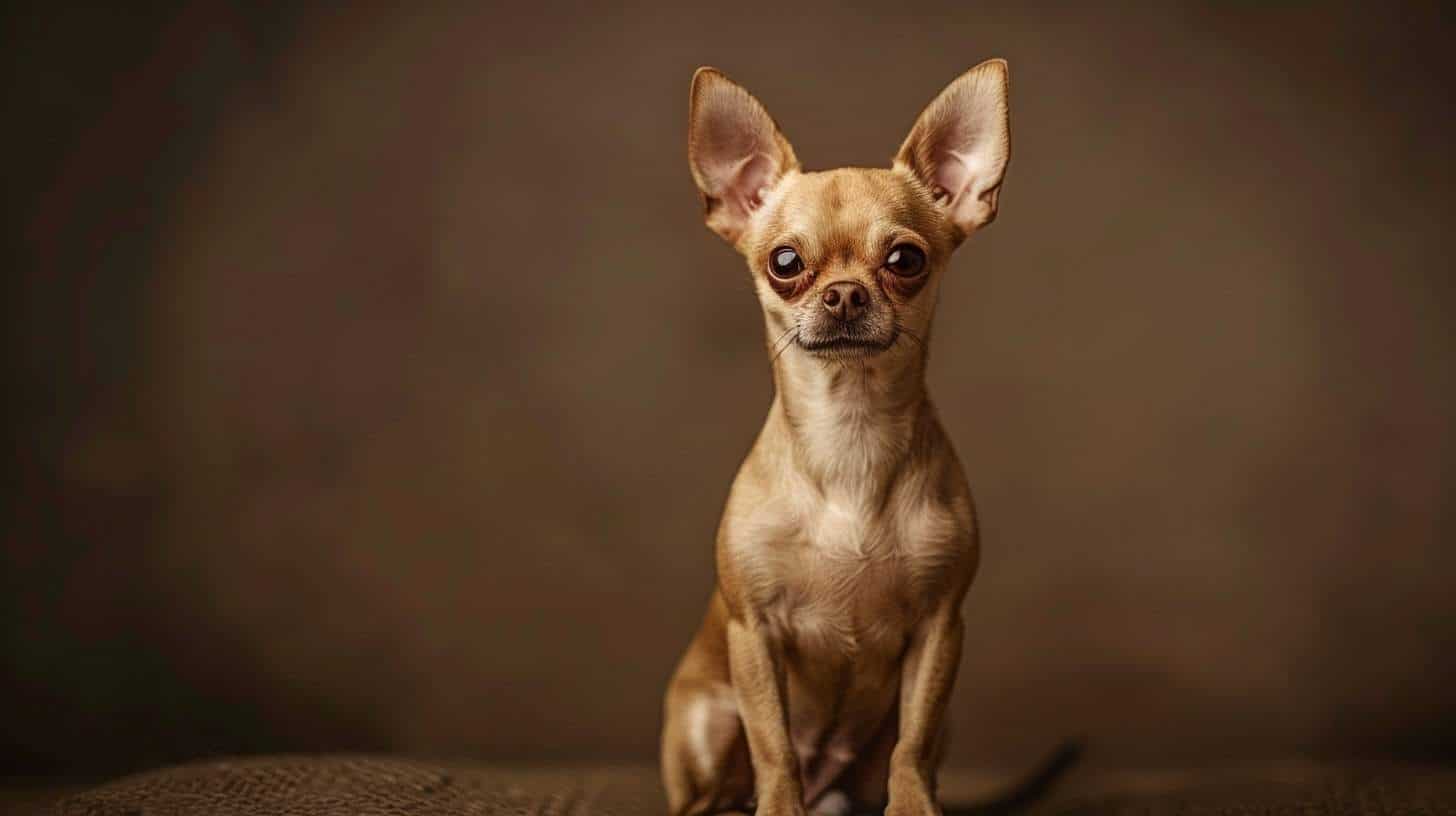
Chihuahua: Complete Breed Guide – Temperament, Care, Health & More (2026)
- 🐕 QUICK ANSWER: CHIHUAHUA BREED GUIDE
- ✅ Chihuahuas are the world’s smallest dog breed – 2-6 lbs, but with personality and confidence that rivals dogs twenty times their size
- ✅ Long lifespan of 14-17 years – one of the longest of any dog breed, making them exceptional long-term companions
- ✅ Two varieties: smooth coat and long coat – both share identical temperament with different grooming requirements
- ✅ Low exercise needs – 20-30 minutes daily satisfies most Chihuahuas
- ✅ Extremely adaptable to apartment and urban living – one of the most practical city companion dogs available
- ⚠️ Chihuahuas bond intensely with one or two people and can be defensive toward others – socialization from puppyhood is critical
- ⚠️ Hypoglycemia is a genuine medical emergency in puppies and very small adults – frequent feeding and glucose on hand are essential
- ⚠️ Tracheal collapse is a serious risk – harnesses are mandatory, collars are dangerous for leash activities
- ⚠️ Molera – a soft spot on the skull – is present in many Chihuahuas and requires protection from head trauma
- ❌ Do NOT allow a Chihuahua to become a “purse dog” with no independent socialization – undersocialized Chihuahuas become fearful, reactive, and difficult to manage
- ❌ Do NOT trust a Chihuahua off-leash near traffic – their boldness toward all situations does not include traffic awareness
- This article draws on breed standards from the Chihuahua Club of America (CCA) and the British Chihuahua Club, health research from the CCA Health Committee, and clinical guidance from veterinary neurologists and cardiologists who specialize in toy breed health.
- Last Updated: May 2026
What Kind of Dog Is a Chihuahua?
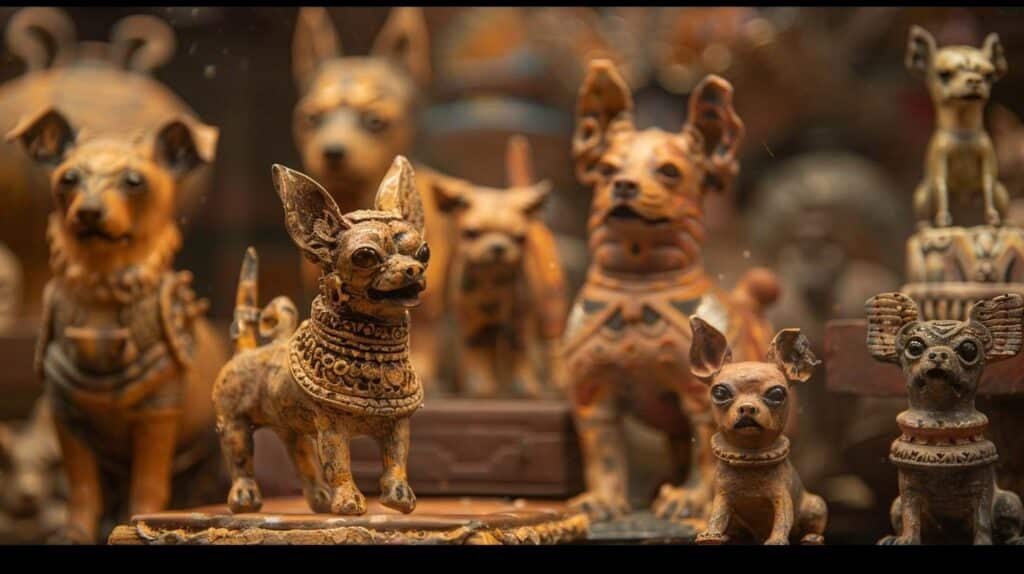
The Chihuahua is the world’s smallest recognized dog breed and one of the oldest breeds in the Americas. Its precise origins remain a subject of ongoing research and debate, but the most widely accepted theory traces it to the Techichi – a small, mute companion dog that the Toltec civilization of ancient Mexico kept as early as the 9th century AD. Archaeological evidence, including ceramic figurines and burial sites, supports the existence of small companion dogs in pre-Columbian Mexico that closely resemble the modern Chihuahua.
The breed takes its name from the state of Chihuahua in northern Mexico, where American tourists and traders encountered large numbers of these small dogs in the mid-19th century. The American Kennel Club registered the first Chihuahuas in 1904, making the breed one of the earlier toy breeds to gain formal recognition in the United States.
The Chihuahua’s appearance in popular culture – carried by celebrities, featured in film and advertising, and associated with Mexican cultural identity – has given it global name recognition that far exceeds most breeds. However, this visibility has also contributed to a problematic ownership pattern: owners acquire Chihuahuas for their aesthetic appeal and carry them exclusively rather than managing them as dogs. This produces undersocialized, fearful animals whose defensive behavior owners then misattribute to the breed rather than to inadequate management. A properly socialized, consistently trained Chihuahua is a characterful, deeply loyal, and engaging companion.
At a Glance: Chihuahua Quick Reference
| Category | Details |
|---|---|
| AKC group | Toy Group |
| Origin | Mexico (Chihuahua state) |
| Height | 5-8 inches |
| Weight | Under 6 lbs (breed standard) |
| Lifespan | 14-17 years |
| Energy level | Moderate |
| Exercise needed | 20-30 minutes per day |
| Grooming | Low (smooth) to moderate (long coat) |
| Shedding | Low (smooth) to moderate (long coat) |
| Trainability | Good – intelligent but very independent |
| Good with children | Moderate – better with older children |
| Good with other dogs | Good with similar-sized dogs |
| Good with cats | Variable – individual dependent |
| Good with strangers | Reserved to defensive – socialization critical |
| Tracheal collapse risk | High – harness mandatory |
| Hypoglycemia risk | High in puppies and very small adults |
| Molera risk | Common – head trauma protection required |
| Dental disease risk | Very high – daily brushing essential |
| Apartment suitable | Exceptional |
| First-time owner suitable | Yes – with realistic socialization commitment |
Chihuahua Temperament: What to Expect Living With One
The Big Dog in a Small Body
The Chihuahua’s temperament combines fierce loyalty to its chosen people with a boldness toward the world that its physical size does nothing to temper. A Chihuahua that decides you belong to it will follow you from room to room, demand proximity with persistent determination, and defend your presence from perceived threats regardless of whether those threats could fit the Chihuahua in a single bite.
This loyalty is genuine and deep. Chihuahua owners consistently describe their dogs as extraordinarily attuned to their emotions, physically affectionate, and communicative through a range of vocalizations and body language signals that experienced owners learn to read with precision.
The Socialization Challenge
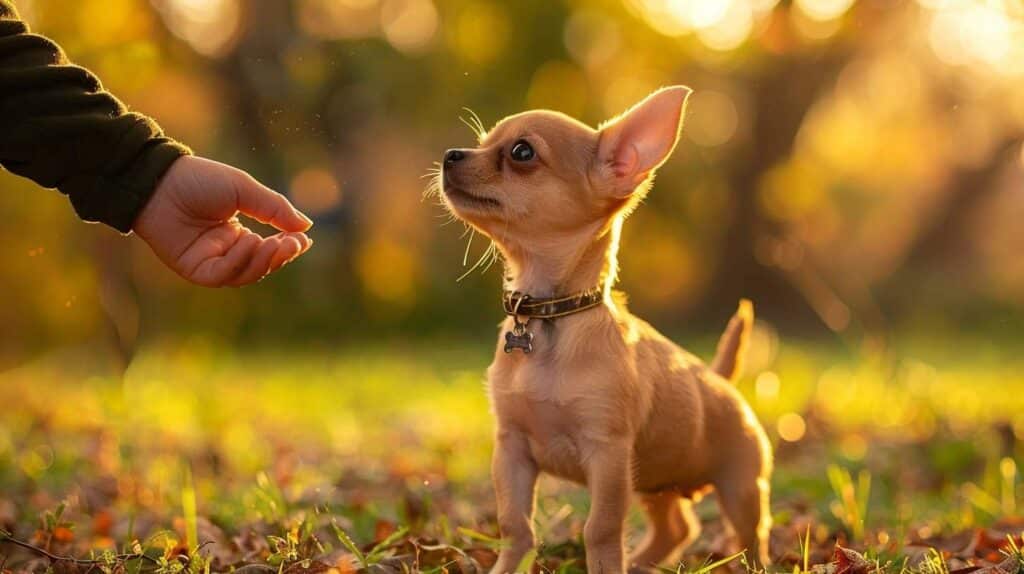
The Chihuahua’s reputation for defensiveness, snapping, and anxiety around strangers is not a breed trait – it is the predictable outcome of the most common Chihuahua ownership mistake: carrying the dog everywhere while exposing it to nothing. A Chihuahua that owners transport in a bag, hold at the park rather than placing on the ground, and shield from contact with unfamiliar people and dogs never learns to assess the world with confidence. Instead, it learns that unfamiliar situations are threatening and that snapping effectively ends unwanted contact.
A Chihuahua raised with consistent positive socialization from puppyhood – placed on the ground, allowed to greet strangers at its own pace, and introduced to other dogs through controlled meetings – develops the confident assessment that makes it a genuinely pleasant companion in public settings.
Selectivity Toward People
Chihuahuas tend to select one or two people as their primary attachments and show significantly different behavior toward others. Within their chosen group, they are warm, demonstrative, and deeply bonded. Outside it, they are often watchful, reserved, and capable of defensive behavior if they feel their person faces an unwelcome approach.
This selectivity means that households where the Chihuahua interacts with a rotating cast of visitors, children, or extended family members require extra socialization investment to prevent the dog from treating all non-primary people as potential threats.
Cold Sensitivity
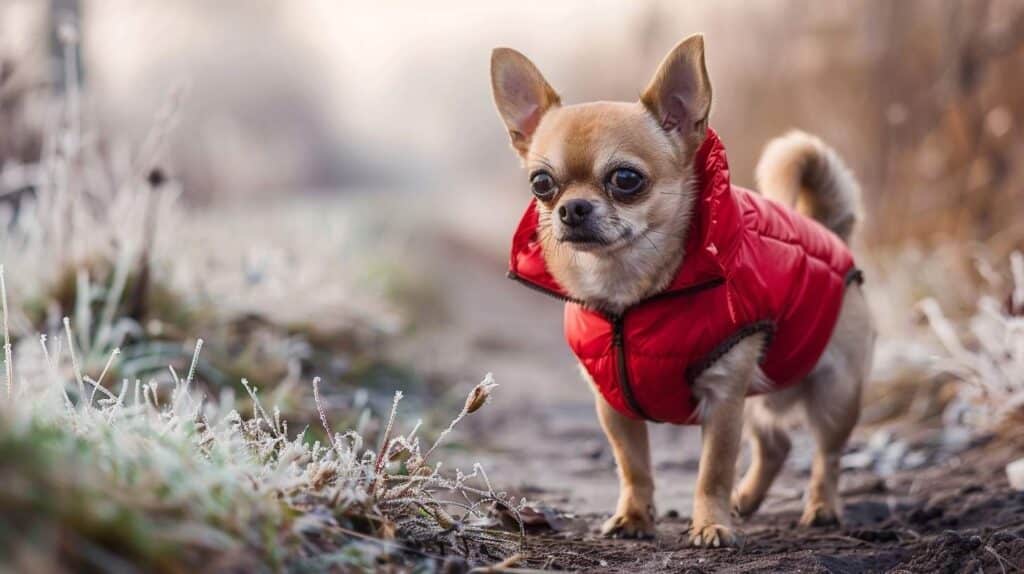
Chihuahuas feel cold acutely. Their small body mass loses heat rapidly, and their thin coat – even in the long-coat variety – provides limited insulation against cold weather. A dog coat is not optional in cold climates and is appropriate for any weather below 50°F. Chihuahuas that are cold become lethargic, shiver persistently, and are prone to stress-related illness.
Two Varieties: Smooth Coat and Long Coat
Both Chihuahua varieties are the same breed – temperament, health profile, and care requirements are identical. The difference is entirely in coat type and the grooming needs that result.
| Feature | Smooth Coat | Long Coat |
|---|---|---|
| Coat description | Short, sleek, close-lying | Soft, flowing, feathered on ears, legs, tail |
| Brushing frequency | Once per week | 2-3 times per week |
| Shedding | Low | Low to moderate |
| Professional grooming | Minimal | Every 8-10 weeks for trimming |
| Matting risk | Very low | Moderate – particularly behind ears |
| Cold weather appearance | More obviously cold | Slightly more insulated |
The Molera: Understanding the Soft Spot
Many Chihuahuas – particularly apple-headed individuals – are born with a molera: an opening in the skull where the cranial bones have not fully fused, similar to the fontanelle in human infants. Unlike in humans, where the fontanelle closes within months, some Chihuahuas retain a molera throughout their lifetime.
The molera itself is not a health defect – it has been present in the breed for centuries and the breed standard acknowledges it. However, it creates a vulnerability that owners must manage carefully.
| Molera Consideration | Management |
|---|---|
| Head trauma risk | Protect from falls, rough play, and pressure on the skull |
| Children handling | Supervise all handling – never allow pressure on the head |
| Veterinary disclosure | Inform all vets – affects anaesthetic positioning and examination |
| Association with hydrocephalus | Dogs with large, domed skulls and persistent open molera should receive hydrocephalus screening |
Hydrocephalus – fluid accumulation in the brain – is more common in Chihuahuas than in most breeds and associates with very domed skull shape and large molera. Signs include abnormal gait, seizures, vision problems, and behavior changes. Any Chihuahua with a significantly domed skull should receive a veterinary evaluation for hydrocephalus as a puppy.
Hypoglycemia: The Puppy Emergency
Hypoglycemia – dangerously low blood sugar – is one of the most important health risks in Chihuahua puppies and very small adults. Their tiny body mass provides essentially no glucose reserve buffer. A puppy that misses a meal, plays too intensely, or experiences stress can develop life-threatening low blood sugar within hours.
| Sign | Urgency |
|---|---|
| Weakness, wobbly gait | Feed immediately – honey on gums, then small meal |
| Trembling, glassy eyes | Feed immediately and call vet |
| Seizures | Emergency – honey on gums, vet immediately |
| Collapse, unconsciousness | Emergency – honey on gums during transport |
Prevention requires feeding puppies under 12 weeks every 3-4 hours without exception, ensuring small adults have food available throughout the day, and keeping a glucose supplement accessible at all times.
Health: Common Conditions in Chihuahuas
| Health Condition | Prevalence | Signs to Watch For | Action |
|---|---|---|---|
| Dental disease | Very high | Bad breath, reluctance to eat, tooth loss | Daily brushing + annual professional cleanings |
| Patellar luxation | Very high | Skipping, holding leg up | Orthopaedic evaluation – surgical correction if severe |
| Tracheal collapse | High | Honking cough, breathing distress | Harness mandatory – vet evaluation if coughing starts |
| Hypoglycemia | High in puppies | Weakness, trembling, seizures | Feed every 3-4 hours as puppy |
| Hydrocephalus | Moderate – domed skulls | Seizures, vision problems, gait abnormalities | MRI evaluation in affected dogs |
| Heart disease (MVD and PDA) | Moderate | Exercise intolerance, cough, murmur | Annual cardiac exam after age 5 |
| Progressive retinal atrophy (PRA) | Moderate | Night blindness progressing | Annual eye exam, DNA testing |
| Molera complications | Common | Head sensitivity, trauma vulnerability | Protection and vet disclosure |
| Legg-Calve-Perthes disease | Low-moderate | Hindleg lameness, pain | Orthopaedic evaluation |
| Epilepsy | Low-moderate | Seizures | Neurological evaluation |
Dental Disease: The Primary Health Management Priority
Chihuahuas carry the same number of teeth as a German Shepherd packed into a jaw a fraction of the size. This overcrowding creates surfaces where plaque accumulates at accelerated rates, predisposing virtually every Chihuahua to dental disease without active management. Studies consistently show that dental disease is the most common health finding in Chihuahuas over age 3.
Daily toothbrushing is the single most important health habit a Chihuahua owner can establish. Additionally, annual professional dental cleanings under anaesthesia should begin by age 2-3 for most Chihuahuas and continue annually throughout the dog’s life.
Grooming: Minimal to Moderate by Coat Type
Smooth Coat Grooming
The smooth coat Chihuahua ranks among the lowest-maintenance dogs in terms of coat care. Weekly brushing with a soft bristle brush or rubber grooming mitt removes loose hair and maintains coat health. Bathing every 4-6 weeks keeps the coat clean.
Long Coat Grooming
The long coat requires brushing 2-3 times per week to prevent tangles, particularly behind the ears, in the armpits, and on the feathering of the legs. Professional trimming every 8-10 weeks maintains a neat appearance.
Universal Grooming Tasks
| Task | Frequency | Notes |
|---|---|---|
| Teeth brushing | Daily – minimum 5 times per week | Most critical health task |
| Nail trimming | Every 2-3 weeks | Small nails grow quickly – long nails affect gait |
| Ear cleaning | Every 2 weeks | Check for odor and discharge |
| Eye area cleaning | Daily | Discharge accumulates in eye corners |
| Paw pad check | Weekly | Cold-sensitive pads in winter weather |
Exercise: Appropriate Activity for the World’s Smallest Breed
Chihuahuas need 20-30 minutes of daily exercise. Two short walks combined with indoor play meets most Chihuahuas’ activity requirements fully. Despite their small size, they are active and enjoy exploring, chasing toys, and participating in interactive games with genuine enthusiasm.
| Exercise Type | Suitability | Notes |
|---|---|---|
| Short leash walks (harness) | Excellent | Primary daily activity |
| Indoor fetch and chase | Excellent | Engages prey drive safely |
| Sniff walks | Excellent | Mental engagement alongside gentle movement |
| Dog parks | Caution | Size difference creates serious injury risk |
| Off-leash in unfenced areas | Avoid | Bold approach to all situations including traffic |
| Running or sustained exercise | Avoid | Tracheal and cardiac health considerations |
For guidance on managing small breed exercise and safety, read our guide on dog separation anxiety.
Training: Working With the Independent Ancient Mind
Chihuahuas are intelligent dogs that learn quickly when motivated – and apply independent judgment that rivals any terrier breed. Their ancient history as companion dogs in Aztec and Toltec households, where inhabitants treated them as sacred objects, may contribute to a temperament that does not naturally defer to human direction.
Effective training uses very high-value food rewards, extremely short sessions, and genuine positive reinforcement. Chihuahuas do not respond to corrections or force – they respond by shutting down or becoming defensive. Patient consistency, however, produces well-mannered and responsive dogs.
| Training Priority | Why It Matters |
|---|---|
| Socialization from day one | Most important factor in producing a stable, confident adult |
| Recall | Bold approach to traffic and larger animals creates constant risk |
| Quiet command | Alert barking is frequent – management essential for urban living |
| Housetraining (patience required) | Small bladder – frequent trips required for months |
| Confident ground walking | Counter the “purse dog” pattern before it establishes |
Is a Chihuahua Right for You?
Owners Who Succeed With Chihuahuas
Chihuahuas thrive with individuals or couples seeking a deeply loyal, long-lived, and highly portable companion. They suit apartment and urban residents particularly well. Additionally, owners committed to consistent socialization from puppyhood get the best from this breed. Elderly owners seeking a gentle, low-demand companion find the Chihuahua an ideal match. Above all, anyone who understands that the breed’s reputation for defensiveness is a management product rather than a breed destiny will succeed with a Chihuahua.
Households That Struggle With Chihuahuas
Chihuahuas are consistently challenging for families with young children who cannot handle a very small dog safely. They also struggle in households with large dogs that owners cannot reliably manage around a 3-5 pound animal. Owners who want a dog consistently friendly with all people without socialization investment, and anyone expecting a passive, compliant companion, will find this breed frustrating.
New puppy? Find a name that fits their personality.
Browse 600+ dog names by gender and personality type — playful, calm, bold, elegant, funny or mysterious.
Try Pet Name FinderFrequently Asked Questions
Chihuahua Temperament and Behavior
Why are Chihuahuas so aggressive? Most Chihuahua “aggression” is defensive behavior that inadequate socialization produces, combined with the common pattern of carrying the dog rather than allowing it to engage independently with the world. A well-socialized Chihuahua is not an aggressive dog – it is a confident, bold, and occasionally assertive one. The defensive reactivity owners see in many Chihuahuas is the predictable result of a dog that never learned to trust its own assessment of the world.
Are Chihuahuas good family dogs? Better with older children who understand how to handle a small dog carefully. The Chihuahua’s tiny size creates injury risk from rough handling, and its defensive response to unwanted contact can produce snapping that frightens children. Families with children over 8 who learn respectful dog interaction typically do well with the breed.
Do Chihuahuas get along with other dogs? Generally well with other Chihuahuas and similar-sized dogs when owners socialize them properly. Their boldness means they frequently approach much larger dogs without apparent size awareness, which creates risk in unsupervised settings. Dog park visits require close supervision due to the potential for a large dog to injure a 5-pound dog accidentally during normal play.
Can Chihuahuas be trained not to bark? Owners can significantly reduce the frequency of alert barking through consistent quiet command training, adequate daily exercise, and sufficient mental stimulation. However, they cannot eliminate it entirely – alertness and vocalization are breed characteristics. A well-trained, adequately exercised Chihuahua with a reliable quiet command is a manageable urban companion.
Chihuahua Health Questions
What is a deer head versus apple head Chihuahua? These informal terms describe two head shapes in Chihuahuas. Apple head Chihuahuas have a distinctly rounded, domed skull and a shorter muzzle. Deer head Chihuahuas have a flatter skull and a longer, more angular muzzle resembling a deer’s face. The AKC breed standard favors the apple head. Both appear within the same breed. Apple head Chihuahuas are more susceptible to molera and hydrocephalus due to their domed skull shape.
What does the molera mean for everyday care? For most Chihuahuas with a small, stable molera, daily management simply means protecting the head from trauma – supervising interactions with children, preventing falls from heights, and informing all veterinarians of its presence. Dogs with large open molera or domed skulls warrant hydrocephalus screening. The molera itself is not painful and does not affect quality of life in unaffected dogs.
How long do Chihuahuas live? Typically 14-17 years – among the longest-lived of all dog breeds. Some Chihuahuas reach 20 years with excellent care. The keys to longevity are daily dental care, appropriate weight management, protection from tracheal stress, and regular veterinary monitoring for the cardiac and neurological conditions that affect older Chihuahuas.
Key Takeaways
- Socialization from day one is the single most important investment in a Chihuahua’s long-term temperament
- A harness is mandatory for all leash activities – tracheal collapse from collar pressure is a genuine and preventable risk
- Daily teeth brushing is non-negotiable – dental disease affects virtually all Chihuahuas without active prevention
- The molera requires head trauma protection and disclosure to every veterinarian
- Hypoglycemia is a genuine emergency in puppies – feed every 3-4 hours and keep glucose accessible at all times
- The “aggressive Chihuahua” is almost always an undersocialized one – this outcome is preventable through management
- 14-17 year lifespan makes the Chihuahua one of the longest commitments in the dog world – plan accordingly
- Dog coats are essential below 50°F – cold sensitivity is a genuine physiological reality in this breed
This article is for informational purposes only. Breed characteristics represent general tendencies and do not predict the behavior or health of any individual dog. Always consult a veterinarian for health advice. Seek emergency veterinary care immediately for any signs of hypoglycemia.