Pomeranian: Complete Breed Guide – Temperament, Care, Health & More (2026)
- 🐕 QUICK ANSWER: POMERANIAN BREED GUIDE
- ✅ Pomeranians are bold, intelligent, and deeply affectionate – a spitz breed personality in a 3-7 lb body
- ✅ Exceptionally adaptable to apartment living – one of the most popular urban companion dogs globally
- ✅ Low exercise needs – 20-30 minutes daily is sufficient for most Pomeranians
- ✅ The double coat, while high-maintenance during shedding, does not require professional grooming as often as silky-coated toy breeds
- ✅ Highly alert and vocal – effective watchdogs that announce everything in their environment
- ⚠️ Tracheal collapse is a serious breed concern – harnesses are mandatory, collars are dangerous for leash activities
- ⚠️ Patellar luxation affects a high proportion of Pomeranians – orthopedic evaluation is important if skipping gait appears
- ⚠️ Hypoglycemia is a risk in very small individuals – feeding management and glucose on hand are important
- ⚠️ Alopecia X (black skin disease) affects Pomeranians at elevated rates – coat loss without medical explanation requires dermatological investigation
- ❌ Do NOT shave a Pomeranian – post-clipping alopecia is common and the coat may never regrow correctly
- ❌ Do NOT allow a Pomeranian off-leash in unfenced areas – their boldness toward larger animals and traffic unawareness creates genuine danger
- This article draws on breed standards from the American Pomeranian Club (APC) and The Kennel Club, health research from the APC Health Committee, and clinical guidance from veterinary dermatologists and cardiologists who specialize in spitz and toy breed health.
- Last Updated: May 2026
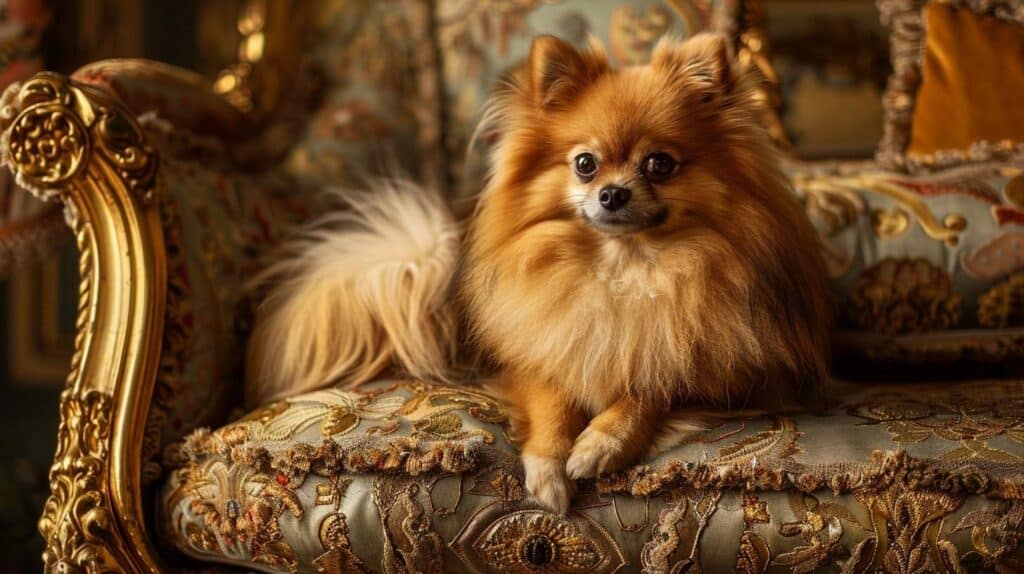
What Kind of Dog Is a Pomeranian?
The Pomeranian belongs to the spitz family – the group of northern working breeds characterized by thick double coats, wedge-shaped heads, erect ears, and plumed tails curled over the back. Its ancestors pulled sleds and herded livestock in the Arctic and sub-Arctic regions of northern Europe. The larger descendants of those dogs remain visible in breeds such as the Samoyed, Keeshond, and Norwegian Elkhound. The Pomeranian’s compact modern form, however, is a relatively recent development.
The breed takes its name from Pomerania – a region of northern Europe straddling what is now northern Germany and Poland – where breeders standardized a larger, working-type spitz in the 18th century. Those early Pomeranians weighed 20-30 pounds and worked as herding dogs. Their transformation into the tiny glamour dogs of today occurred primarily through the enthusiasm of the British Royal Family. Queen Victoria acquired a small Pomeranian in Italy in 1888 and exhibited it at the Windsor Castle Dog Show, where its small size and beautiful coat created a sensation. Decades of selective breeding toward a diminutive standard followed.
By the late Victorian era, breeders had reduced Pomeranians to their current size of 3-7 pounds, and the breed’s working heritage had given way entirely to its companion function. Today, the Pomeranian’s spitz ancestry expresses itself not in working capability but in the bold, independent, assertive temperament that characterizes the family – and in a coat that remains one of the most magnificent in the toy group.
At a Glance: Pomeranian Quick Reference
| Category | Details |
|---|---|
| AKC group | Toy Group |
| Origin | Pomerania (modern Germany/Poland) |
| Height | 6-7 inches |
| Weight | 3-7 lbs |
| Lifespan | 12-16 years |
| Energy level | Moderate |
| Exercise needed | 20-30 minutes per day |
| Grooming | Moderate-high – double coat with seasonal shedding |
| Shedding | Moderate year-round, high during coat blows |
| Trainability | Good – intelligent but independent |
| Good with children | Moderate – better with older children |
| Good with other dogs | Good with similar-sized dogs |
| Good with cats | Variable – prey drive and boldness present |
| Tracheal collapse risk | High – harness mandatory |
| Patellar luxation risk | High – orthopedic monitoring important |
| Alopecia X risk | Moderate – breed-specific condition |
| Dental disease risk | Very high – daily brushing essential |
| Apartment suitable | Excellent |
| First-time owner suitable | Yes – with realistic expectations |
Pomeranian Temperament: What to Expect Living With One
The Spitz Personality in Miniature
Despite their tiny size, Pomeranians retain the full temperamental profile of their northern spitz ancestors – bold, alert, independent, and possessed of a self-confidence entirely disproportionate to their physical dimensions. A Pomeranian that encounters a dog twenty times its size typically responds with the poise of an animal that considers itself the larger party. This fearlessness is part of the breed’s considerable charm and one of its primary management requirements.
The spitz personality also includes a degree of independence that makes Pomeranians more self-sufficient than many companion toy breeds. They enjoy their owner’s company but do not experience the same dependency-driven separation anxiety that more exclusively companion-oriented breeds develop. Consequently, a Pomeranian left alone for moderate periods is typically more settled than a Maltese or Cavalier in the same situation.
Affection and the Owner Bond
Pomeranians are genuinely affectionate with their people. They seek physical closeness, enjoy being held, and form strong bonds with their household members. Their affection tends to be more selective than that of broadly social breeds – most Pomeranians show a clear preference for their primary person while remaining pleasant but less demonstrative with others.
This selectivity also applies to strangers. Pomeranians are typically reserved with people they do not know – watchful and assessing rather than immediately friendly. This natural caution, combined with their vigilant alertness, makes them effective watchdogs that announce every arrival with reliability and volume.
Vocalization: The Watchdog That Never Stops Watching
Pomeranians bark – at sounds, at movement outside windows, at strangers, at other animals, and sometimes at their own reflection. This vocal alertness directly expresses their spitz working heritage – northern working dogs that monitored their environment and communicated their observations provided real value. In a city apartment, however, it is the characteristic that generates the most owner management effort.
Therefore, training a reliable quiet command is the most important behavioral priority for most Pomeranian owners. A Pomeranian with a solid quiet command, adequate daily exercise, and sufficient mental stimulation barks substantially less than one whose vocal tendencies owners have left unaddressed.
Pomeranians and Children
Pomeranians suit households with older children better than those with young ones. Their tiny size creates significant injury risk from rough handling, drops, or accidental falls – a 5-pound dog does not survive the kinds of falls and rough play that a Labrador Retriever ignores. Additionally, their spitz independence means they respond to unwanted handling or pain with snapping rather than tolerance.
Older children who understand how to interact with a small dog – approaching calmly, never picking the dog up without adult supervision, and reading the dog’s body language – typically coexist well with Pomeranians.
The Coat: Beauty and Management
Understanding the Double Coat
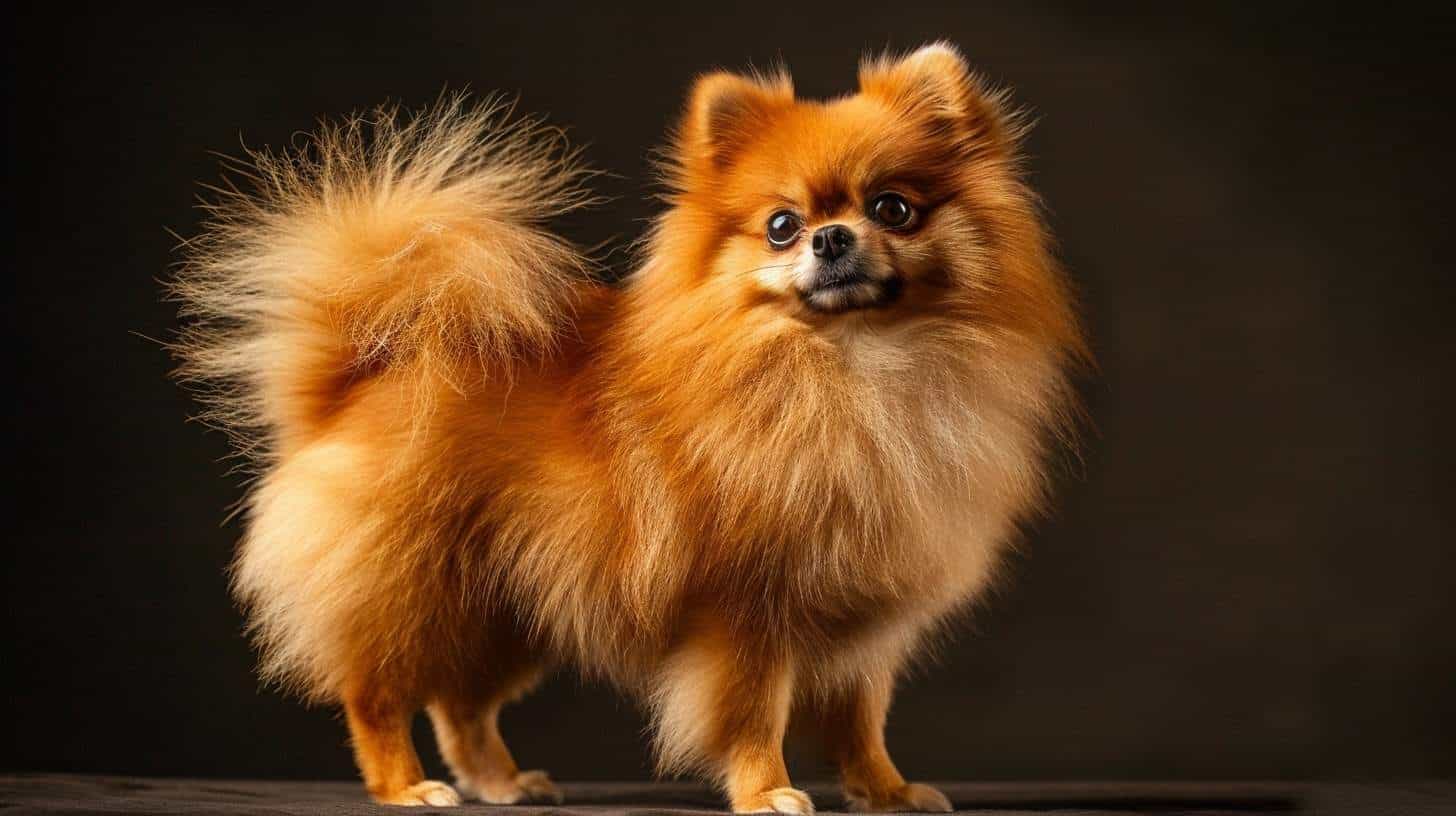
The Pomeranian’s iconic coat consists of a dense, soft undercoat and a longer, harsher outer coat that stands away from the body, creating the characteristic cloud-like silhouette. This double coat is a cold-climate adaptation from the breed’s northern ancestors – and it requires specific care that differs significantly from silky-coated toy breeds.
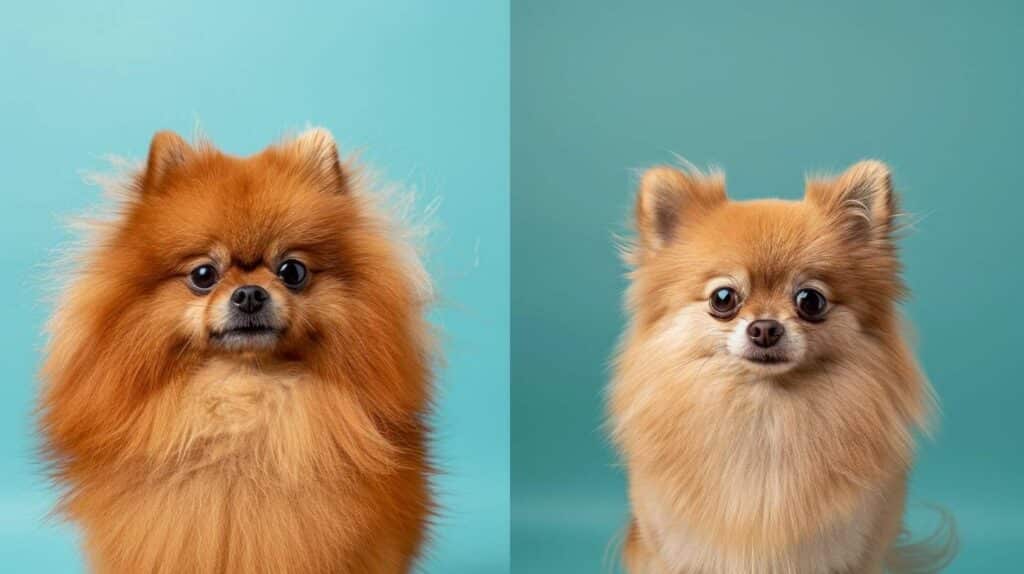
The Shaving Warning
Shaving a Pomeranian is one of the most serious and irreversible grooming mistakes an owner can make. Post-clipping alopecia – a condition where the shaved double coat does not regrow correctly – affects a significant proportion of Pomeranians. The guard hairs of the outer coat may fail to regrow entirely, leaving the dog with only patchy undercoat or bare skin in the shaved areas permanently.
Never shave a Pomeranian. Instead, manage heat through exercise timing, shade, water access, and air conditioning. The coat regulates temperature in both directions, and removing it does not cool the dog – it exposes the skin to direct sun and disrupts a natural thermoregulation system.
Grooming Schedule
| Task | Frequency | Notes |
|---|---|---|
| Brushing (regular periods) | 3-4 times per week | Pin brush and slicker – reach the undercoat |
| Brushing (coat blow periods) | Daily | Two annual blows – undercoat detaches in quantity |
| Bathing | Every 4-6 weeks | Blow-dry completely – damp undercoat mats rapidly |
| Ear cleaning | Every 2 weeks | Upright ears accumulate debris |
| Nail trimming | Every 3-4 weeks | Small nails grow quickly |
| Teeth brushing | Daily – minimum 5 times per week | Most important health habit |
| Sanitary trim | Every 6-8 weeks | Keep the area around hindquarters neat |
| Paw pad trimming | Monthly | Hair grows between pads – slippery on hard floors |
Coat Blow Management
Twice per year – typically spring and autumn – Pomeranians lose much of their undercoat over a 2-3 week period. Daily brushing during this period is essential. The volume of shed undercoat is remarkable given the dog’s small size. Additionally, a high-velocity dryer after bathing during blow periods dramatically speeds undercoat removal and reduces indoor hair accumulation.
Alopecia X: The Breed-Specific Coat Condition
Alopecia X – also called black skin disease or coat funk in the breed community – is a condition where the coat progressively thins and eventually fails in patches, particularly over the trunk. The skin in affected areas darkens over time. Unlike most coat loss conditions, Alopecia X does not result from hormonal imbalance, parasites, thyroid disease, or Cushing’s disease – veterinarians must rule out all of these through testing before making the Alopecia X diagnosis.
The condition is cosmetic rather than medically dangerous, but it is often permanent and has no consistently reliable treatment. Neutered males appear most commonly affected. Some reports suggest that neutering (for males) or spaying (for females) occasionally triggers coat regrowth in Alopecia X dogs. Any significant unexplained coat loss in a Pomeranian should prompt veterinary evaluation to rule out treatable medical causes first.
Health: Common Conditions in Pomeranians
| Health Condition | Prevalence | Signs to Watch For | Action |
|---|---|---|---|
| Dental disease | Very high | Bad breath, reluctance to eat | Daily brushing + annual professional cleanings |
| Patellar luxation | High | Skipping, holding leg up | Orthopaedic evaluation – surgical correction if severe |
| Tracheal collapse | High | Honking cough, breathing distress | Harness mandatory – vet evaluation if coughing starts |
| Alopecia X | Moderate | Progressive coat thinning, darkening skin | Veterinary diagnosis after ruling out other causes |
| Hypoglycemia | Moderate – very small individuals | Weakness, trembling, seizures | Feed regularly – glucose supplement on hand |
| Progressive retinal atrophy (PRA) | Moderate | Night blindness progressing | Annual eye exam, DNA testing |
| Patent ductus arteriosus (PDA) | Moderate – cardiac defect | Heart murmur detected in puppy | Cardiac exam – surgical correction if indicated |
| Hypothyroidism | Low-moderate | Weight gain, lethargy, coat changes | Annual thyroid panel |
| Legg-Calve-Perthes disease | Low-moderate | Hindleg lameness, pain | Orthopaedic evaluation |
| Epilepsy | Low-moderate | Seizures | Neurological evaluation |
Tracheal Collapse
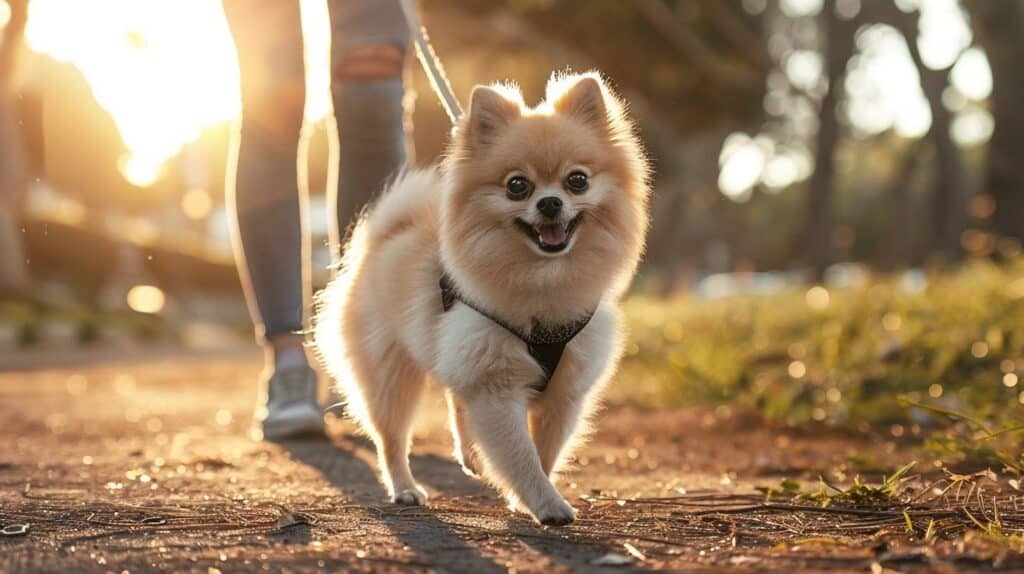
As with other toy breeds, the Pomeranian’s small trachea is vulnerable to collapse from collar pressure during leash activities. Use a harness with a back or chest attachment for all walking. A flat collar for identification purposes only – with no leash connection – is acceptable.
Exercise: Modest Needs, Enthusiastic Participation
Pomeranians need 20-30 minutes of daily exercise. Their small size makes this achievable through two short walks and indoor play. Despite modest requirements, they are active and engaged – they enjoy exploring, investigating scents, and participating in interactive games with considerably more enthusiasm than their size suggests.
| Exercise Type | Suitability | Notes |
|---|---|---|
| Short leash walks (harness) | Excellent | Primary daily activity |
| Indoor fetch and chase | Excellent | Engages spitz drive |
| Interactive puzzle toys | Excellent | Mental engagement alongside play |
| Off-leash in fenced area | Good | Prey drive and boldness – supervise |
| Dog parks | Caution | Size disparity creates injury risk from larger dogs |
| Running or jogging | Avoid sustained | Small body, tracheal health considerations |
Heat Management
The Pomeranian’s double coat provides poor heat dissipation compared to single-coated breeds. Therefore, exercise during hot weather carries heatstroke risk. Walk in early morning or after sunset during summer months, and ensure access to cool indoor environments throughout warm weather.
For more on recognizing heat-related emergencies, read our guide on dog heat stroke.
Training: Working With the Independent Spitz Mind
Pomeranians are intelligent dogs that learn quickly – but, like their spitz relatives, they apply independent judgment to whether commands merit compliance in any given moment. Training that uses high-value food rewards, short engaging sessions, and genuine positive reinforcement produces cooperative, well-mannered dogs. Training that relies on repetition without adequate motivation produces a dog that tunes out the session entirely.
| Training Element | Effectiveness | Notes |
|---|---|---|
| High-value food rewards | Excellent | Primary motivator |
| Short varied sessions (5-10 min) | Best results | End before engagement drops |
| Positive reinforcement | Essential | Only approach that works consistently |
| Quiet command training | Highest priority | Alert barking requires consistent management |
| Harsh corrections | Counterproductive | Creates anxiety and shuts down cooperation |
Priority Training Areas
| Priority | Why It Matters |
|---|---|
| Quiet command | Barking is frequent and breed-typical – management is essential for apartment living |
| Recall | Bold approach to other animals and traffic unawareness creates risk |
| Housetraining (patience required) | Small bladder capacity and independent nature extend the process |
| Polite leash walking | Pulling and reactivity are defaults – harness and consistent training address these |
| Socialization (ongoing) | Reduces stranger wariness and dog-dog reactivity throughout life |
Is a Pomeranian Right for You?
Owners Who Succeed With Pomeranians
Pomeranians thrive with apartment and urban residents who want a small, alert, and characterful companion. They also suit owners who enjoy regular grooming interaction with their dog, individuals and couples without young children, and owners who find the watchdog vocal quality reassuring rather than exhausting. Furthermore, anyone who appreciates the bold, self-assured spitz personality in a compact form will find the Pomeranian deeply rewarding.
Households That Struggle With Pomeranians
Pomeranians are consistently challenging for families with young children who cannot handle a very small dog safely. They also struggle in households that want a quiet companion, homes with large dogs that owners cannot reliably manage around a 5-pound animal, and with anyone unprepared to manage the breed’s vocal tendencies through consistent training.
New puppy? Find a name that fits their personality.
Browse 600+ dog names by gender and personality type — playful, calm, bold, elegant, funny or mysterious.
Try Pet Name FinderFrequently Asked Questions
Pomeranian History and Characteristics
Why are Pomeranians so small when they used to be much bigger? The transformation from a 20-30 pound herding dog to the 3-7 pound companion dog of today occurred over approximately 150 years through deliberate selective breeding. Queen Victoria’s preference for smaller specimens after encountering tiny Pomeranians in Italy in 1888 created a fashion for miniaturization. Breeders drove the process by selecting increasingly small individuals across generations, reducing the breed by roughly 80% of its original body weight within a few generations.
Are Pomeranians hypoallergenic? No. Pomeranians shed dander continuously as a double-coated breed. They are not among the better choices for owners with dog allergies. Low-shedding single-coated breeds such as Maltese, Bichon Frise, or Havanese suit allergy-sensitive households significantly better.
Do Pomeranians shed a lot? Year-round moderate shedding with two significant annual coat blows in spring and autumn. Regular brushing makes the daily and weekly shedding manageable. During coat blow periods, the volume of shed undercoat is substantial given the dog’s small size. Indoor hair accumulation is a permanent feature of Pomeranian ownership that regular brushing significantly reduces but does not eliminate.
Pomeranian Health Questions
Can I shave my Pomeranian in summer? No – this is one of the most important Pomeranian care rules. Shaving risks permanent coat damage through post-clipping alopecia, where the guard hairs of the outer coat may fail to regrow. The double coat protects against both heat and cold – removing it exposes the skin to direct sun and actually increases overheating risk. Manage summer heat through exercise timing and air conditioning instead.
What is Alopecia X in Pomeranians? Alopecia X is a breed-specific coat condition causing progressive thinning and eventual loss of the outer coat, with skin darkening in affected areas. It is not medically dangerous but is cosmetic and often permanent. A veterinarian must diagnose it after ruling out medical causes including thyroid disease, Cushing’s disease, and other hormonal conditions. No consistently reliable treatment exists.
Why does my Pomeranian bark so much? Alert barking is a defining characteristic of the spitz temperament – northern working dogs monitored their environment and communicated their observations, and breeders valued this trait. Consistent quiet command training combined with adequate daily exercise and mental stimulation significantly reduces the frequency. A well-exercised, mentally engaged Pomeranian with a trained quiet command barks substantially less than one whose vocal tendencies owners have not addressed.
How long do Pomeranians live? Typically 12-16 years – among the longer-lived toy breeds. Dogs that receive daily dental care, appropriate weight management, regular veterinary attention, and protection from tracheal stress and heat consistently live toward the higher end of this range. Dental disease is the most directly owner-influenced health factor.
Key Takeaways
- A harness is mandatory for all leash activities – collar use risks tracheal collapse in this breed
- Never shave a Pomeranian – post-clipping alopecia can permanently damage the coat
- Daily teeth brushing is the single most important preventive health habit in the breed
- Quiet command training is the highest behavioral priority – alert barking is frequent and requires consistent management
- Alopecia X requires veterinary diagnosis after ruling out treatable medical causes
- Bold spitz temperament means Pomeranians approach all situations with confidence – management around larger animals and traffic is essential
- Annual coat blows require daily brushing – a high-velocity dryer significantly speeds undercoat removal
- 12-16 year lifespan makes the Pomeranian a long-term companion – dental care and tracheal protection extend healthy years significantly
This article is for informational purposes only. Breed characteristics represent general tendencies and do not predict the behavior or health of any individual dog. Always consult a veterinarian for health advice.