Puppy Vaccination Schedule
You just brought home your adorable new puppy. Congratulations! But amidst the excitement, there’s an important question: What vaccines does my puppy need, and when?
Puppy vaccinations are critical for protecting your dog from serious, potentially fatal diseases. Following the proper vaccination schedule ensures your puppy develops immunity at the right times.
This complete guide covers everything about puppy shots: which vaccines are essential, the exact timeline, costs, potential side effects, and what to expect at each vet visit.
New puppy? Find a name that fits their personality.
Browse 600+ dog names by gender and personality type — playful, calm, bold, elegant, funny or mysterious.
Try Pet Name FinderWhy Puppy Vaccinations Are Critical
Puppies are born with some immunity from their mother’s milk, but this maternal immunity fades between 6-16 weeks of age.
During this vulnerable period:
Puppies become susceptible to serious diseases. Their immune systems are still developing. Without vaccines, exposure to viruses can be fatal.
Vaccines work by:
Introducing weakened or killed viruses. Stimulating immune system to produce antibodies. Creating immunity without causing disease. Protecting puppies when maternal immunity fades.
Vaccination has nearly eliminated many once-common fatal diseases.
Core vs. Non-Core Vaccines
Veterinarians categorize vaccines into two groups.
Core Vaccines (Required for All Puppies)
These vaccines protect against serious, widespread diseases:
Distemper: Highly contagious viral disease. Attacks respiratory, gastrointestinal, and nervous systems. Often fatal. No cure exists.
Parvovirus (Parvo): Extremely contagious and deadly. Causes severe vomiting and bloody diarrhea. Especially dangerous for puppies. High mortality rate without treatment.
Adenovirus (Hepatitis): Affects liver, kidneys, and blood vessels. Can cause sudden death. Highly contagious.
Rabies: Always fatal once symptoms appear. Transmissible to humans. Required by law in most areas.
Every puppy needs these vaccines regardless of lifestyle.
Non-Core Vaccines (Based on Risk Factors)
Your vet may recommend these based on:
Geographic location. Lifestyle. Exposure risk. Local disease prevalence.
Common non-core vaccines:
Bordetella (Kennel Cough): Recommended for dogs in boarding, daycare, or dog parks. Prevents respiratory infection. Not always 100% effective but reduces severity.
Leptospirosis: Bacterial infection from contaminated water. Can cause kidney and liver failure. Transmissible to humans. Recommended in endemic areas or for dogs near wildlife.
Lyme Disease: Transmitted by ticks. Causes joint pain and kidney problems. Recommended in tick-heavy regions.
Canine Influenza: Viral respiratory infection. Recommended for dogs in close contact with many other dogs. Two strains exist; vaccine covers both.
Discuss with your vet which non-core vaccines your puppy needs.
Complete Puppy Vaccination Schedule
This schedule covers typical timing for core vaccines. Your vet may adjust based on individual factors.
6-8 Weeks Old (First Vet Visit)
DHPP Vaccine (First Dose):
Combination vaccine covering: Distemper, Hepatitis (Adenovirus), Parvovirus, Parainfluenza.
Also called: DA2PP, 5-in-1, or puppy shot.
What happens at this visit: Physical examination. Weight check. Discussion of diet and care. Deworming (parasites common in puppies). Fecal exam.
Important: Puppies shouldn’t go to public areas yet. Avoid dog parks, pet stores, or anywhere unknown dogs have been. Risk of disease exposure too high.
10-12 Weeks Old (Second Visit)
DHPP Vaccine (Second Dose):
Booster strengthens developing immunity. Ensures protection as maternal immunity fades.
Optional vaccines (if recommended):
Bordetella (if puppy will board or attend daycare). Leptospirosis (first dose in endemic areas). Lyme disease (first dose in tick-heavy regions).
What happens at this visit: Physical examination. Weight and growth check. Discussion of behavior and training. Possible fecal exam. Deworming if needed.
Socialization note: Puppy classes with vaccinated dogs may be safe. Discuss timing with your vet. Avoid unvaccinated dogs and public areas.

14-16 Weeks Old (Third Visit)
DHPP Vaccine (Third Dose):
Final booster in puppy series. Ensures full immunity. Critical for long-term protection.
Rabies Vaccine (First Dose):
Required by law in most areas. Given as early as 12 weeks in some states, typically 16 weeks. Cannot be given earlier than 12 weeks legally.
Optional vaccines (if recommended):
Bordetella booster if given previously. Leptospirosis (second dose). Lyme disease (second dose). Canine influenza (first dose).
What happens at this visit: Physical examination. Final puppy check before adult vaccines. Discussion of spaying/neutering timeline. Microchip discussion or implantation.
After this visit: Puppy is mostly protected. Can begin supervised socialization in safe environments. Wait one week after final vaccine for full immunity. Still avoid high-risk areas like dog parks.
6 Months Old (Optional Visit)
Some vets recommend additional visit:
Spay/neuter procedure discussed or scheduled. Final fecal exam. Any missed vaccines.
12-16 Months Old (First Adult Booster)
DHPP Booster:
One year after final puppy dose. Then every 1-3 years based on vaccine type and local laws.
Rabies Booster:
One year after first rabies vaccine. Then every 1-3 years depending on vaccine type and local requirements.
Non-core vaccine boosters if applicable.
After this, your dog moves to adult vaccination schedule.
Detailed Vaccine Information
DHPP Vaccine Breakdown
Distemper:
Virus spreads through air, bodily fluids. Symptoms: Fever, coughing, vomiting, seizures. Often fatal. Survivors may have permanent neurological damage.
Hepatitis (Adenovirus-2):
Targets liver primarily. Symptoms: Fever, lethargy, loss of appetite, abdominal pain. Can cause sudden death in severe cases.
Parvovirus:
Extremely hardy virus survives in environment for months. Attacks intestinal lining and bone marrow. Symptoms: Severe vomiting, bloody diarrhea, lethargy, dehydration. Without treatment, mortality rate exceeds 80%.
Parainfluenza:
One cause of kennel cough complex. Respiratory symptoms: Coughing, sneezing, nasal discharge. Usually mild but contributes to respiratory infections.
DHPP given as single injection covering all four diseases.
Rabies Vaccine
Why rabies vaccine is mandatory:
Rabies is always fatal once symptoms appear. Transmissible to humans through bites. Public health concern. Legal requirement in nearly all jurisdictions.
Vaccine types:
1-year vaccine: First rabies vaccine is always 1-year. Required booster one year later.
3-year vaccine: After first booster, most dogs receive 3-year vaccine. Check local laws; some areas require annual boosters.
Proof of rabies vaccination: Vet provides certificate. Required for licensing in most areas. Needed for boarding, grooming, travel.

Vaccine Costs
Vaccination costs vary by location and clinic type.
Per Visit Costs
At regular veterinary clinic:
Exam fee: $50-100. DHPP vaccine: $20-30. Rabies vaccine: $15-25. Non-core vaccines: $15-30 each. Total per visit: $100-200.
Complete puppy series (4 visits): $400-800.
At low-cost vaccine clinic:
Much lower prices. Sometimes no exam fee. DHPP: $10-20. Rabies: $10-15. May not include full physical exam. Good option for budget-conscious owners with healthy puppies.
Complete series: $150-300.
Ways to Save Money
Vaccine clinics: Pet stores and animal shelters often host. Significantly cheaper. May lack full exam.
Animal shelter adoption: Many shelters include initial vaccines in adoption fee.
Wellness plans: Some vets offer payment plans. Spreads cost over time. May include other services.
Pet insurance: Some plans cover routine vaccinations. Check coverage details.
Vaccine Side Effects
Most puppies tolerate vaccines well, but side effects can occur.
Common Mild Side Effects
Normal reactions (24-48 hours after vaccine):
Mild lethargy or tiredness. Reduced appetite. Soreness at injection site. Mild fever. Mild swelling at injection site.
These are normal immune responses.
Management: Monitor puppy closely. Ensure access to water. Offer favorite foods if appetite decreased. Limit exercise for 24 hours. Soreness usually resolves within 1-2 days.
Serious Side Effects (Rare)
Seek immediate veterinary care if:
Severe allergic reaction (anaphylaxis): Facial swelling. Hives or itching. Difficulty breathing. Collapse. Occurs within minutes to hours.
Vaccine site reaction: Firm lump persisting beyond one week. Growing lump at injection site. Pain or heat at site beyond 48 hours.
Severe lethargy: Puppy won’t wake or respond. Extreme weakness. Unresponsive.
Vomiting or diarrhea: Repeated vomiting. Bloody diarrhea.
These reactions are very rare but require immediate attention.
What to Expect at Puppy Vet Visits
Before the Visit
Bring: Previous vaccine records if available. List of questions. Stool sample if requested. Favorite treats for positive association.
Prepare puppy: Light meal 2-3 hours before. Potty break before entering clinic. Bring toy or blanket for comfort.

During the Visit
Physical examination: Weight and temperature check. Heart and lung auscultation. Examination of eyes, ears, mouth. Palpation of abdomen. Check for hernias or abnormalities. Joint and muscle assessment.
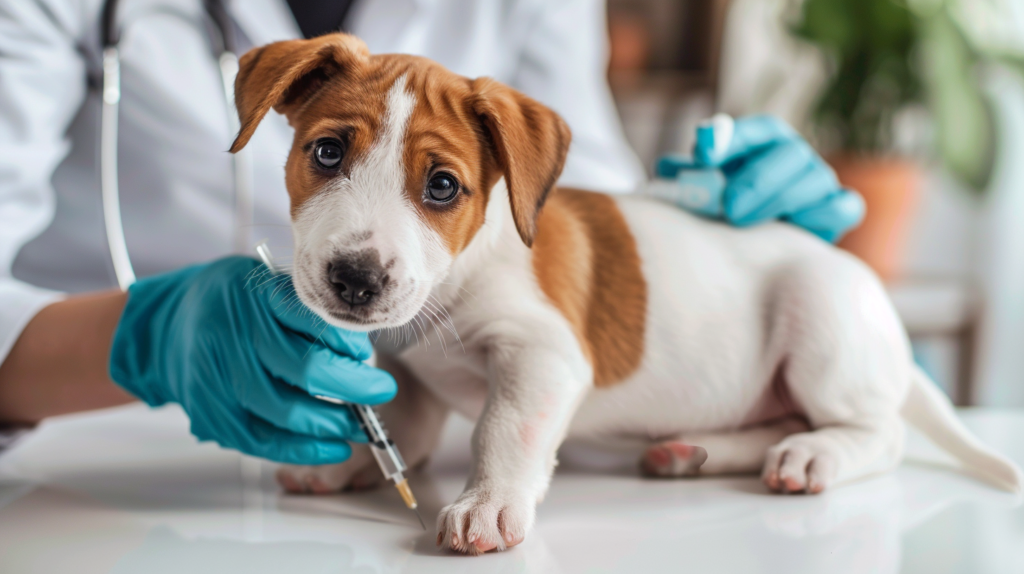
Vaccines administered: Quick injection, usually in scruff or hip. Most puppies barely notice.
Discussion topics: Diet and nutrition. Training and behavior. Parasite prevention. Spay/neuter timing. Socialization safety. Any concerns you have.
Duration: Typically 20-30 minutes.
After the Visit
Monitor for 24-48 hours: Watch for side effects. Note any behavioral changes. Check injection site daily.
Reward your puppy: Positive experience important. Treats and praise. Play or walk if puppy feels well.
Follow instructions: Any medications prescribed. Next appointment scheduled.
Vaccination and Socialization Balance
Challenge: Puppies need socialization during critical period (7-16 weeks). But they’re not fully vaccinated until 16 weeks.
How to socialize safely:
Before full vaccination: Puppy classes with vaccinated dogs only. Carry puppy in public places. Invite vaccinated, healthy dogs to your home. Car rides and handling by various people. Exposure to sights and sounds from safe distance.
Avoid until fully vaccinated: Dog parks. Pet stores where dogs walk. Areas where unknown dogs have been. Contact with unvaccinated dogs. Anywhere with potential parvo exposure.
One week after final vaccine: Full socialization can begin. Safe to visit dog parks. Attend group training classes. Play with unknown dogs.
Special Circumstances
Adopting Older Puppies
If vaccination history unknown:
Vet will restart vaccine series. May do titer testing (antibody test). Ensures puppy is protected.
If partially vaccinated:
Continue where previous vet left off. Vet may adjust schedule. Ensure rabies vaccine given if age-appropriate.
Immunocompromised Puppies
Puppies with health issues may need:
Delayed vaccination schedule. Individual assessment. Different vaccine protocol. Close monitoring.
Always work with vet for special cases.
Pregnant Dogs
Pregnant dogs should have:
Completed vaccinations before pregnancy. Some vaccines unsafe during pregnancy. Puppy immunity depends on mother’s immunity.
Never breed unvaccinated dogs.
Adult Dog Vaccination Schedule
After puppy series complete, dogs need boosters.
DHPP vaccine: 1 year after final puppy dose. Then every 1-3 years based on vaccine type. Some states require more frequent boosters.
Rabies vaccine: 1 year after first rabies vaccine. Then every 1-3 years based on vaccine type and local law.
Non-core vaccines: Bordetella: Every 6-12 months if needed. Leptospirosis: Annually in endemic areas. Lyme: Annually in tick-heavy regions. Canine influenza: Annually if exposed.
Your vet will create personalized schedule.

Titer Testing Alternative
Some owners prefer titer testing over automatic boosters.
What is titer testing: Blood test measuring antibody levels. Determines if dog still has immunity. May reduce number of vaccines given.
Pros: Reduces vaccine exposure if immunity present. Good for dogs with vaccine sensitivities. Provides actual immunity data.
Cons: More expensive than vaccine. Not accepted for rabies (legal requirement). Still need boosters if titers are low. Not all vets offer titer testing.
Discuss with your vet if interested.
Common Questions
Q: Can I skip vaccines if my puppy stays home?
A: No. Many diseases spread through air or on shoes/clothing. Rabies vaccination required by law. Risk too high to skip core vaccines.
Q: Can I give vaccines myself?
A: Not recommended. Improper storage or administration reduces effectiveness. No legal rabies certificate without vet administration. Professional guidance important.
Q: What if I miss a vaccine appointment?
A: Contact vet immediately. May need to restart series if gap too long. Don’t skip vaccines; protection incomplete without full series.
Q: Can adult dogs get parvo?
A: Yes, though less common. Unvaccinated adults vulnerable. Puppies at highest risk. Vaccine prevents disease in dogs of all ages.
Q: Are there vaccine-free alternatives?
A: No safe alternative to vaccination exists. Nosodes and homeopathic remedies don’t work. Vaccination is only proven prevention.
Q: Can vaccines cause autism in dogs?
A: No. This myth based on discredited human study. No evidence vaccines cause behavioral or neurological issues. Benefits vastly outweigh minimal risks.
Q: Do small dogs need less vaccine?
A: No. All dogs receive same vaccine dose regardless of size. Disease exposure equal for all sizes.
The Bottom Line
Puppy vaccinations are non-negotiable for responsible dog ownership.
Key takeaways:
Core vaccines protect against deadly diseases: distemper, parvo, hepatitis, rabies. Standard schedule: 6-8 weeks: First DHPP. 10-12 weeks: Second DHPP. 14-16 weeks: Third DHPP plus rabies. 12-16 months: First adult boosters. Complete series costs $400-800 at regular vet, $150-300 at low-cost clinics. Side effects usually mild and temporary. Balance socialization with safety until fully vaccinated. Discuss non-core vaccines with your vet based on lifestyle.
Following proper vaccination schedule gives your puppy the best chance at a long, healthy life.
Work closely with your vet to create personalized plan for your puppy’s needs.
Did you just get a puppy? Share your vaccination experience in the comments!
This article provides general guidance. Always follow your veterinarian’s specific recommendations for your individual puppy.